
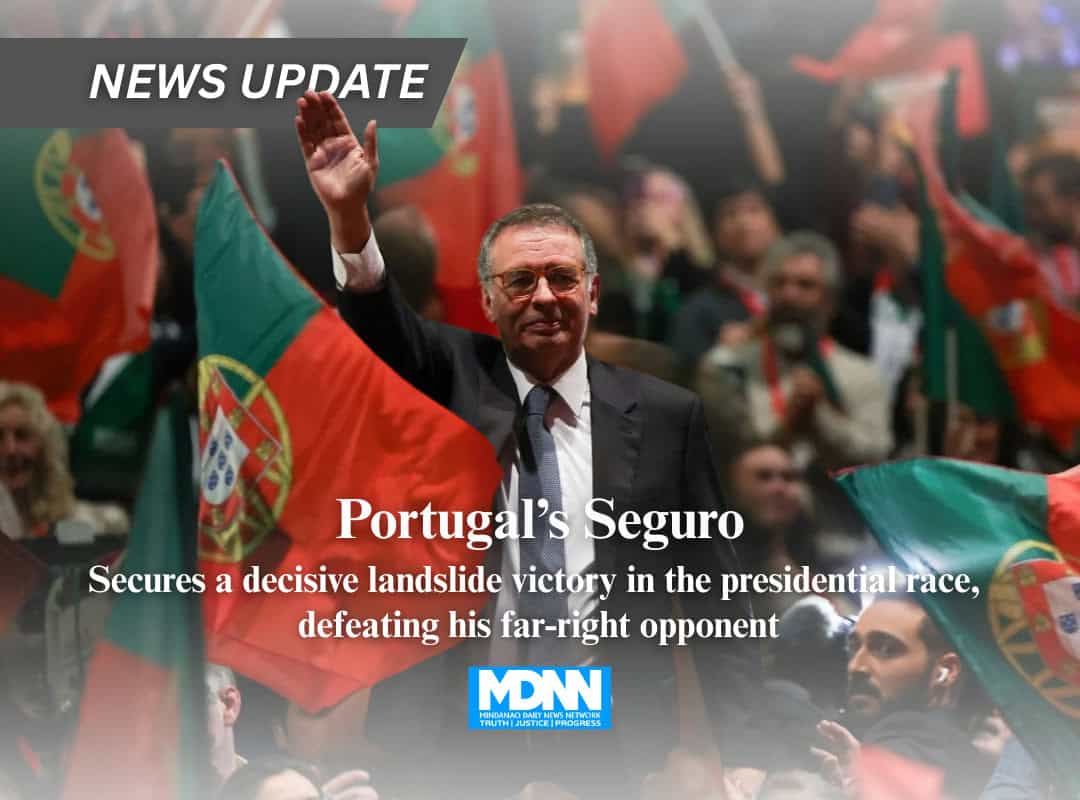
Portugal has elected moderate Socialist Antonio Jose Seguro as its new president following a decisive run-off election victory over far-right challenger Andre Ventura. Seguro secured about 66 percent of the vote, marking the first time in 20 years that a Socialist leader will hold the largely ceremonial but politically influential post. He succeeds conservative president Marcelo Rebelo de Sousa, who completed two terms in office.
In his first remarks after the win, Seguro expressed pride and gratitude toward the Portuguese people, highlighting their commitment to freedom, democracy, and the country’s future. Despite severe weather conditions and recent storms that caused flooding in some areas, voter turnout remained strong, reflecting continued public engagement in national politics.
Seguro’s victory was bolstered by support from some conservative figures after the first round, as concerns grew among centrist voters about Ventura’s populist and anti-establishment stance. While Ventura conceded defeat, his stronger-than-expected performance shows the rising influence of far-right politics in Portugal, mirroring broader trends seen across parts of Europe. Ventura, a former television sports commentator and leader of the Chega party, has indicated he intends to remain a leading voice for the political right.
Portugal Elects Antonio Jose Seguro as President in Landslide Run-Off Victory
Although the Portuguese presidency carries mostly ceremonial responsibilities, it does hold important constitutional powers, including the ability to dissolve parliament and veto certain legislation. Political observers suggest Seguro’s moderate stance could help maintain stability, especially if future parliamentary elections produce a divided political landscape.
Seguro has positioned himself as a unifying figure from a modern and moderate left, promising to mediate political tensions and safeguard democratic values. However, he has also signaled caution on contentious issues such as proposed labor reforms, saying he would prefer consensus with labor unions before moving forward with legislation that could affect workers’ rights.
As Portugal looks ahead, many see Seguro’s presidency as a test of how centrist leadership can balance political stability while responding to shifting public sentiments across Europe.