

From the Sidelines
By: Ray G. Talimio Jr.
“From Social Media Storm to Policy Shift at the LTO”
A routine traffic apprehension involving media personality James Deakin’s son unexpectedly evolved into a national discussion on enforcement practices at the Land Transportation Office (LTO). What began as a personal grievance aired on social media escalated into a public policy response from the Department of Transportation (DOTr), culminating in new orders that changed how driver’s licenses are handled during traffic violations.
The incident started when Deakin’s newly licensed son was apprehended for multiple traffic violations while driving an unregistered and uninsured vehicle on a major expressway. Reports indicated that the vehicle obstructed traffic and violated lane rules while attempting to exit the Skyway. The situation worsened when documentation for the vehicle could not be produced on the spot. As prescribed by existing rules, the LTO confiscated the driver’s license pending case resolution.
Frustrated by the process, Deakin took to social media to express his objections. He questioned the confiscation of the license, the requirement to present vehicle ownership documents, and the fifteen (15) calendar days period for settling the case, which did not exclude weekends or holidays. The public reaction was mixed. Some sympathized with his concerns about procedural rigidity, while others emphasized that traffic laws apply equally regardless of social standing.
The LTO responded publicly by outlining the specific violations and reaffirming that the apprehension followed established regulations. However, the conversation did not end there. According to Deakin, he later received a call from Acting Transportation Secretary Giovanni Z. Lopez, also known as Banoy Lopez, who apologized for the distress caused and shared an internal memorandum introducing key policy changes.
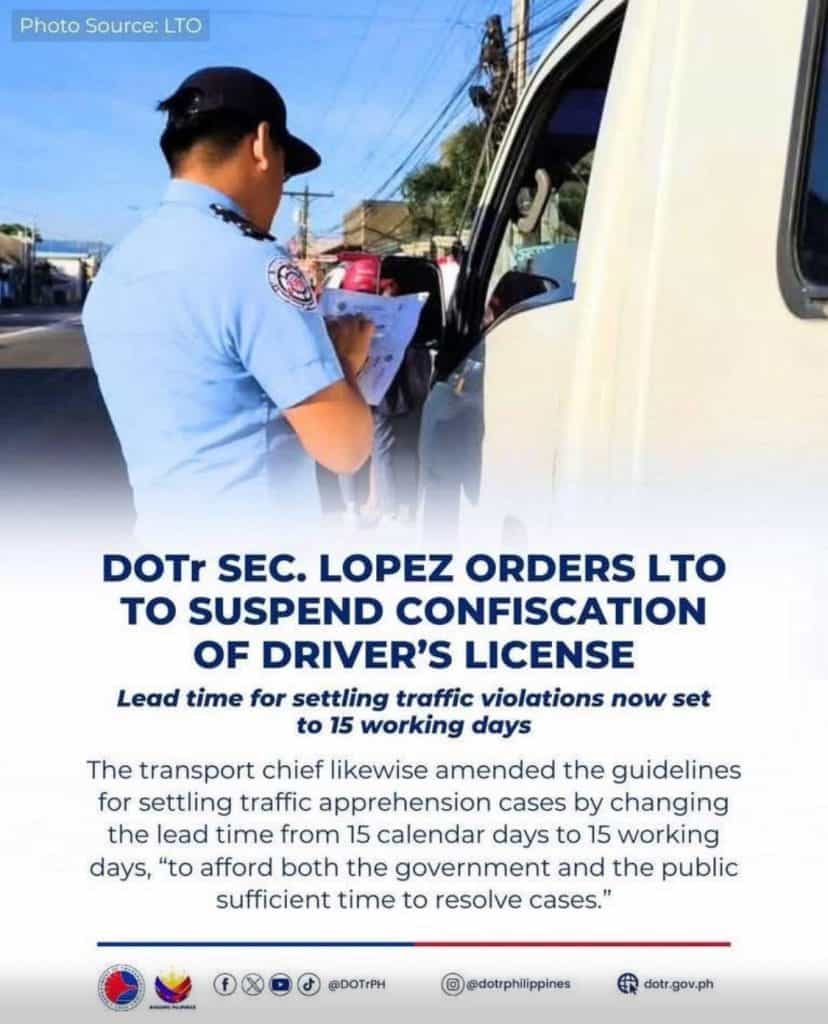
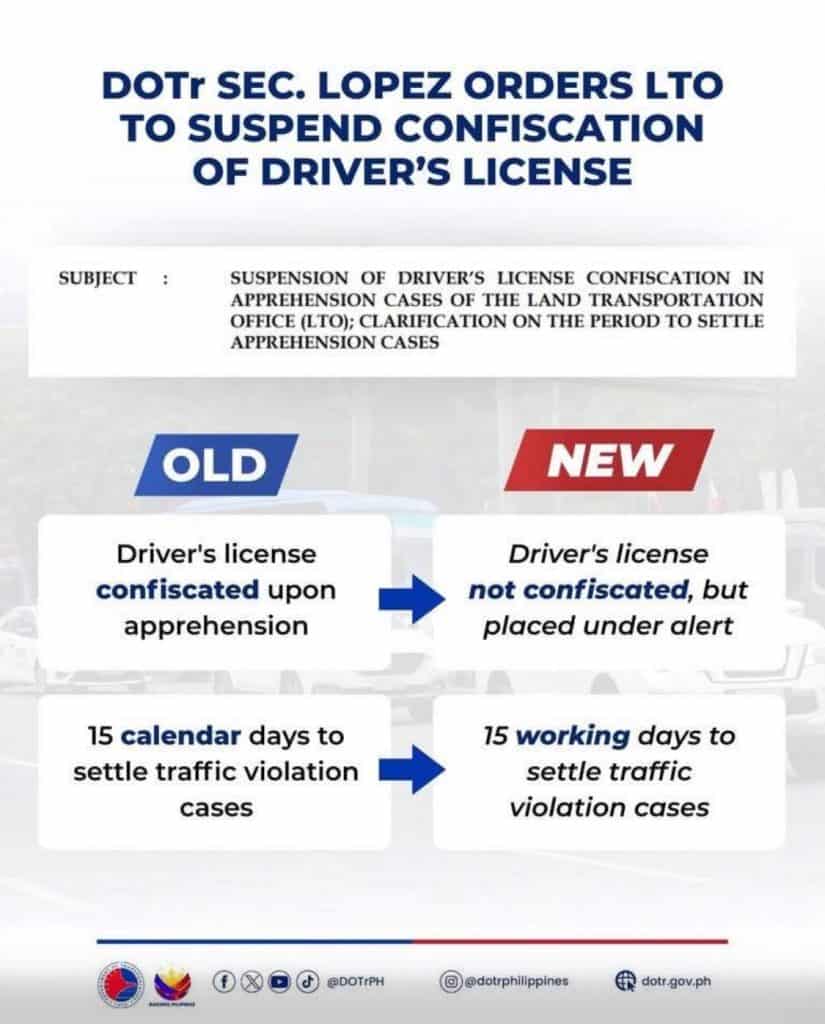
Under the new directive, traffic enforcers are no longer allowed to confiscate a driver’s license on the spot. Instead, the license will be placed under alert status in the system. In addition, the settlement period for traffic cases has been adjusted from 15 calendar days to 15 working days. The Department of Transportation (DOTr) explained that this change was intended to provide both motorists and government offices sufficient time to resolve cases, especially when holidays intervene.
The reform also aligned with the service delivery standards promoted by the Anti-Red Tape Authority (ARTA), which enforces the Ease of Doing Business and Efficient Government Service Delivery Act. ARTA Director General Ernesto Perez has consistently emphasized that government procedures must be citizen centered, time bound, and transparent, particularly in frontline services where delays and rigid rules can burden the public.
Supporters of the reform argue that the new rules reduce the risk of arbitrary enforcement and minimize inconvenience for motorists who rely on their licenses for work and daily mobility. The shift also supports ARTA’s broader objective of simplifying government processes and improving public trust in institutions.
Critics, however, warn that the policy change should not weaken discipline on the roads. They stress that traffic rules exist to protect lives and ensure order, particularly in high risk areas such as expressway exits where sudden maneuvers can trigger accidents and congestion. From this perspective, accountability for unsafe driving behavior must remain firm even as procedures become more flexible.
The episode highlights a recurring tension in governance between rule enforcement and citizen responsiveness. On one hand, agencies are tasked with implementing laws consistently. On the other, they are expected to listen when processes appear unreasonable or outdated. In this case, the DOTr chose to adjust its procedures without reversing the underlying principles of traffic regulation, while ARTA’s standards provided an institutional framework for ensuring that reforms remained service oriented.
Deakin framed the outcome as a victory for public engagement, crediting citizen support for prompting institutional change. He also acknowledged that mistakes were made during the incident and emphasized that responsibility and learning were part of the experience. At the same time, he pointed to the presence of reform minded officials as proof that constructive dialogue can lead to improvement.
The broader lesson is not about who won an argument online, but about how governance can evolve through public scrutiny. Social media did not change the law, but it amplified a conversation that reached policymakers and resulted in procedural refinement.
Traffic safety remains a shared responsibility between motorists and authorities. While enforcement methods may evolve, the core objective stays the same, safer roads, fair treatment, and a system that works for both the public and the state.
Sources:
Department of Transportation official advisory on suspension of driver’s license confiscation
Land Transportation Office memorandum on traffic apprehension procedures
Anti-Red Tape Authority policy statements on service standards
Public statements of Acting Secretary Giovanni Z. Lopez
james Deakin social media posts on the traffic incident
Photo Credits: Land Transportation Office official photo release
Department of Transportation Philippines social media pages
Disclaimer: This article is for public information and commentary purposes only. It does not constitute legal advice.
About the Author: Ray G. Talimio Jr. is a Certified Public Accountant and veteran columnist on governance, economic policy, and public accountability. He is Past President and Past Chairman of the Board of the Cagayan de Oro Chamber of Commerce and Industry Foundation Inc. He served as Co-Chairman of the Economic Development Committee of the Regional Development Council Region X and as Chairman of the MSME Development Council of Misamis Oriental and Cagayan de Oro from 2022 to 2025. He currently serves as a National Officer of the Philippine Institute of Certified Public Accountants after having served as its Past Senior Regional Director and Past Chapter President. He served as BIMP-EAGA Chairperson from 2023 to 2025. He is a staunch advocate of MSME development, regional economic integration, good governance, and public private partnerships.