
From the Sidelines
By: Ray G. Talimio Jr.
“Balancing Investment Ambition with Environmental Responsibility”
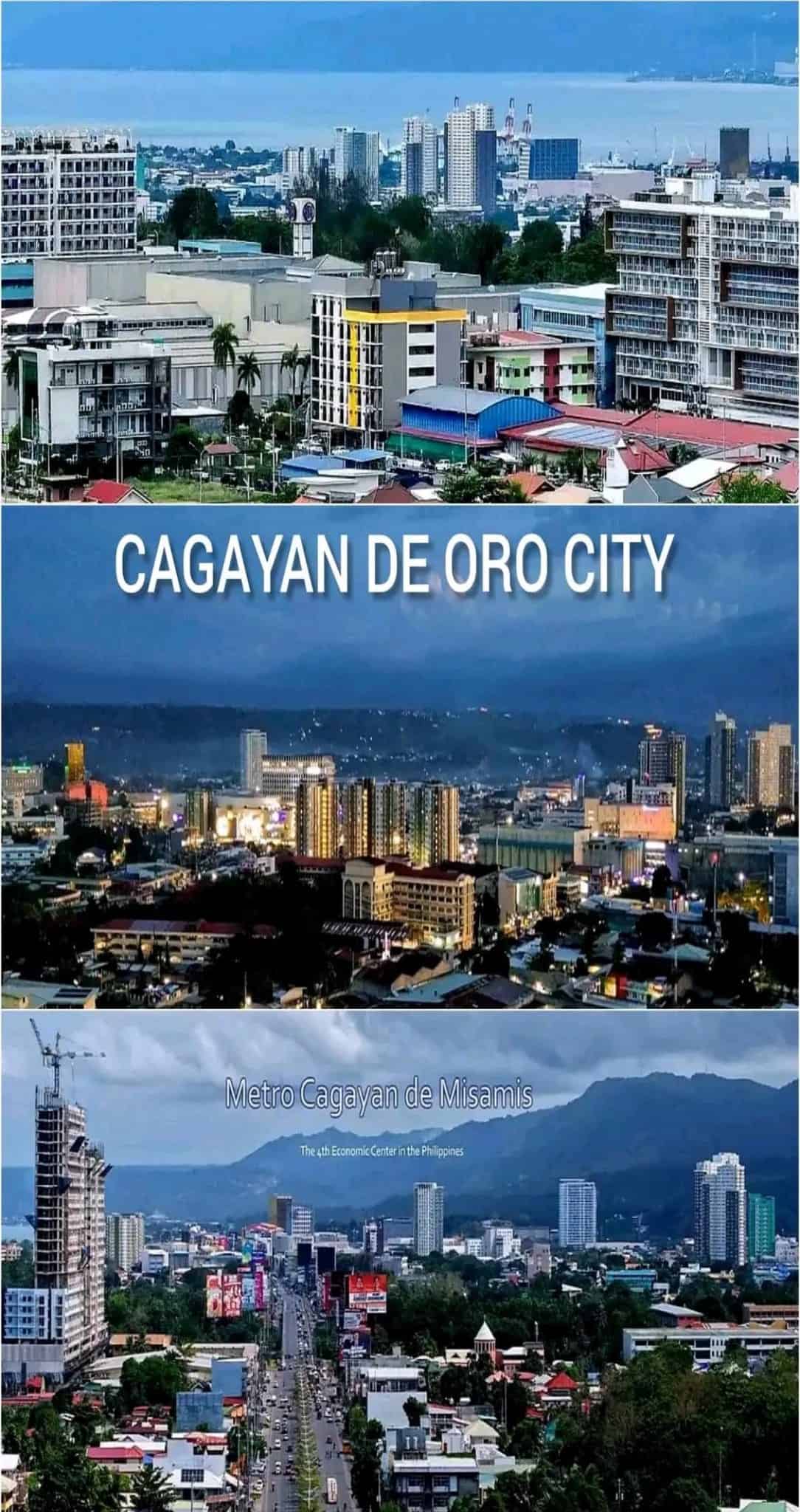
Over the past years, Cagayan de Oro City has transformed into a major urban center, marked by expanding commercial zones and increasingly dense developments. While these changes have driven economic progress, they have also altered the city’s natural environment. Flooding, once an uncommon occurrence for earlier generations, is now a recurring problem that affects many communities during the rainy season.
One of the most ambitious projects contributing to this transformation is the Masterson Mile North development by Pueblo de Oro Development Corporation (PODC). The project was designed as a mixed use complex featuring residential towers, office spaces, and commercial establishments in the Uptown area of the city. From the perspective of the developer, the project represents a long term commitment to Cagayan de Oro City’s economic growth and urban modernization.
The Masterson Mile North development has been publicly reported to carry an estimated development cost of Thirteen Billion Five Hundred Million Pesos (P13.5B), covering site development, supporting infrastructure, and vertical construction. Separately, PODC has also discussed an additional investment pipeline of about Thirteen Billion Pesos (P13B) in new Uptown Cagayan de Oro City developments presented in briefings with local officials. These investments reflect the company’s continued confidence in the city’s long term growth potential.
The City Council and the local government unit (LGU) previously expressed support for the project, citing its potential to generate employment, attract new investors, and strengthen the city’s position as a regional business hub. Public signing ceremonies between the LGU and the developer symbolized this shared vision for progress.
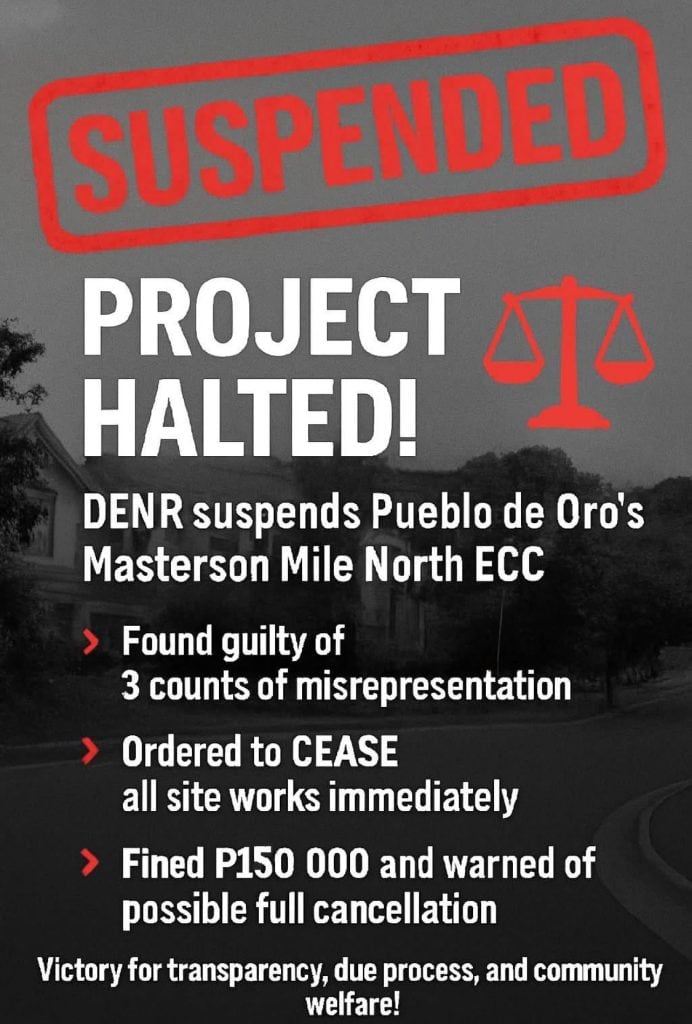
However, the Department of Environment and Natural Resources (DENR), through the Environmental Management Bureau (EMB) Region 10, placed the project’s Environmental Compliance Certificate (ECC) under suspension, subject to further review and compliance. This action followed findings of discrepancies in the environmental application documents submitted for the project.
According to the regulatory findings, some land titles presented during the ECC process were either cancelled, inconsistent with updated subdivision plans, or incomplete. There were also environmental disclosures that required clarification, particularly those involving areas affected by road widening and zoning adjustments. Under environmental regulations, project proponents must demonstrate clear legal control over their sites and provide accurate environmental impact information. When documentation issues arise, regulatory agencies are duty bound to reassess approvals to safeguard ecological systems and community welfare.
The City Council’s earlier endorsement was based primarily on land use classification and zoning ordinances. However, zoning approval does not replace the national environmental compliance process. The ECC remains a separate and higher regulatory requirement intended to ensure that large scale developments do not pose undue risks to the environment and surrounding communities.
This suspension does not automatically mean that the project has been permanently stopped. The setback appears temporary in nature and subject to compliance. From the viewpoint of both the LGU and PODC, this phase allows for corrections, improved transparency, and stronger environmental safeguards.
For the city government, the challenge is to balance economic ambition with responsible urban planning. Development should not compromise natural drainage systems, wetlands, and catch basins that play a vital role in flood mitigation. Many residents now recognize that past land conversions, especially those involving natural water retention areas, have contributed to the flooding issues experienced today.
The advocacy of community leaders such as Mr. Arthur Aranas and environmental groups deserves recognition. Their efforts brought technical and ecological concerns into public discussion, reinforcing the importance of citizen participation in governance and environmental protection.
At the same time, PODC’s continued investment signals confidence in Cagayan de Oro City’s long term potential. With proper compliance, transparent processes, and cooperation between regulators, developers, and the community, the city can pursue growth that is both progressive and environmentally responsible.
Cagayan de Oro City’s development story continues. The lesson from this episode is clear. Sustainable progress requires accountability, science-based planning, and respect for the natural environment.
Sources:
Department of Environment and Natural Resources Environmental Management Bureau Region 10 Resolution on the suspension of the Environmental Compliance Certificate for the Masterson Mile North Project.
DENR Administrative Order No. 2003-30.
Environmental Impact Statement Manual.
Local Government Code of the Philippines (Republic Act No. 7160).
Presidential Decree No. 1096, National Building Code of the Philippines.
BusinessWorld report on Masterson Mile North development cost.
Cagayan de Oro City Local Economic Development and Investment Promotions Office briefing on PODC investment pipeline.
Photo Credits: Wikimedia Commons
Metro Cagayan de Misamis
Rappler
Pueblo de Oro Development Corporation
Disclaimer: This article is for public information and commentary purposes only. It does not constitute legal advice. Interpretations are based on available public documents and regulatory issuances.
About the Author: Ray G. Talimio Jr. is a Certified Public Accountant and veteran columnist on governance, economic policy, and public accountability. He is Past President and Past Chairman of the Board of the Cagayan de Oro Chamber of Commerce and Industry Foundation Inc. He served as Co-Chairman of the Economic Development Committee of the Regional Development Council Region X and as Chairman of the MSME Development Council of Misamis Oriental and Cagayan de Oro from 2022 to 2025. He currently serves as a National Officer of the Philippine Institute of Certified Public Accountants after having served as its Past Senior Regional Director and Past Chapter President. He served as BIMP-EAGA Chairperson from 2023 to 2025. He is a staunch advocate of MSME development, regional economic integration, good governance, and public private partnerships.