

Pagpangagaw Nga Walay Kaluoy: Dagat, Kabuhayan, Kinabuhi – Atong Panalipdan
More than fifty fishing families in Molugan, El Salvador City, Misamis Oriental are deeply confused and troubled after discovering that the foreshore area—approximately 3,000 square meters—where they have lived since the 1980s as a fishing community has been titled under the name of Ms. Evelyn Roa Clavano.
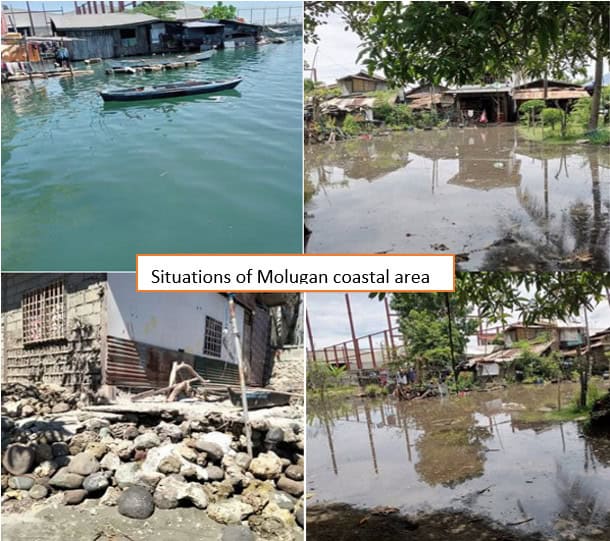
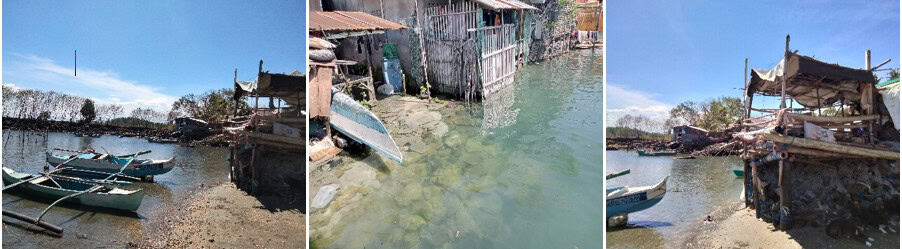
This 3,000-square-meter foreshore, which remains submerged in water to this day, only became habitable after the residents spent decades painstakingly filling it with stones to raise the ground by about five feet. It is on this reclaimed area that they built their homes. This land should never have been titled as dry land—if anything, it deserves a “water title” instead.
Now, with the issuance of a land title, an eviction case has been filed against the fishing community in Molugan. This is not just a legal matter—this is a clear case of social injustice! It is a blatant mockery of justice and a violation of the basic human rights of our fisherfolk. In defense of their homes and livelihood, the residents have organized themselves as the Kapunungan ng Mananagat sa Molugan, an association affiliated with the Trade Union Congress Party (TUCP).
As narrated to me by their President, Mr. Hernandez Valmoria, it was in the late 1970s when then-Governor Pedro “Oloy” Roa—himself a logger—utilized the
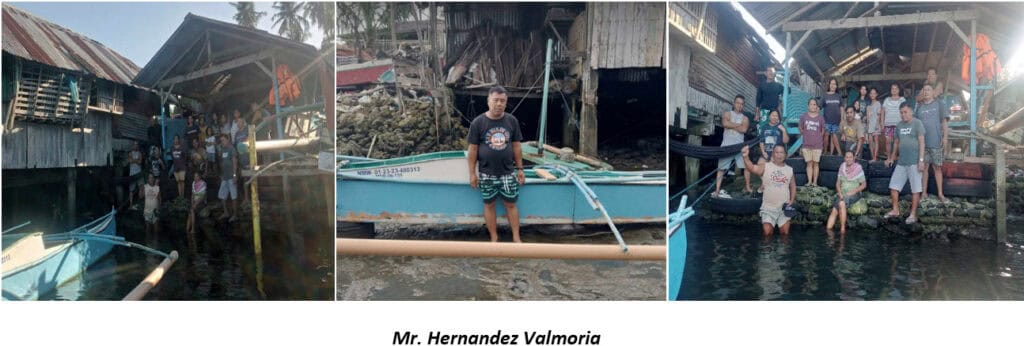
seashore area of Molugan, El Salvador as a tambakan (stockpile site) for cut logs such as mahogany, narra, almaciga, red lauan, and others, before they were transported to foreign countries. Honestly, I’m not surprised.
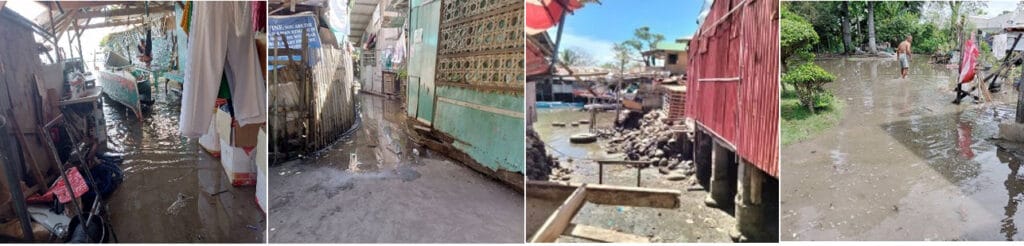
Residence Area
Based on my research, logging companies like Roa & Sons could earn up to ₱360 million from a single shipment of logs alone. This money didn’t just go into the pockets of the loggers—it also benefited those who were supposed to enforce environmental laws, despite the fact that logging activities at the time were clearly illegal. Yes, according to existing laws back then, our dipterocarp forests were protected. Logging was prohibited in areas with elevations above 1,000 meters above sea level or in sloped lands with gradients exceeding 50%. Moreover, the cutting of the country’s most valuable native trees—such as narra, red lauan, almaciga, and mahogany—was also banned.
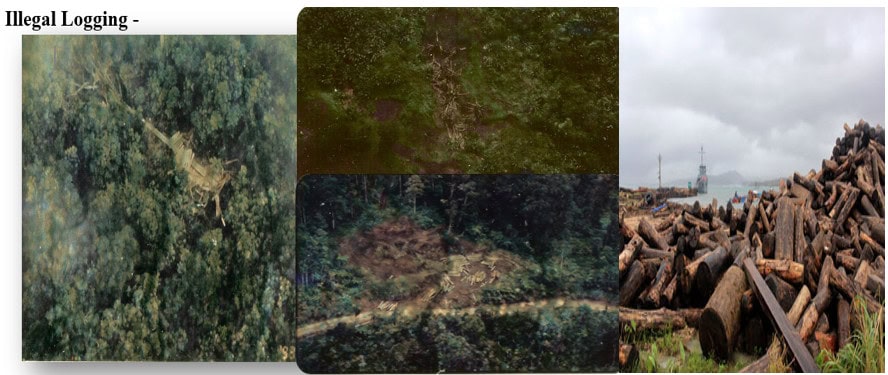
The original 17 million hectares of dipterocarp forests in the Philippines, only half a million hectares remain. This massive deforestation is one of the key reasons why our country ranks fourth in the world among nations most severely affected by climate change. In a single night of flooding, thousands of lives and homes can be lost. To prevent ecological disaster, our archipelago needs at least 54% forest cover. At present, we have only 5%, a dangerously low figure that puts us all at risk.
Well, Molugan eventually became a dumping ground for cut logs. After the area along the seashore was used for this purpose, an application for land titling covering approximately 14,000 square meters was filed by Ms. Evelyn Roa Clavano, the daughter of the late Roa. Following the issuance of the title, around 11,000 square meters were sold to Union Plywood Corporation (UPC), and later acquired by Gaisano from UPC. Today, a Gaisano warehouse stands on the site.
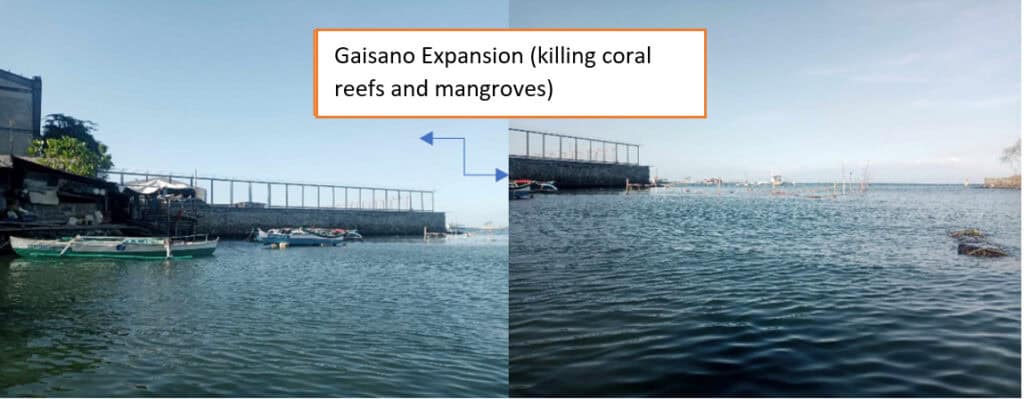
However, this construction is a gross violation of existing environmental laws, as any development within the seashore—which is classified as public domain—requires prior approval from the Department of Environment and Natural Resources (DENR). The remaining 3,000 square meters comprise the foreshore area, which has been home to more than 50 families for the past 40 years. Their continued occupancy is supported by a Barangay Resolution officially recognizing them as fisherfolk residents of the area.
As a responsible fishing community, they have received support from the government. The DENR provided a yacht to the Local Government Unit (LGU), which was then turned over to the Molugan fisherfolk. These fisherfolk now serve as fishery wardens, helping to protect Macajalar Bay from illegal fishing activities.
Their commitment to safeguarding the natural beauty and resources of Macajalar Bay is a reflection of their gratitude to the government for allowing them to reside and fish in the foreshore area. This livelihood sustains not only their families but also contributes to the food security of their wider community.
When the Sangguniang Panlungsod discovered that a land title had been issued over the foreshore areas to a businesswoman, Ms. Evelyn Roa Clavano, the August Body promptly passed a resolution calling for the cancellation of the said title. This title, they declared, should never have been issued in the first place—its issuance is, therefore, deemed fraudulent. This raises a serious question: Why was a land title issued at all?
Titling of foreshore land cannot proceed without the knowledge and approval of the Department of Environment and Natural Resources (DENR). Yet, the DENR has categorically denied giving any such consent. In fact, Mr. Conrado Mahinay, the Community Environment and Natural Resources Officer (CENRO), confirmed that no application for titling had ever been filed by Ms. Evelyn Roa Clavano.
So again, we ask: Why and how was a title issued without DENR’s knowledge and consent? This troubling issue is now under official investigation and verification. If proven that the title was indeed issued without DENR authorization, Atty. Van Michael Pacuribot, head of the Legal Office of DENR Region 10, has personally assured the fishing community of Molugan that DENR will formally request no less than the Office of the Solicitor General to cancel the illegal title.
Even the Commission on Human Rights (CHR) has expressed deep concern over the matter, emphasizing that the titling of this foreshore area is a clear violation of the human rights of the fishing community in Molugan, El Salvador. For over forty years, these fishing families have lived in the area. Their connection to the land and sea has given them vested rights—far stronger than any piece of paper labeled as a land title. The families will never leave. To do so would mean losing not just their homes, but also their livelihood, their access to food, and ultimately, their dignity. They would be pushed into hunger, homelessness, and deeper poverty. That is why we cry out:
AGAW DAGAT, AGAW KABUHAYAN, AGAW BAHAY, AGAW PAGKAIN—ITO AY MAUUWI SA AGAW BUHAY.
SILA PO AY TAO AT HINDI BASURA!
Must the enrichment of a few come at the cost of the displacement of many?
Never! You’ve already stripped our forests bare—must you now claim the sea as well? TAMA NA PO! Let this serve as notice to all: In this country, no one is above the law. Everyone must bow before the majesty of the law, for we uphold the rule of law—not the rule of men.
But once again, we ask: Why was a land title issued over a foreshore area that is even submerged under water? Is this not a blatant example of how money and influence can bend the law? For more than five long years now, over 50 fishing families have been repeatedly summoned to court—fighting not only to protect their homes, but to defend their basic human rights against eviction. These families have already spent what little they have on legal defense, even as they struggle daily to feed their malnourished children. The fishing communities—once vibrant—are now among the poorest of the poor. Why? Because out of the Philippines’ 13 major bays, 10 are already biologically dead.
One major cause of this destruction is massive siltation, which has wiped out crucial marine and fishery resources. This siltation is caused by the erosion of our forests, as millions of tons of topsoil are washed from denuded mountains into our rivers and, eventually, into our bays. The root of this? Rampant logging in our dipterocarp forests—carried out for decades by companies like Roa & Sons Logging Company. We plead: Have mercy on the poor fishing community in Molugan!
Their suffering is already unbearable—must we burden them further with lawsuits for simply standing up for their rights? Please, have compassion! We call on the Commission on Human Rights to intervene. There is compelling reason to believe that State actors may be involved in violating the human rights of these poor and marginalized fishing families. Justice demands urgent action.