
From the Sidelines
By: Ray G. Talimio Jr.
“From Ghost Flood Control Projects to Ghost Employees and Ghost Voters”
The word “ghost” has long been associated with corruption and inefficiency in our public institutions. In Philippine governance, ghosts are not the supernatural beings of folklore, but the invisible shadows of deceit and deception. From ghost flood control projects to ghost employees and ghost voters, these manifestations highlight systemic weaknesses that erode public trust.
Ghost projects are perhaps the most notorious. Year after year, billions of pesos are allocated for flood control infrastructures, yet communities remain submerged during typhoon season. Audit reports and Senate investigations have revealed instances where projects exist only on paper, with no actual construction on the ground. Funds are disbursed, contractors get paid, and officials pocket commissions, while citizens continue to suffer from preventable flooding. These ghost projects are not just financial crimes but humanitarian failures.
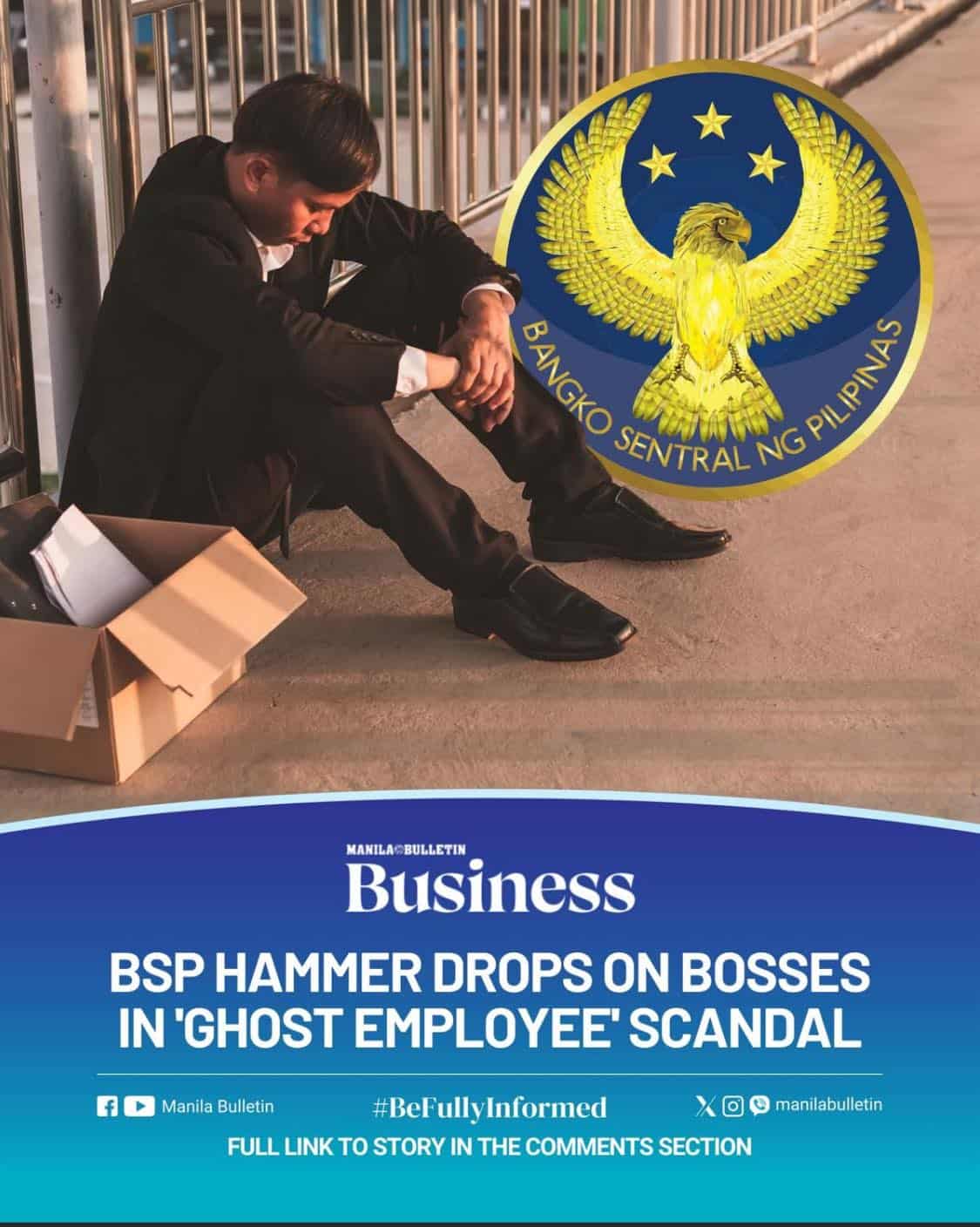
Now the term “ghost” has found another haunting ground: ghost employees. The Bangko Sentral ng Pilipinas (BSP) recently dismissed two supervisors for falsifying attendance records of four employees, effectively covering up their nonexistence or nonperformance. This scandal has already led to the resignation of two Monetary Board members last year, proving that even the most respected financial institution is not immune from such practices. Ghost employees are a double burden: they drain public resources while also undermining the morale of genuine workers who carry the load.
But the most dangerous manifestation of all comes during elections, through ghost voters. These are fictitious names inserted into the voters list, often used to pad ballots or influence outcomes in close contests. Election fraud through ghost voters undermines the very foundation of democracy. Every fake vote cancels out the voice of a legitimate citizen and chips away at the integrity of the electoral process. While the Commission on Elections has invested in biometrics and automated systems, cases of padded voters lists and questionable registrations continue to be raised by watchdog groups.
The pattern is clear. Ghosts thrive where systems are weak, oversight is lax, and accountability mechanisms are compromised. Whether in multi billion flood control projects, in payroll systems of government agencies, or in voters lists manipulated with ghost voters that decide the fate of national and local leadership, these invisible hands operate in plain sight because whistleblowers are silenced and institutions fail to protect the public interest.
To dispel these ghosts, transparency and vigilance are nonnegotiable. Citizens must demand accountability from agencies, while independent bodies such as the Commission on Audit (COA), the Civil Service Commission (CSC), and the Commission on Elections (COMELEC) must be strengthened. Digitalization can also help, with real time project monitoring, biometric linked payroll systems, and enhanced safeguards in the voters registry reducing the space for fraud.
The ghosts haunting our institutions will persist unless decisive action is taken. Each ghost project, ghost employee, and ghost voter is not just a symbol of corruption but a reminder of what is being stolen: roads that should have eased traffic, dikes that should have prevented floods, salaries that should have gone to honest workers, and votes that should have reflected the true will of the people. These are not just ghosts on paper, they are real opportunities lost for the Filipino people.
Sources: Manila Bulletin, Commission on Audit reports, Senate investigations, Commission on Elections advisories
Photo Credits: Manila Bulletin Business, Bangko Sentral ng Pilipinas
Disclaimer: This article is based on publicly available news reports and official audit findings. Readers are encouraged to verify details from the original sources.
About the Author: Ray G. Talimio Jr. is a Certified Public Accountant and a veteran columnist on governance, economic policy, and public accountability. He is Past President and Past Chairman of the Board of the Cagayan de Oro Chamber of Commerce and Industry Foundation Inc. (Oro Chamber), Past Co Chairman of the Economic Development Committee of the Regional Development Council Region X, and Past Chairman of the MSME Development Council of Misamis Oriental and Cagayan de Oro from 2022 to 2025. He currently serves as a National Officer of the Philippine Institute of Certified Public Accountants (PICPA), after having served as its Past Senior Regional Director and Past Chapter President. He is a staunch advocate for MSME development, regional economic integration, and good governance, and served as BIMP EAGA Chairperson from 2023 to 2025. He is also a strong proponent of BIMP EAGA cooperation and public private partnerships.
###