
From the Sidelines
By: Ray G. Talimio Jr.
“Mindanao can attract billions in new power generation, but those investments mean little if the transmission grid cannot accommodate and deliver the electricity they produce.”
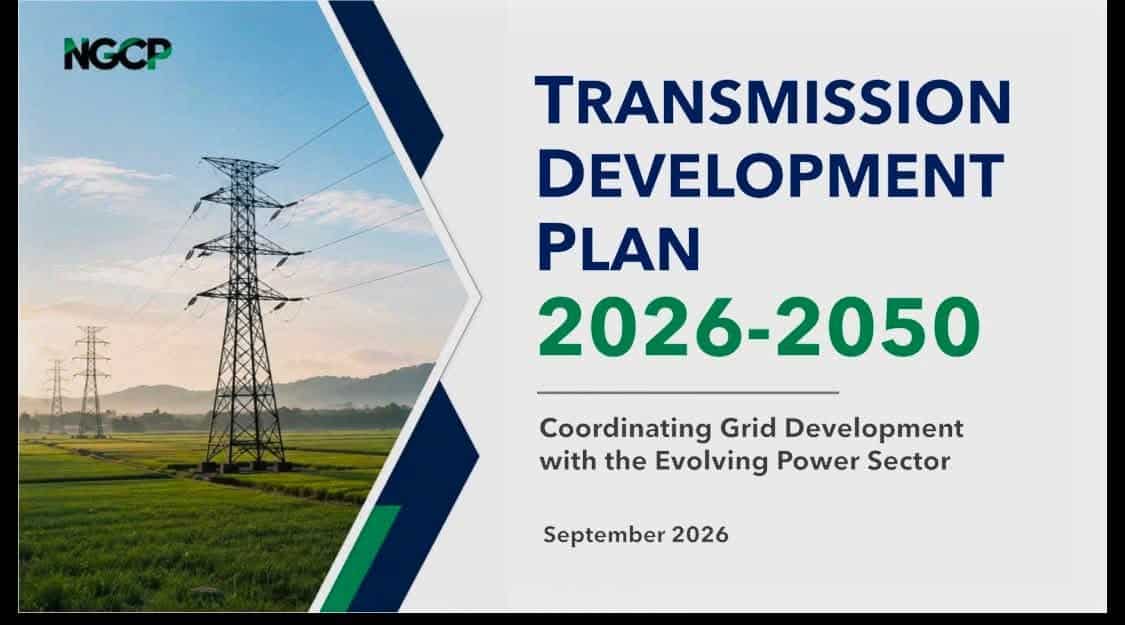
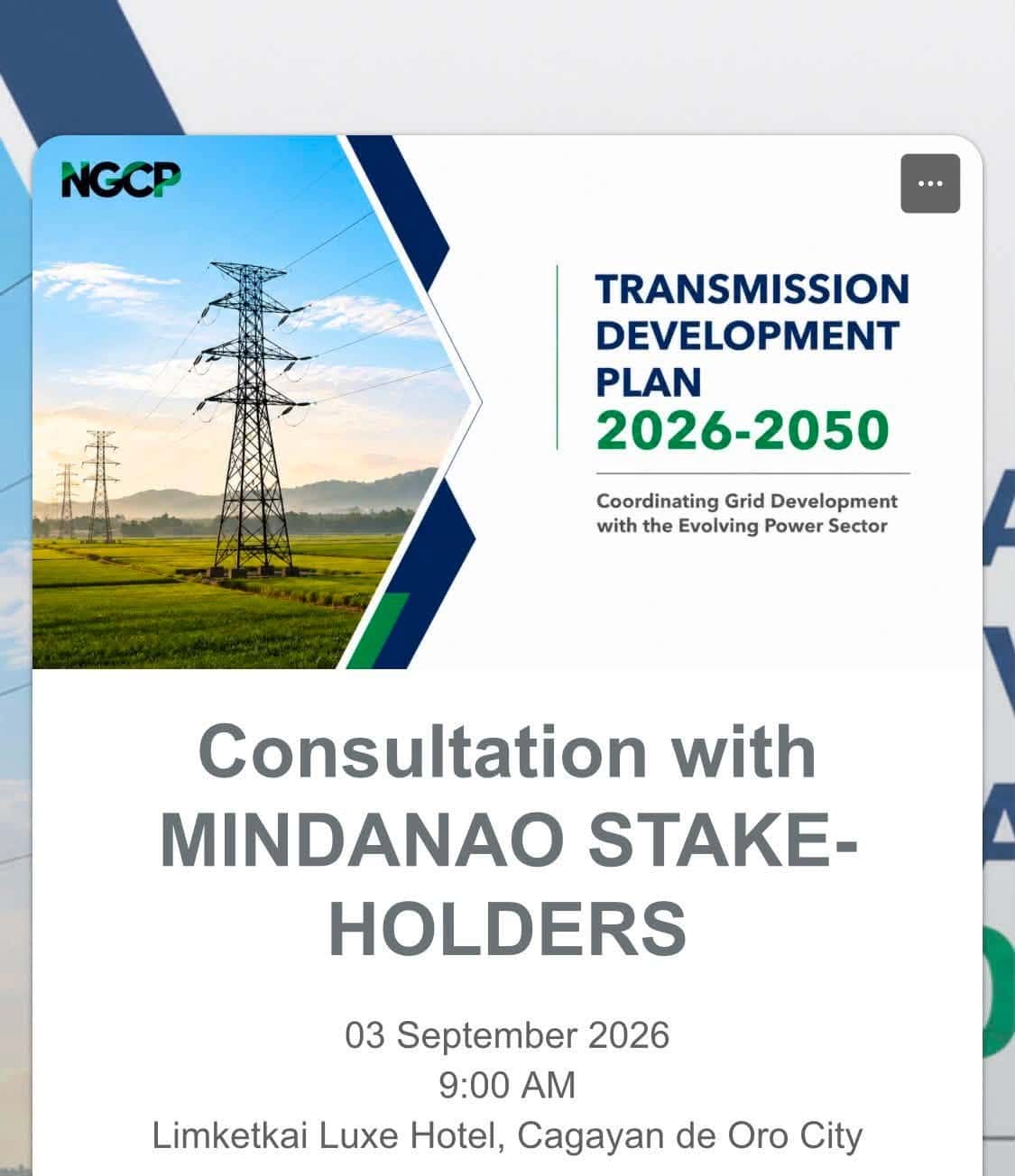
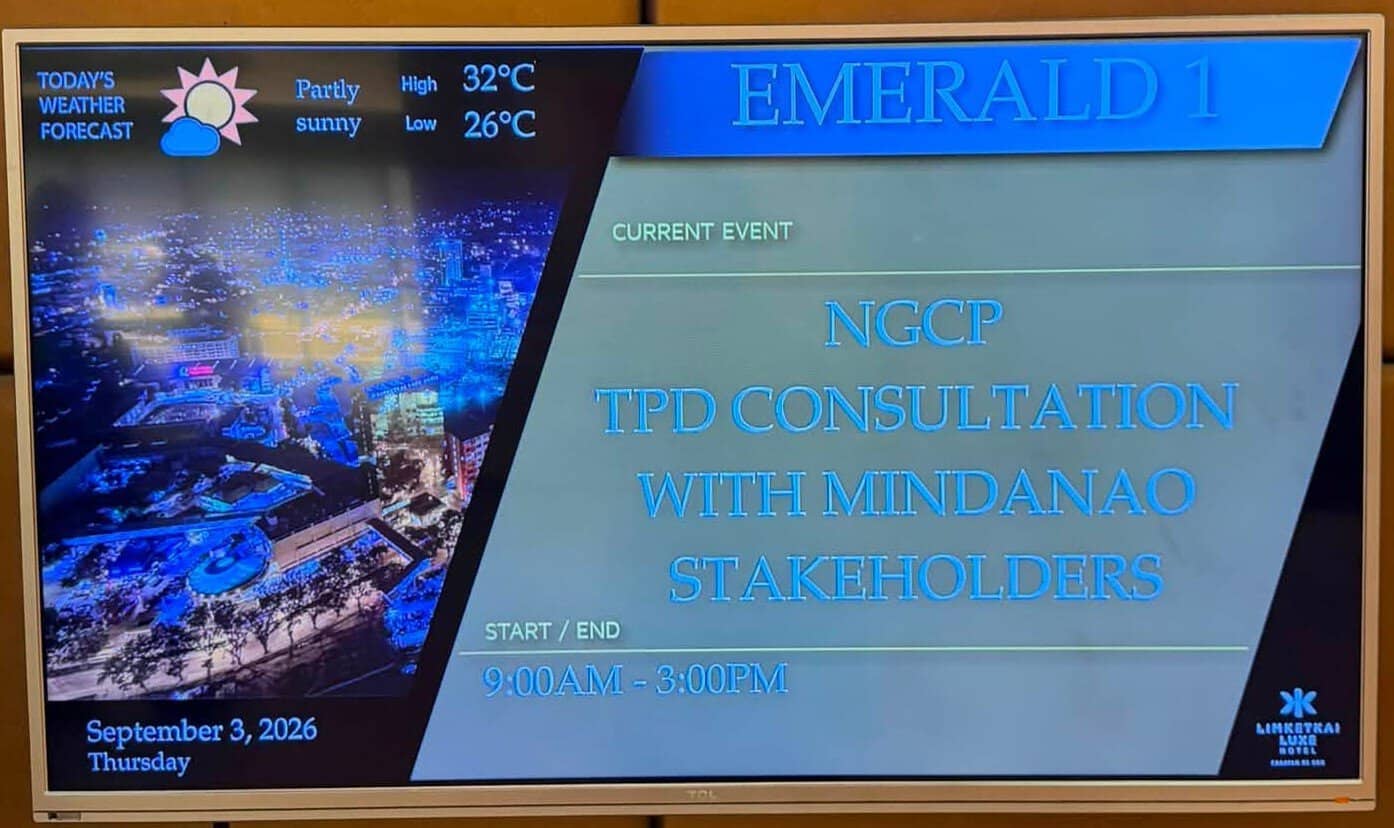
The National Grid Corporation of the Philippines’ (NGCP) Transmission Development Plan (TDP) 2026-2050 presents an ambitious vision for the country’s electricity highway. For Mindanao, however, the presentation also raises an uncomfortable question: Is transmission development moving fast enough to keep pace with generation and economic growth?
For decades, Mindanao’s power debate centered on generation. Do we have enough power plants?
That question is changing.
Mindanao now faces a different challenge: whether the grid can absorb new generating capacity and reliably transport electricity from where it is produced to where industries, businesses and households need it.
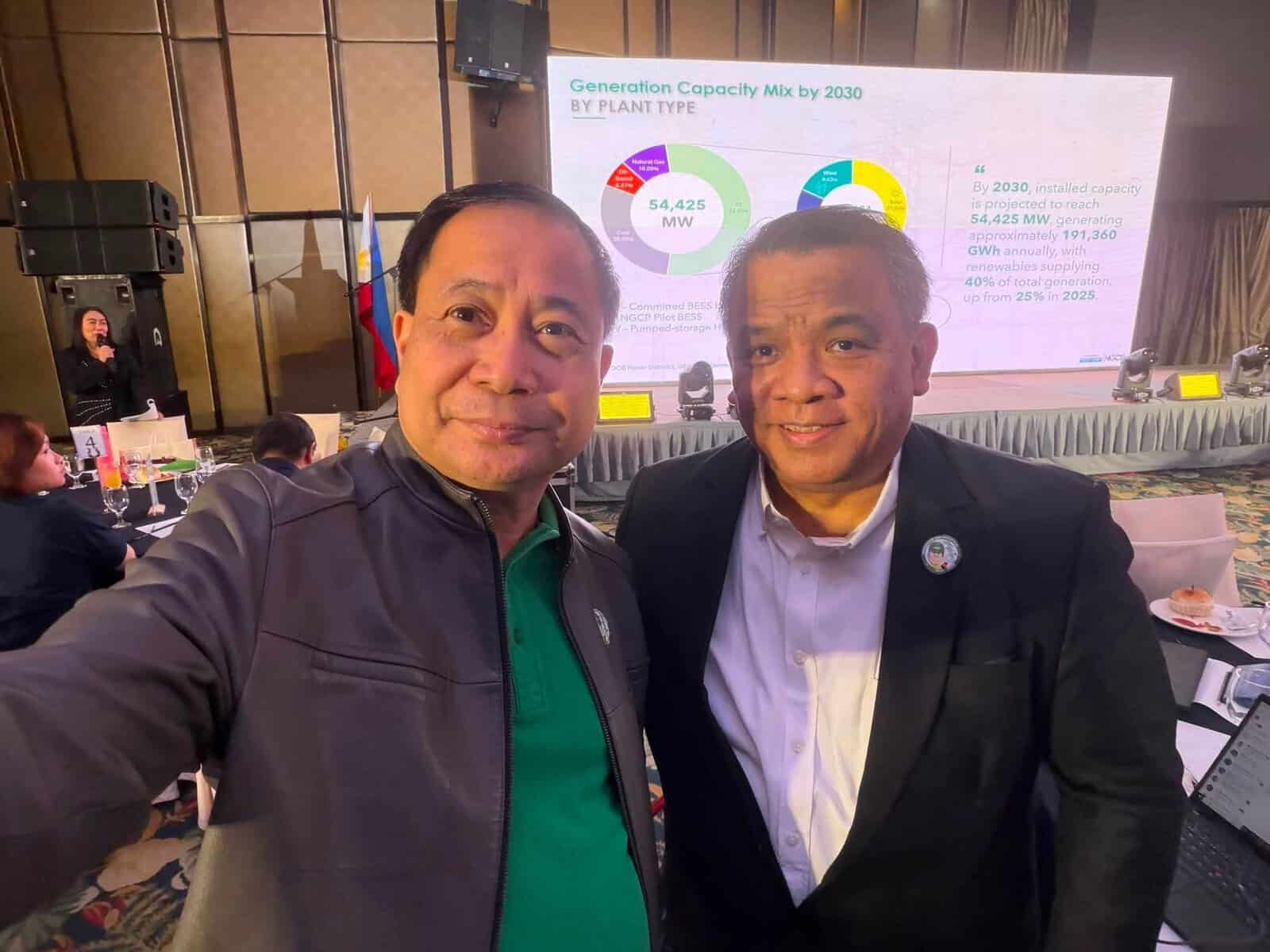
NGCP’s presentation shows nearly 5,000 megawatts (MW) of proposed Mindanao generation projects with completed System Impact Studies (SIS), including more than 3,300 MW of solar.
An SIS determines whether a proposed generating facility can be connected safely to the grid and what transmission improvements may be required.
Solar presents another challenge because it is a Variable Renewable Energy (VRE) source. Its production changes depending on sunlight. Solar plants are also generally Inverter-Based Resources (IBRs), which interact with the grid differently from traditional synchronous generators.
This explains one of the more intimidating acronyms in NGCP’s presentation: GFM-STATCOM.
GFM means Grid-Forming, while STATCOM means Static Synchronous Compensator. Put simply, it is sophisticated equipment that can strengthen the grid and provide rapid voltage support. As renewable-energy penetration increases, technologies of this kind become increasingly important in maintaining voltage, frequency and overall system stability.
Another technology is BESS, or Battery Energy Storage System. Batteries can absorb electricity when supply is abundant and discharge it when needed. Depending on their configuration, they can also provide reserves, frequency regulation and other grid-support services.
These technologies are necessary. But technology alone does not answer the bigger issue.


Will the infrastructure arrive on time?
NGCP’s plans include thousands of additional circuit-kilometers of transmission lines, new substations and substantial additional transformer capacity for Mindanao toward 2050. Some important projects, however, stretch well into the 2030s and even later.
Meanwhile, power investments do not necessarily wait for transmission planning cycles.
Solar farms can be developed relatively quickly. Industrial estates, economic zones, data centers, mining and mineral-processing facilities and large manufacturing plants can create significant new loads.
If these investments materialize earlier than NGCP forecasts, Mindanao could find itself in an ironic situation: plenty of generating capacity but insufficient infrastructure to move the electricity efficiently.
NGCP’s earlier Transmission Development Plan also illustrates the challenge. It identified limited additional transmission headroom in Mindanao, excluding capacity already allocated to committed generating plants, even after completion of the Mindanao-Visayas Interconnection Project.
That interconnection itself is an enormous opportunity.
Mindanao is no longer an electrically isolated grid. Electricity can now move between Mindanao and the Visayas and, through the interconnected national system, ultimately across the country’s three major grids.
But interconnection is only as useful as the capacity available to move electricity through it. NGCP has plans to substantially increase the transfer capability between Mindanao and the Visayas.
This raises a legitimate question: Can the expansion be accelerated?
If Mindanao develops substantial renewable and conventional generation surpluses, stronger interconnection capacity could allow electricity produced here to serve demand elsewhere. Conversely, Mindanao could draw electricity from the other grids during shortages or major generation outages.
Transmission therefore becomes economic infrastructure, just like ports, expressways and telecommunications networks.
This is where regulators must also become more demanding.
The Energy Regulatory Commission (ERC) must ensure that transmission projects are necessary, reasonably costed and delivered on schedule. Consumers ultimately pay for approved transmission investments through electricity charges. Delayed infrastructure hurts consumers and investors, but unnecessary or excessively costly infrastructure can also burden consumers.
Mindanao stakeholders should therefore ask NGCP several straightforward questions.
How much generation is waiting to connect? Which transmission corridors are approaching their limits? Which projects can be accelerated? How much renewable generation could potentially be curtailed because of transmission constraints? And how much will the proposed expansion ultimately cost electricity consumers?
There is another important question. NGCP’s planning horizon extends to 2050, but investors make decisions today. A company deciding whether to locate a factory, data center or processing plant in Mindanao will be concerned not merely with projected capacity 10 or 20 years from now, but with whether dependable electricity can be delivered when the investment becomes operational.
The issue is not whether Mindanao needs GFM-STATCOMs, BESS, stronger substations and new transmission lines. A modern grid increasingly requires them.
The issue is timing.
Power plants cannot substitute for transmission lines, just as factories cannot substitute for roads and ports.
Mindanao is attracting new generation investments. It is pursuing renewable energy, industrialization and economic zones.
The grid must not arrive after the investments it is supposed to serve.
Sources: National Grid Corporation of the Philippines (NGCP), Transmission Development Plan 2026-2050, Consultation with Mindanao Stakeholders; NGCP Transmission Development Plan 2025-2050; Department of Energy (DOE); Energy Regulatory Commission (ERC).
Photo Credits: NGCP Transmission Development Plan presentation materials, where applicable.
Disclaimer: The views expressed in this column are those of the author and are based on publicly available information and NGCP presentation materials. They do not necessarily reflect the position of any organization with which the author is affiliated.
About the Author: Ray G. Talimio Jr. is a CPA, economist, tax advisor, columnist and business consultant. He is a Past President and Past Chairman of the Cagayan de Oro Chamber of Commerce and Industry, former Co-Chair of the Regional Development Council-X Economic Development Committee, former Chairman of the Micro, Small and Medium Enterprise Development Council of Misamis Oriental and Cagayan de Oro, former Chairman of BIMP-EAGA Northern Mindanao, and a member of the Association of Certified Public Accountants in Public Practice (ACPAPP).
###