
Gold, power, and fractures in Barobo:
By CHRIS V. PANGANIBAN
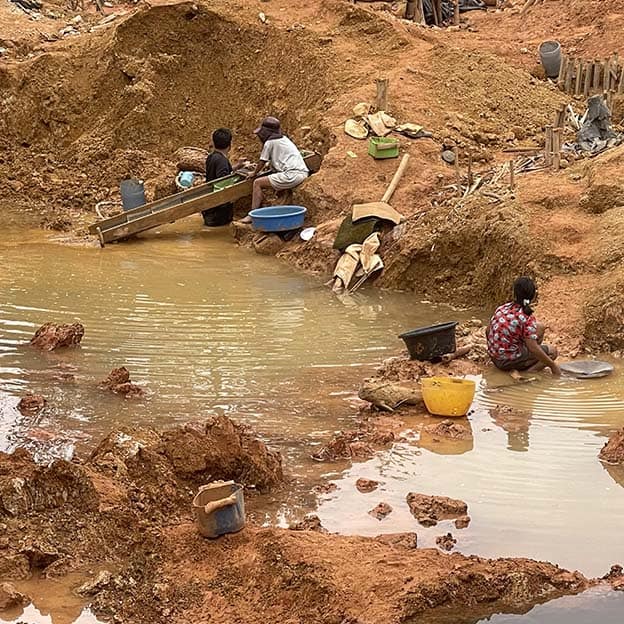
BAROBO, Surigao del Sur — Behind the recent anti-illegal mining raid in this upland town lies a deeper conflict that has shaped local governance, triggered violence, and drawn national security attention: the rapid expansion of unregulated gold extraction operations and the struggle over who controls them.
Mayor Ronnie Martizano has publicly questioned the conduct of a recent enforcement operation in two barangays, citing lack of coordination with the municipal government. But the dispute is only the latest flashpoint in a long-running struggle over small-scale gold panning, mechanized extraction, and alleged organized mining operations that have reshaped parts of Barobo’s upland communities.
In an interview with the Inquirer, Martizano said he was “disgusted” by how the raid was carried out, although he has yet to issue a full statement while attending to a family medical emergency. The mayor had earlier allowed limited small-scale gold panning and sluicing in Barangay Bahi as a livelihood measure while the municipality awaited approval of its Minahang Bayan application from the Mines and Geosciences Bureau (MGB).
But that regulatory gray zone—where livelihood mining, environmental enforcement, and large-scale extraction overlap—has become the center of escalating tensions.
From livelihood mining to enforcement conflict
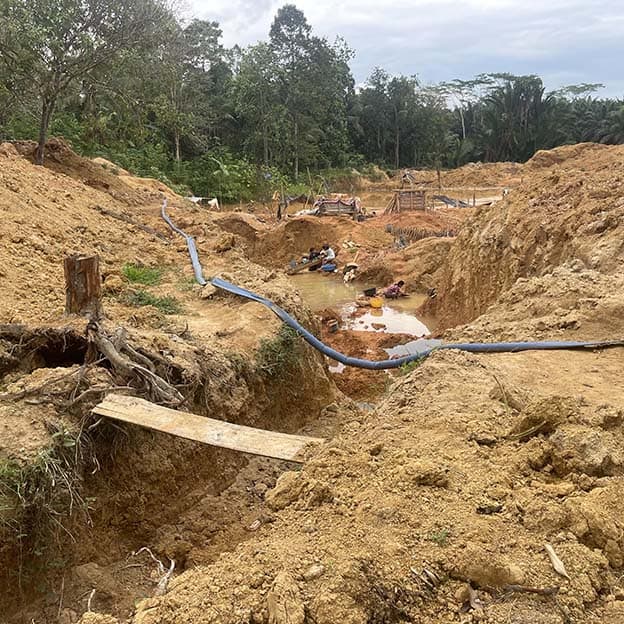
Local officials say small-scale mining in Barobo initially operated under informal tolerance while regulatory processes were ongoing. However, over time, the use of heavy equipment and the expansion of extraction sites into forest and river-adjacent areas triggered enforcement actions by national agencies.
Municipal Environment and Natural Resources Officer Danilo Joseph Galigao said the recent raid was conducted without prior coordination with the local government, with authorities arriving on-site before municipal officials were informed.
Barobo police chief Maj. Andrew Lupian confirmed that even local police units were notified only after the operation had already begun.
The joint operation by police and environmental enforcement agencies led to the arrest of three individuals and the seizure of more than P7.1 million worth of equipment, including a Volvo backhoe, pumps, chainsaws, hoses, and mining tools. Authorities said the suspects were caught extracting mineral resources without permits.
But beyond the confiscations, the operation has reopened questions about enforcement coordination, local authority participation, and the blurred boundary between legal small-scale mining and illegal large-scale extraction.
Violence, allegations, and a turning point
The tensions in Barobo escalated sharply last year after Mayor Martizano survived an ambush that investigators later linked to his intensified crackdown on large-scale mining operations in upland barangays.
While full case details have not been publicly released, the incident marked a turning point in the municipality’s security posture and prompted increased monitoring of suspected organized mining activities.
In response, national authorities established a multi-agency task force under the Presidential Anti-Organized Crime Commission (PAOCC), bringing together law enforcement units and environmental agencies to address reports of coordinated mining operations allegedly involving heavy equipment and outside financing.
Security officials described the initiative as part of a broader effort to dismantle organized networks operating beyond the scope of traditional small-scale mining regulation.
Environmental alarms reach downstream communities
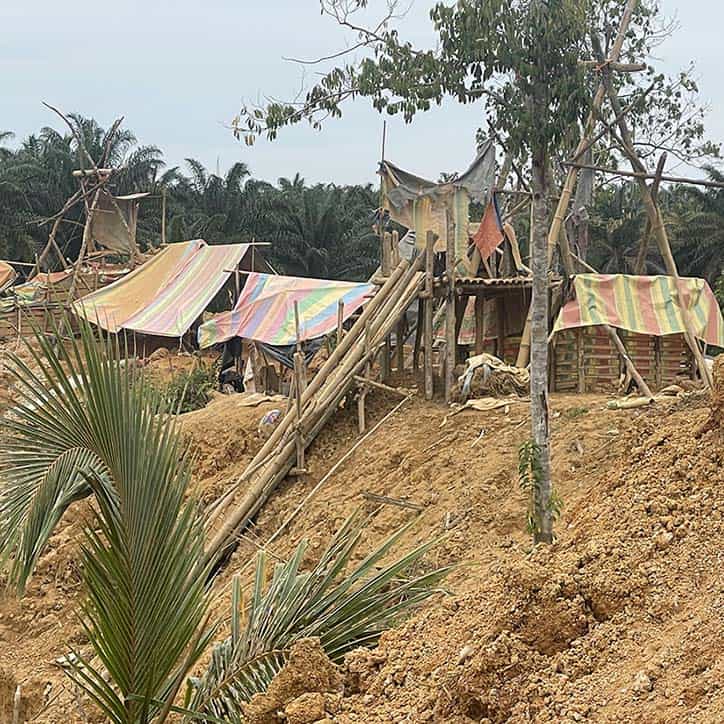
The mining dispute is not confined to Barobo. During early task force coordination meetings, officials flagged growing environmental concerns over river degradation linked to sedimentation and waste from mining sites.
Officials from neighboring Hinatuan raised alarms that waterways connected to the town were being affected, warning of potential long-term damage to one of the region’s most sensitive tourism assets—the Hinatuan Enchanted River.
The concern underscored a growing regional fear: that unchecked extraction in upland areas could translate into irreversible ecological damage downstream, affecting both biodiversity and tourism-dependent livelihoods.
Conflicting narratives on the ground
As enforcement intensifies, competing narratives have emerged.
Municipal officials argue that lack of coordination between national agencies and the local government has fueled confusion and public distrust. Galigao said the mayor had previously pushed for stricter controls on heavy equipment while maintaining regulated small-scale livelihood mining pending formal approval of a Minahang Bayan zone.
On the other hand, police and environmental enforcement units maintain that operations are based on verified intelligence reports of illegal extraction activities and are conducted within proper coordination channels.
Police Maj. Michael John Sentinta of the 1301st Maneuver Company denied allegations of misconduct during the raid, including claims that personal belongings were confiscated. He challenged critics to pursue formal legal complaints if they believe violations occurred.
A contested crackdown with no clear end
PRO13 officials say the operation is part of continuing efforts to suppress illegal mining in Caraga and protect watershed areas. Brig. Gen. Marcial Mariano P. Magistrado IV emphasized sustained inter-agency cooperation in dismantling unauthorized extraction activities.
Yet on the ground, Barobo remains a contested space—where livelihood, environmental regulation, political authority, and security concerns intersect.
Maj. Lupian noted that additional individuals arrested during the operation have been subjected to inquest proceedings before prosecutors.
For now, the questions persist: who defines what counts as “small-scale livelihood mining” in a resource-rich but loosely regulated landscape—and who bears responsibility when enforcement collides with local governance and long-standing economic survival?
In Barobo, the answers remain as unsettled as the riverbeds where the gold is taken.