


Plundered Paradise: The Rise and Reign of Illegal Loggers and Miners
Kim’s Dream Orlan Ravanera
For generations, Cagayan de Oro was known as a land blessed by nature, a place of majestic mountains, fertile valleys, abundant rivers, and precious biodiversity. It was a region defined by ecological richness and natural beauty. Yet what happened over several decades in Northern Mindanao is not merely an environmental story; it is a tragic chronicle of greed, corruption, impunity, and the long-term consequences of choosing profit over the common good. This article revisits those painful events not to reopen old wounds, but to highlight urgent lessons for a country still grappling with environmental destruction and a governance system that too often fails to defend the public interest.
Illegal logging in Northern Mindanao intensified during the 1960s and continued, unchecked, through the 1970s, 1980s, and 1990s. What took place was not petty theft; it was a massive, industrial-scale operation involving six major companies: VICMAR, TIPI, DACUDAO, Valderama & Sons, Roa & Sons, and Remedios Fortich. These companies operated with near-total freedom because they were protected by politicians, tolerated by corrupted agencies, and guarded by private armed groups. Every night, from midnight until dawn, an estimated fifty ten-wheeler trucks roared through Cagayan de Oro’s highways carrying illegally harvested timber. These logs were extracted from highly restricted zones, slopes steeper than 50 percent, elevations above 1,000 meters, and protected watershed reserves that were essential for stabilizing soil, regulating river flow, and preventing floods.
Instead of being hidden, the plunder was done openly. Armed escorts with AK-47s and Armalites accompanied the trucks. Government checkpoints, which should have stopped the operations, became toll stations where each truck paid around ₱5,000 to pass unobstructed. It was a business enterprise protected as fiercely as any cartel. The loss inflicted upon the region was immeasurable. Many of the stolen logs came from centuries-old hardwood species Mahogany, Red Lauan, Almaciga, and Narra. These were not simply trees; they were ecological pillars supporting entire forest ecosystems. Once destroyed, no human generation could replace them. The syndicates became so powerful that they built their own checkpoints, equipped with machine guns, blocking even legitimate authorities from entering the forest. Agencies mandated to protect the environment were intimidated into silence or influenced by corruption.
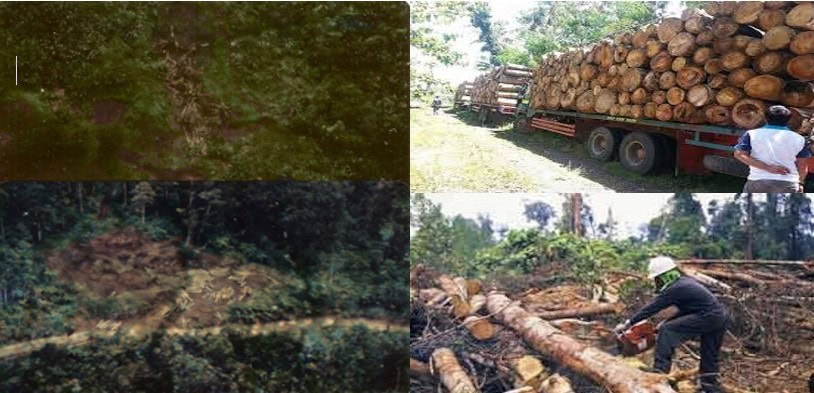
As Chairman of Task Force Macajalar, I witnessed how deeply rooted these operations were. During an aerial surveillance mission with an Air Force pilot, we spotted a fully operational sawmill hidden beneath the forest canopy inside a legally protected zone. Yet the pilot refused to fly closer, fearing the aircraft could be fired upon. This moment revealed the grim reality: logging syndicates had gained enough power to threaten even military personnel. By the early 1990s, it was evident that legal channels alone could not stop the destruction. Law enforcement agencies were compromised, silenced, or overpowered. The forests were dying, and with them, the ecological security of Cagayan de Oro.
In 1991, ordinary citizens, farmers, church groups, students, professionals, urban residents, and elders made a historic decision: they would stand against the destruction themselves. When the government failed, the people stepped forward. Human barricades were organized across vital highways to block logging trucks from leaving the mountains. This movement was not ideological; it was moral. It was driven by a profound responsibility to protect the land, rivers, and future generations. At one blockade, three logging trucks owned by the late 2nd Lt. Modesto Eleazar were seized and turned over to the Department of Environment and Natural Resources (DENR). The next day, they were quietly released proof of a system working not for the people, but for violators.
Still, the citizens did not surrender.
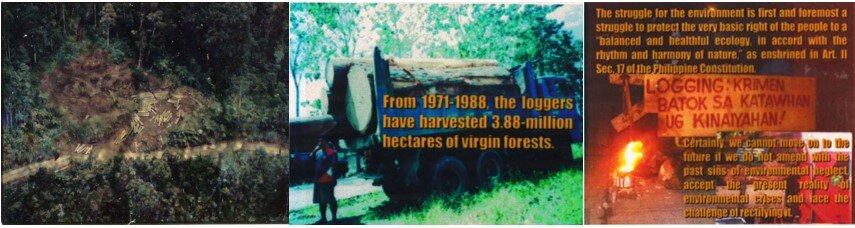
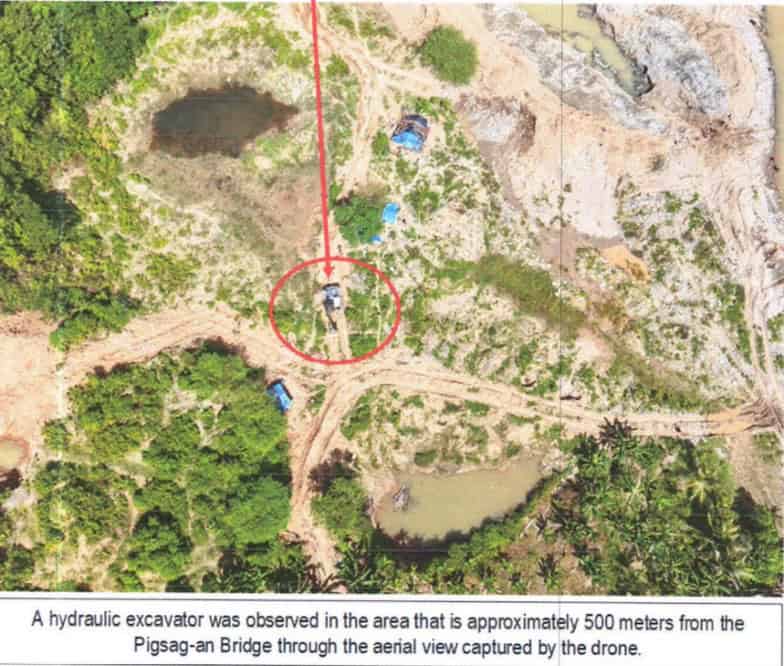
For ten long years, Cagayanons maintained the barricades. They faced threats, harassment, and danger, but their persistence eventually caught national attention. Then, President Joseph Estrada personally visited the barricade site at Upper Carmen in front of SEARSOLIN. After hearing the testimonies and reviewing the evidence, he ordered DENR Secretary Cerilles to stop the six major logging companies. This was a victory born from courage, sacrifice, and unity. But the struggle was far from over. When illegal logging finally slowed, another destructive activity took its place: large-scale illegal mining. Areas such as Tumpagon, Pigsag-an, Bisigan, Nangkaon Opol, Dansolihon, and Iligan became hotspots for unregulated extraction, often driven by foreign operators, particularly Chinese and Korean nationals. Many arrived as tourists but proceeded to establish full-scale mining ventures. Heavy equipment bulldozers, backhoes, and drilling machines, was brought into the country, and mining sites expanded rapidly. The operations polluted rivers, destabilized mountains, and exposed entire communities to landslides, flooding, and toxic contamination.
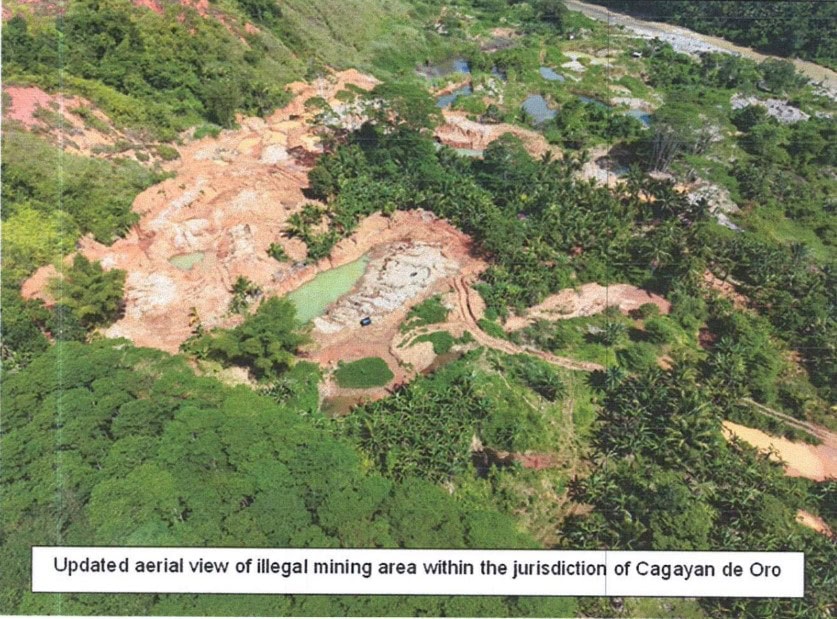
In 2014, as Chairman of Task Force Kinaiyahan, a multi-agency body created under a Writ of Kalikasan, we conducted a major operation in Barangay Tumpagon. Three Chinese nationals were arrested; none had working permits. The camp also contained firearms, grenades, shabu, drug paraphernalia, and heavy equipment operating dangerously near the river system. Yet despite the seriousness of these crimes, the individuals were released after one week. Worse, a local politician escorted them back to China, guaranteeing their safety and absolving them of accountability.
This incident exposed a painful truth: Environmental laws mean little when political protection shields violators. Illegal mining later spread to Opol, Iligan, and other municipalities. The ecological wounds left by illegal logging grew deeper as heavy machinery carved through mountains and polluted rivers. The environmental destruction in Cagayan de Oro must be viewed within a larger national and global context. When forests vanish:
- Watersheds destabilize, creating droughts or sudden flash floods
- Rivers accumulate silt and debris
- Biodiversity collapses
- Soil loosens, increases erosion, and accelerates landslides
- Climate change intensifies every vulnerability.
The tragedy of Typhoon Sendong in 2011, which claimed thousands of lives, was not merely a natural disaster. It was the culmination of decades of unchecked logging, mining, and government neglect. Denuded mountains could no longer absorb rainfall. Rivers choked by silt overflowed with deadly force. The city suffered the consequences of crimes committed long before the storm arrived. When nature is abused, it eventually responds with overwhelming power.
The story of Cagayan de Oro offers powerful lessons for the Philippines:
First, Ecological collapse happens gradually, then all at once. Decades of abuse accumulate until a single event triggers disaster. Second, Corruption is the engine of environmental destruction. Without political protection, illegal operations cannot survive. Second, Impunity destroys not only forests but entire communities. When violators go unpunished, people pay the price. Third, Environmental victories are fragile. Without vigilance, exploitation resurfaces in different forms. Fifth, People’s courage is stronger than political corruption. The human barricades proved that collective action can force change.
Despite everything, hope is not lost. The human barricades of the 1990s stand as a testament to what ordinary citizens can achieve when united by conscience and truth. The land can still heal. Rivers can recover. Forests can regrow. But healing requires honest governance, strong institutions, and a community willing to protect what remains. Our responsibility is not only to the present generation but to all those who will inherit the consequences of our actions.
Cagayan de Oro has suffered deeply, but its story is not yet finished.
Whether it remains a land of loss or becomes a land of renewal depends on all of us. To God be the glory.
###