

By Chris V. Panganiban
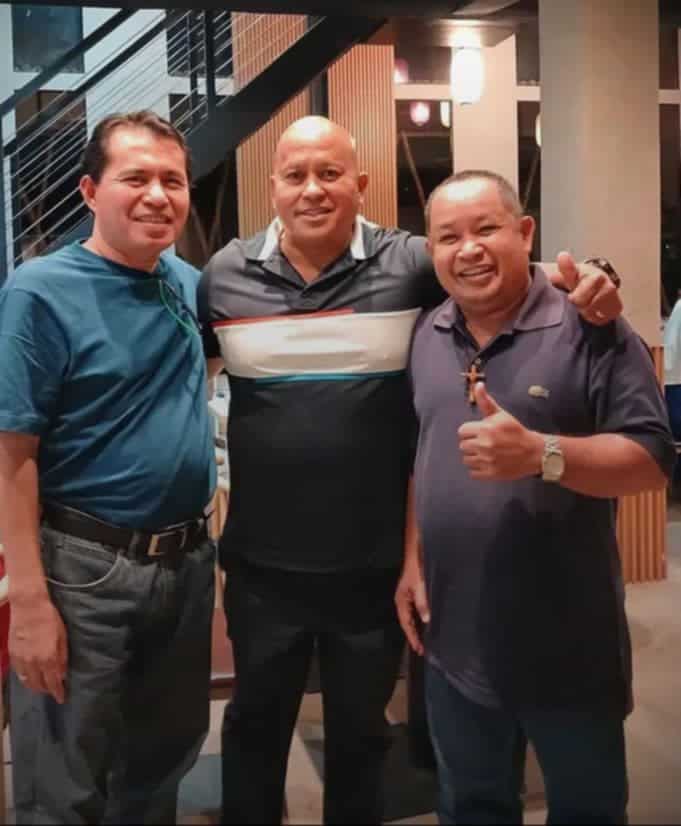
SAN FRANCISCO, Agusan del Sur — Senator Ronaldo “Bato” de la Rosa, a former chief of the Philippine National Police (PNP), was “used” by former President Rodrigo Duterte, according to Rex Linao, his former instructor and longtime acquaintance.
Linao, Executive Director of the Foundation for the Development of Agusanons, Inc. (FDAI), described de la Rosa as a good person whose career illustrates how public officials can be leveraged for political purposes, a concept he calls gamitan.
“My basic point is Bato is a good person,” Linao wrote in a social media post. “But he was used by Digong. The TokHang program, his brainchild—‘Knock and Plead’—was a good idea, meant to help communities. But it deteriorated into something bloody. He allowed himself to be used in exchange for position. His being chief of the PNP, then senator, were the rewards. That’s gamitan: he was leveraged for a purpose beyond himself, and it came with both opportunity and compromise.”
Linao’s insights come from decades of personal and professional interaction with de la Rosa. Over 25 years ago, they were classmates in a PhD program. At the time, de la Rosa served in the Presidential Anti-Organized Crime Task Force, while Linao led an environmental consultancy and lectured in graduate school. Their academic discussions and shared notes laid the foundation of a lasting professional relationship.
Years later, de la Rosa became Linao’s student in the Public Safety Officers Senior Executive Course (PSOSEC), an eight-month training program in Davao City for senior police officers preparing for strategic management and command roles. Linao recalled that de la Rosa consistently attended sessions and actively participated in exercises, showing dedication to the coursework.
After completing the program, de la Rosa led the TokHang initiative.
De la Rosa’s career continued upward as he became PNP chief and later successfully ran for the Senate, where he remains an incumbent. Linao said this trajectory reflects the strategic use of public officials in politics, demonstrating both opportunity and ethical compromise.
“In every situation, there is a use for one’s position, and it can carry both opportunity and compromise,” Linao said.
The experiences of Linao and de la Rosa highlight the complex realities of public service and law enforcement in Mindanao, illustrating how personal integrity, leadership, and politics intersect in ways that shape both careers and communities.
###