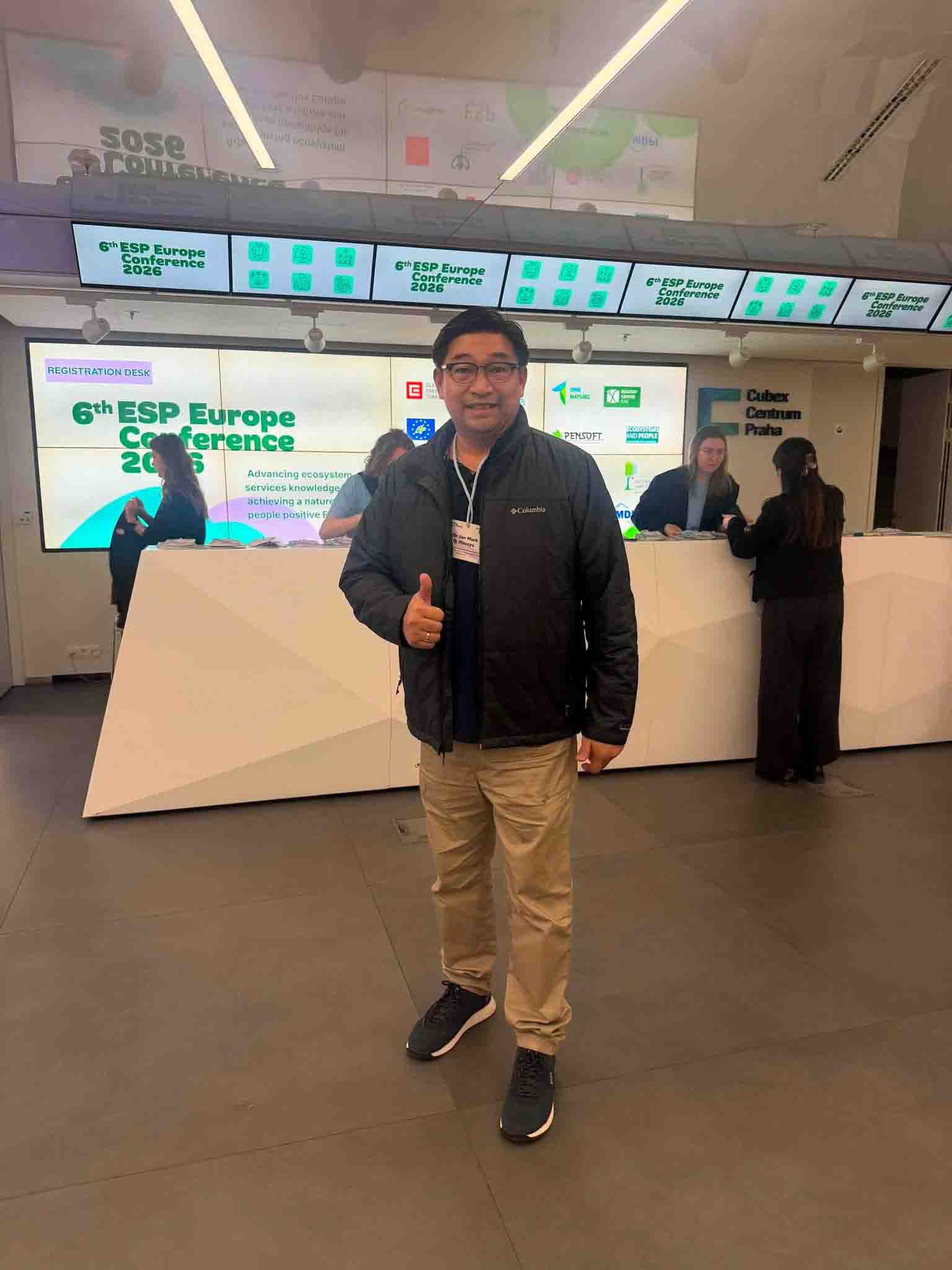
CAGAYAN DE ORO CITY – Dr. Ian Mark Q. Nacaya, governance reform practitioner, policy strategist, and former Majority Floor Leader of the Cagayan de Oro City Council, will once again represent the Philippines in an international scientific gathering as a Research Abstract Presenter during the 6th ESP Europe Conference to be held on May 18-22, 2026 in Prague, Czechia.
The conference, organized by the Ecosystem Services Partnership (ESP), carries the theme: “Advancing ecosystem services knowledge for achieving a nature and people positive Europe.” It gathers scientists, policymakers, governance practitioners, environmental planners, and development leaders from different parts of the world to discuss ecosystem services, climate resilience, governance transformation, biodiversity protection, and sustainable development pathways.
Dr. Nacaya’s accepted research abstract is titled:
“Ecosystem-Based Adaptation as Adaptive Infrastructure: Reframing Disaster Recovery Governance in Climate-Vulnerable River Basin Systems.”
The study highlights the growing importance of ecosystem-based adaptation (EbA) as part of adaptive infrastructure in disaster-prone communities, particularly in vulnerable river basin systems exposed to climate risks, flooding, environmental degradation, and socio-economic instability. The paper argues that ecosystems themselves, such as watersheds, forests, rivers, wetlands, and natural buffers, must no longer be viewed merely as environmental assets, but as living infrastructures essential for disaster resilience, recovery governance, and long-term community survival.
The research also seeks to reframe disaster recovery governance by emphasizing that recovery should not only focus on rebuilding damaged structures, but also on restoring ecological systems that protect communities and sustain livelihoods. Through this perspective, governance institutions are encouraged to integrate ecological resilience, community participation, and adaptive planning into disaster recovery policies and local development systems.
For Dr. Nacaya, the Prague conference marks another milestone in his continuing engagement with global ecosystem governance discussions.
This will already be his second time to serve as a speaker and presenter in an ESP international conference.
His first participation was during the ESP10 World Conference held in Hannover, Germany in 2019, where he presented governance innovations from the Philippines, particularly the ecological services and environmental governance initiatives he authored and supported during his tenure as City Councilor of Cagayan de Oro.
Among the significant measures associated with his environmental governance work was the advancement of ecological services-oriented local policies, including ecosystem protection and environmental rehabilitation mechanisms that promoted community participation and sustainability-oriented governance.
His return to the ESP global platform in Prague reflects the continuing relevance of local governance experiences from the Philippines in addressing global concerns on climate adaptation, ecosystem restoration, and resilient development.
Dr. Nacaya emphasized that local governments, especially those situated along vulnerable river basins and climate-sensitive areas, must begin viewing ecosystems as part of their critical infrastructure systems.
“Infrastructure is not limited to roads, bridges, and buildings. Forests, watersheds, rivers, wetlands, and biodiversity systems are also infrastructures that protect human settlements, livelihoods, and future generations,” he shared.
He further noted that climate-vulnerable communities in developing countries like the Philippines require governance models that bridge ecological protection, disaster recovery, and sustainable development planning.
The ESP Europe 2026 Conference will focus on several major themes, including ecosystem governance in changing political landscapes, ecosystem knowledge for a people-and-nature-positive future, climate and nature-based solutions for resilience, equity and justice in ecosystem services, and sustainable governance transitions.
Dr. Nacaya’s participation not only highlights Filipino contributions to global environmental governance discussions, but also demonstrates how local legislative experience, public sector leadership, and community-centered governance can contribute to international conversations on resilience and sustainability.
As climate change continues to reshape governance priorities across the world, his participation serves as a reminder that local innovations and ecosystem-based governance approaches from cities and communities in the Philippines can contribute meaningfully to global solutions.
###