CAGAYAN DE ORO CITY (PIA) — The Department of Agriculture in Northern Mindanao (DA-10) is expanding climate resilience measures to help farmers prepare for the possible effects of El Niño through the prepositioning of farm inputs, deployment of agricultural machinery, promotion of diversified farming systems, and establishment of food processing facilities.
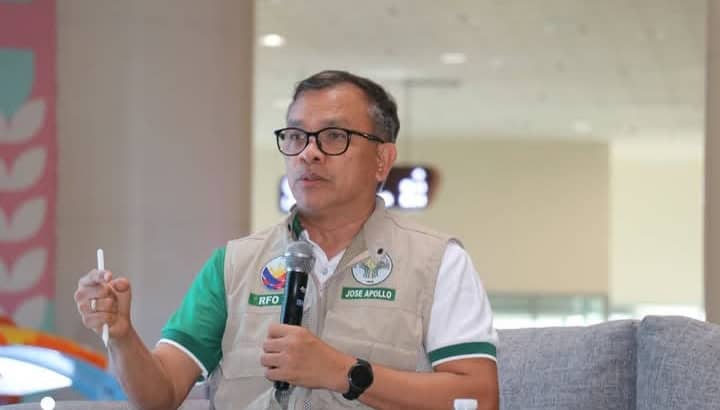
During the Kapihan sa PIA, DA-10 Regional Executive Director Jose Apollo Y. Pacamalan said the agency works closely with the Philippine Atmospheric, Geophysical and Astronomical Services Administration (PAGASA) to translate weather forecasts into agricultural interventions before disasters affect farming communities.
Pacamalan said the regional office monitors weather advisories and uses ground validation and drone mapping to determine the extent of damage from typhoons, floods, and drought.
“Within 24 hours after a weather disturbance, we conduct ground-truthing and drone mapping to determine the exact number of affected hectares, identify the barangays and sitios involved, and verify the farmers who need assistance,” he said.
He said the information enables the department to deliver assistance and recovery interventions more quickly.
Among the agency’s preparedness measures are the prepositioning of seeds and fertilizers in areas forecast to be affected by typhoons, deployment of farm machinery for land preparation after floods, and coordination with the National Irrigation Administration to clear irrigation canals in flood-prone communities.
Pacamalan recalled that after a previous typhoon affected Bukidnon, DA-10 immediately deployed land-preparation equipment to help farmers resume rice planting after floodwaters subsided.
For areas vulnerable to drought, the department has prepositioned planting materials for climate-resilient crops such as sweet potato and cassava in municipalities surrounding Mt. Kitanglad, Mt. Balatukan, and Mt. Kalatungan, where rainfall remains suitable for planting.
“We encourage farmers not to rely on a single commodity. Diversifying crops reduces production risks and ensures that families still have food and income even during extreme weather conditions,” Pacamalan said.
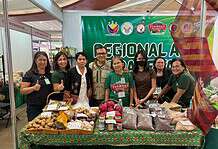
The regional office is also promoting food processing facilities to reduce postharvest losses by converting surplus harvests, including corn, squash, sweet potato, and sayote, into products such as flour and powder with a longer shelf life.
Pacamalan said processed food products can supplement food packs distributed by agencies such as the Department of Social Welfare and Development and the Office of Civil Defense during disaster response operations.
“We need a collective effort to prepare, store, and ensure food supply, especially for vulnerable communities during worst-case scenarios,” he said.
Beyond emergency preparedness, DA-10 continues to promote diversified farming systems, agroforestry, contour farming, and soil and water conservation measures to improve agricultural resilience and reduce soil erosion, particularly in sloping areas.
The agency maintains demonstration farms in Claveria, Misamis Oriental, and in Lantapan and San Fernando, Bukidnon, where farmers can observe contour farming and agroforestry systems integrating rice, corn, coffee, cacao, fruit trees, and other crops.
Pacamalan also said DA-10 has begun incorporating heat index and relative humidity data, along with rainfall forecasts, in planning agricultural interventions to address the effects of prolonged heat on crop productivity.
He encouraged local government units and farmers to work with the department in adopting climate-resilient farming practices.
“This is not something the government can prepare for alone. It requires the participation of local governments and farmers to adopt diversified farming, protect our watersheds, and implement soil and water conservation measures,” Pacamalan added. (JAKA/PIA-10)