
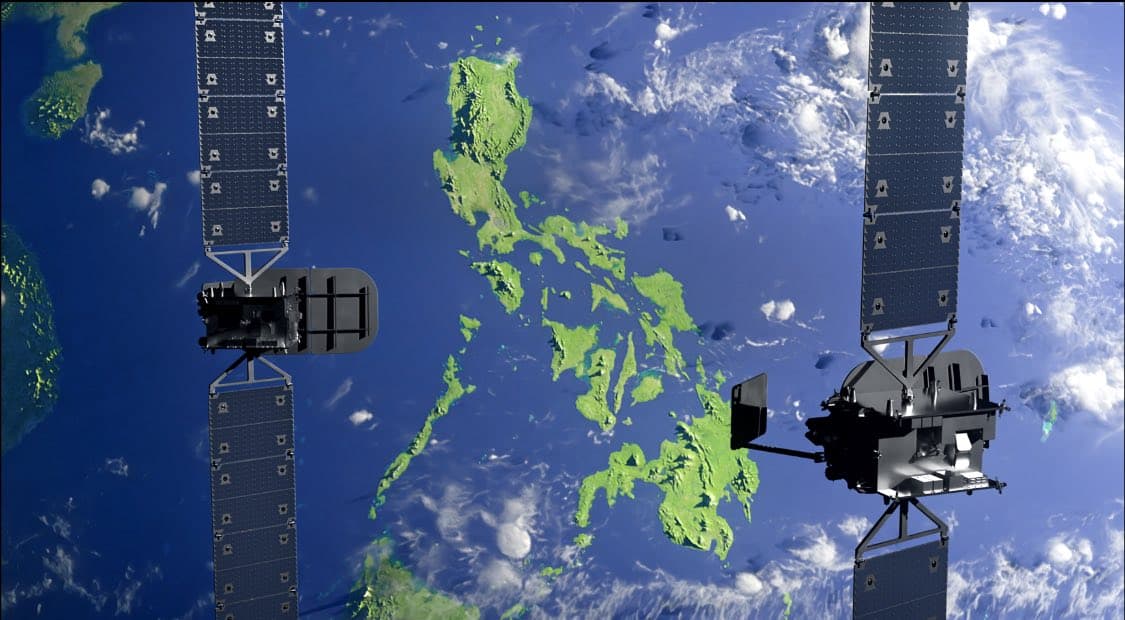
Part 1: Why a Dedicated Philippine Satellite Matters
From the Sidelines
By: Ray G. Talimio Jr.
“Why Agila is not just about internet speed but about resilience, sovereignty, and credibility”
The naming of Agila as the Philippines’ dedicated satellite was not a symbolic act. It was a strategic signal that connectivity, like energy and transport, has become a core element of national resilience. When President Ferdinand “Bongbong” Marcos Jr. publicly named Agila during the Astranis-Orbits satellite launch ceremonies in San Francisco, California, USA, in November 2023, the message was clear. The Philippines was asserting the need for dedicated satellite capacity rather than indefinite reliance on shared platforms serving multiple countries.
For an archipelagic country exposed to typhoons, earthquakes, and submarine cable disruptions, satellite connectivity is not a luxury. It is a continuity layer. Agila is positioned to serve geographically isolated and disadvantaged areas, support disaster response when terrestrial networks fail, and provide redundancy for critical government communications. These are practical needs, not abstract goals. Recent years have repeatedly shown how vulnerable ground-based systems can be.

The technical discussion matters. Satellite performance is shaped by operating frequency bands. Ku band offers a balance between capacity and weather resilience, making it suitable for mission-critical applications such as government connectivity, aviation support systems, and disaster response. Ka band delivers significantly higher throughput but is more vulnerable to rain fade, a critical factor in a tropical climate. The practical approach is not Ku band versus Ka band, but strategic deployment of both. Ku band supports always-on services where availability is paramount, while Ka band supports high-capacity broadband where advanced mitigation and redundancy are feasible. A hybrid Ku and Ka architecture allows Agila to balance speed and reliability under Philippine conditions.

Beyond engineering, Agila carries economic implications. Investors assess not only incentives but infrastructure reliability. Digital disruptions translate into operational risk, higher insurance costs, and reduced competitiveness. A credible satellite backbone strengthens the country’s value proposition for foreign direct investment, particularly in shared services, logistics, tourism corridors, and export manufacturing located outside major urban centers.
Agila must therefore be viewed as part of a diversified connectivity portfolio, complementing fiber networks, towers, and submarine cables. Its value lies not in replacing terrestrial systems, but in reinforcing them. The real policy question is not whether the Philippines needs Agila, but how the project is structured, governed, and integrated into national development planning.

Sources:Presidential Communications Office releases on the Astranis-Orbits satellite launch and Agila naming, November 2023.
Public briefings on national satellite connectivity and disaster resilience.
General satellite communications engineering references on Ku band and Ka band performance in tropical environments.
Photo Credits: Astranis Space Technologies official images related to MicroGEO satellite missions and launch activities.
Presidential Communications Office archival photos from the Agila satellite naming events.
Disclaimer: This article is based on publicly available records and is intended for public policy commentary.
It does not constitute legal, regulatory, or investment advice.
About the Author: Ray G. Talimio Jr. is a Certified Public Accountant and veteran columnist on governance, economic policy, and public accountability. He is Past President and Past Chairman of the Board of the Cagayan de Oro Chamber of Commerce and Industry Foundation Inc. He served as Co-Chairman of the Economic Development Committee of the Regional Development Council Region X and as Chairman of the MSME Development Council of Misamis Oriental and Cagayan de Oro City from 2022 to 2025. He currently serves as a National Officer of the Philippine Institute of Certified Public Accountants after having served as its Past Senior Regional Director and Past Chapter President. He served as BIMP-EAGA Chairperson from 2023 to 2025. He is a staunch advocate of MSME development, regional economic integration, good governance, and public private partnerships.