
By CHRIS V. PANGANIBAN
SAN FRANCISCO, Agusan del Sur — The Northern Davao Electric Cooperative (Nordeco) can still turn to the courts for a temporary restraining order (TRO) while mounting a peaceful defense of its assets against the planned takeover by the Aboitiz-led Davao Light and Power Company (DLPC), a cooperative official said Tuesday.
Lawyer Jordanne Chan-Antonio, general manager of the Zamboanga del Norte Electric Cooperative, said Nordeco has yet to exhaust all legal remedies despite ongoing efforts to transition its operations in Davao del Norte and Davao de Oro to the private utility.
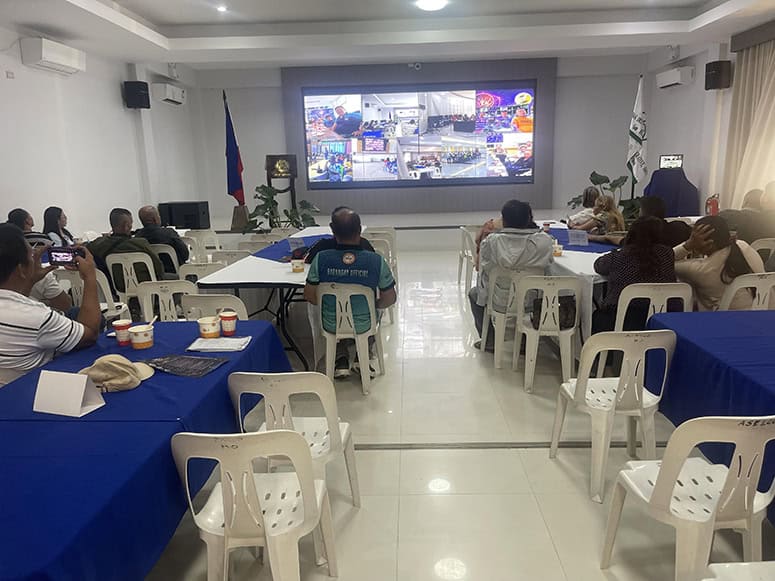
“Going to court for a TRO remains an option. They can also peacefully hold their ground and protect their assets,” Antonio told participants of the Member-Consumer-Owners (MCO) Virtual Summit, which was organized by the Association of Mindanao Electric Cooperatives and gathered hundreds of stakeholders from 21 cooperatives across Mindanao.
Nordeco has called on its member-consumer-owners (MCOs) to remain calm and cooperative amid ongoing confusion caused by the actions of DLPC.
In an advisory dated March 12, 2026, the cooperative said DLPC’s recent activities have created uncertainty, particularly among its members, following the denial of Nordeco’s motions for reconsideration by the Regional Trial Courts Branch 2 in Tagum City and Branch 4 in Panabo City, which were received electronically on March 11.
Nordeco asked for the continued understanding and cooperation of its members while the cooperative undertakes all necessary legal measures to ensure the uninterrupted and orderly delivery of electricity.
The advisory reminded members to continue supporting Nordeco by paying monthly obligations and refraining from unauthorized installations, reconnections, or tampering with meters or other equipment outside the cooperative’s supervision.
The summit reflected growing concern over what many described as a test case for the future of electric cooperatives in the region. Antonio urged Nordeco members and stakeholders to be more assertive. “Let’s make a noise and be proactive,” she said.
Also speaking virtually, Association of Philippine Electric Cooperatives (APEC) party-list Rep. Sergio Dagooc criticized lawmakers in Nordeco’s franchise area for favoring the interests of DLPC over the cooperative’s franchise.
“Franchise is a mix of politics and business, which represents 80 percent, and the remaining 20 percent is for the people’s interest,” Dagooc said.
The lawmaker said DLPC, owned by private interests, is primarily focused on highly urbanized areas such as Tagum City, where it can earn greater profits, unlike the cooperative model which prioritizes underserved communities.
“Cooperatives are not purely profit-driven but community-driven,” he added, citing past cases where DLPC abandoned service in Diwalwal in Monkayo when gold tunnel operations declined, and left Island Garden City of Samal (IGACOS) after finding operations initially unfeasible, only returning later when resorts and industries emerged.
Dagooc and fellow power-sector party-list Rep. Presley de Jesus of the Philippines Rural Electric Cooperatives Association have long contended with vested interests advocating the privatization of electric cooperatives. He said MCOs can counter this by uniting and leveraging the collective strength of an estimated 16 million votes nationwide to influence the election of congressmen and senators.
Dagooc filed House Bill 7006 seeking the renewal of Nordeco’s franchise, set to expire in Davao del Norte and Davao de Oro in 2028 and in IGACOS in 2033.
The current standoff over IGACOS traces back to long-running concerns over power reliability in areas served by Nordeco, which have drawn scrutiny from national agencies and lawmakers over the past decade.
Congress passed Republic Act No. 12144, expanding DLPC’s franchise to include Davao del Norte and Davao de Oro—territories historically served by Nordeco.
Since then, the Energy Regulatory Commission (ERC) and the National Electrification Administration (NEA) have issued guidelines covering asset valuation, system integration, and customer migration, emphasizing the need for stable and efficient power supply.
DLPC, backed by its parent company Aboitiz Power Corporation, maintains that its expansion is government-authorized and aimed at improving service reliability in areas long plagued by outages.
The dispute has intensified in IGACOS, where both parties have issued competing claims over the right to serve consumers. DLPC cited its expanded franchise under RA 12144, a writ of possession issued by a regional trial court, and a provisional Certificate of Public Convenience and Necessity from the ERC as legal grounds to operate.
The company has already started groundwork for the transition, including installing distribution poles and executing power supply agreements.
Nordeco strongly rejected accusations by Mayor Lemuel Reyes that it sabotaged power service in IGACOS.
“These insinuations are baseless and irresponsible,” the cooperative said in a press release. It noted that DLPC blocked Nordeco repair teams responding to outages, with personnel facing police blotters.
“The current power situation in Samal is a direct result of DLPC operations,” Nordeco said, emphasizing its commitment to cooperate in ensuring stable and reliable service.
Nordeco, meanwhile, insists that its franchise remains valid until 2033 and that the Supreme Court ruling cited by DLPC has yet to attain finality due to a pending motion for reconsideration. The cooperative has questioned the writ of possession’s scope and highlighted unresolved motions seeking to suspend enforcement while legal issues are settled.
Efforts to implement the transition have been gradual but contentious, focusing initially on key urban centers like Tagum City, where infrastructure and demand make early takeover feasible. Recent reports of DLPC attempts to assume control have prompted resistance from Nordeco officials and employees, drawing support from other electric cooperatives.
###