
The Tragedy of Environmental Destruction Now Foretold
Kim’s Dream Orlan Ravanera
On December 17, 2011, the cities of Cagayan de Oro and Iligan were struck by what stands as one of the most devastating environmental catastrophes in Philippine history. Typhoon Sendong (Washi) unleashed torrential rains that triggered massive flash floods, killing more than 3,000 people, destroying entire communities, and rendering over 11,000 families homeless in a matter of hours. Rivers overflowed with terrifying speed, sweeping away homes, vehicles, and human lives while people slept, unprepared for the scale of the disaster.
Fourteen years have passed since that tragic night. Yet what is most disturbing is not merely the memory of Sendong, but the reality that the very conditions that caused the disaster remain in place and have, in fact, worsened. The ecological ingredients for another catastrophe are still present, now intensified by massive illegal mining, which many environmental experts describe as the final death blow to the already fragile ecosystems of Northern Mindanao. If these destructive practices continue unchecked, future floods will not only be inevitable but far more deadly.
According to environmental scientists and disaster specialists who have closely studied the region, at least 20,000 people, particularly those living in low-lying and vulnerable areas of Cagayan de Oro, could perish if another Sendong-like event occurs today. This grim prediction forces us to confront a painful but necessary question: Why are we now in greater danger than we were in 2011?
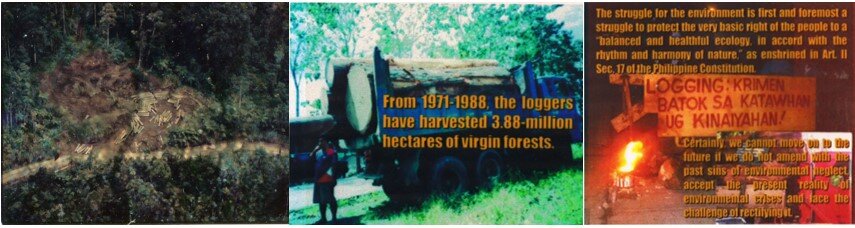
The answer lies in a long history of ignored warnings and deliberate environmental neglect. As early as the year 2000, during the height of grassroots resistance against illegal logging, environmental advocates established a human barricade in the uplands of Upper Carmen, fronting the Manresa Farm area in Cagayan de Oro. This was not an act of protest for publicity; it was a desperate attempt to stop the relentless destruction of the city’s natural defenses.
At that time, 10-wheeler logging trucks, escorted by armed men carrying AK-47s and Armalites, passed through Cagayan de Oro from midnight until dawn. While most Cagay-anons slept, these trucks transported illegally cut logs from the uplands, stripping the mountains bare and leaving the city increasingly exposed to disaster. During this period, then President Joseph Ejercito Estrada personally came to the barricade site to engage in dialogue. He asked a direct question: “Why were we willing to risk our lives to stop these operations?”
In response, we presented clear and disturbing evidence documentation showing approximately 200,000 hectares of denuded forestlands in the uplands of Cagayan de Oro, Bukidnon, and the Lanao provinces. We categorically informed the President that these logging activities were conducted in strictly prohibited zones, including: Areas above 1,000 meters above sea level, steep slopes exceeding 50% gradient, forests containing hardwood species such as Narra, Red Lauan, Mahogany, and Almacega.
These areas are legally protected because they function as nature’s shields absorbing rainfall, stabilizing soil, regulating river flow, and preventing floods and landslides. To log these zones is not merely illegal; it is an invitation to ecological disaster. We issued a clear and scientifically grounded warning: if the denuded uplands were not immediately replanted and rehabilitated, Cagayan de Oro would face catastrophic flooding. We explained that when forests are removed, rainwater no longer seeps into the soil. Instead, it rushes directly into rivers and down toward the city.
In practical terms, we warned that one inch of rainfall falling on the 200,000 hectares of denuded uplands could translate into approximately one meter of floodwater once concentrated in the city’s roughly 3,000-hectare urban center. Ten inches of rain, therefore, could mean ten meters of flooding, a scenario that would overwhelm rivers, bridges, and communities. Instead of a serious public discussion, the warning was met with mockery. The following day, a newspaper headline read: “Ravanera, Crazy Environmentalist, the Prophet of Doom.” No one listened.
At the time, logging companies were earning around ₱360 million per shipment of logs, a staggering amount that fueled corruption and silence. These profits were reportedly shared among law enforcers, checkpoint personnel, political protectors, and even sections of the media, ensuring that environmental crimes continued without accountability.
Worse still, the loggers failed to comply with mandatory reforestation requirements, a clear violation of the Environmental Compliance Certificates (ECCs) issued by the Department of Environment and Natural Resources (DENR). Had these powerful logging firms, Vicmar, TIPI, Dacudao, Roa and Sons, Remedios Fortich, Valderama & sons, among others, fulfilled their legal obligations to replant and restore the forests, the catastrophic impact of Typhoon Sendong could have been prevented, or at least greatly reduced.
This brings us to the most urgent question: Where are we now?
The state of the environment has deteriorated not only in the Philippines but across the globe. Humanity has entered what many scientists describe as a survival phase, marked by accelerating climate change, biodiversity loss, and ecological collapse. Thousands of concerned scientists worldwide have symbolically moved the “Doomsday Clock” to “one minute before midnight,” signaling how close humanity is to irreversible planetary damage. Yet, despite these warnings, public awareness and action remain dangerously insufficient, particularly in cities like Cagayan de Oro, which have already paid a heavy price for environmental neglect.
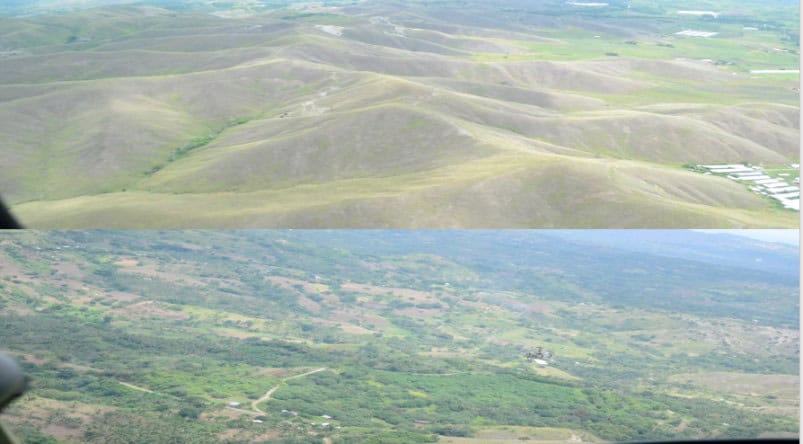
When Sendong struck in 2011, there were already around 200,000 hectares of denuded uplands. Today, that figure has increased to more than 300,000 hectares, due to continued illegal logging, weak enforcement of environmental laws, and the conversion of ancestral lands into massive plantations. Indigenous communities, once the natural stewards of these forests, have been displaced, and their lands transformed into monoculture landscapes that offer little protection against floods.
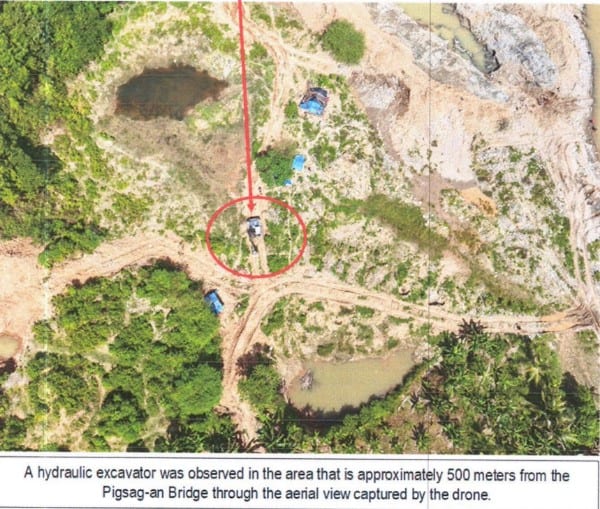
If deforestation laid the groundwork for disaster, massive illegal mining now represents the most destructive and dangerous threat. Across the uplands of Cagayan de Oro, Opol, and Iligan, foreign nationals, particularly Korean and Chinese operators, have engaged in widespread mining activities. Many enter the country on tourist visas, yet bring with them hundreds of heavy machines, including bulldozers, backhoes, and lifters. These operations are conducted in watersheds, forest zones, and mountainous areas, areas that are critical for water regulation and ecological stability. Mountains are being carved open, rivers are being choked with silt and toxic waste, and watersheds are being destroyed at an alarming rate.
Mindanao’s wealth is not limited to what grows on its surface. Beneath its soil lie at least 72 known major mineral resources, making the region a prime target for extractive exploitation. Tragically, this wealth has become a curse rather than a blessing, as foreign interests often working in collaboration with powerful local actors extract resources with little regard for environmental laws or human lives.
What we face today is not simply an environmental crisis; it is a moral and existential reckoning. Typhoon Sendong was not merely a natural disaster; it was the result of decades of environmental crimes, corruption, and indifference. The tragedy was foretold, the warnings were clear, and the consequences were devastating. If current trends continue, the next disaster will not only be predictable, it will be far deadlier. The question is no longer whether another catastrophic flood will occur, but whether we will finally act before it does.
The survival of Cagayan de Oro, Iligan, and countless communities across Northern Mindanao depends on urgent, decisive action: strict enforcement of environmental laws, an end to illegal logging and mining, protection of ancestral domains, and genuine commitment to ecological restoration. History has already warned us. Nature has already spoken. The only question that remains is whether we are finally prepared to listen before it is too late.
###