
By Chris V. Panganiban
Inquirer Mindanao
SAN FRANCISCO, Agusan del Sur — When El Niño dried up the fields and left him without enough water to plant rice, Isaac Garilao did not have to rely on a single crop for his livelihood.
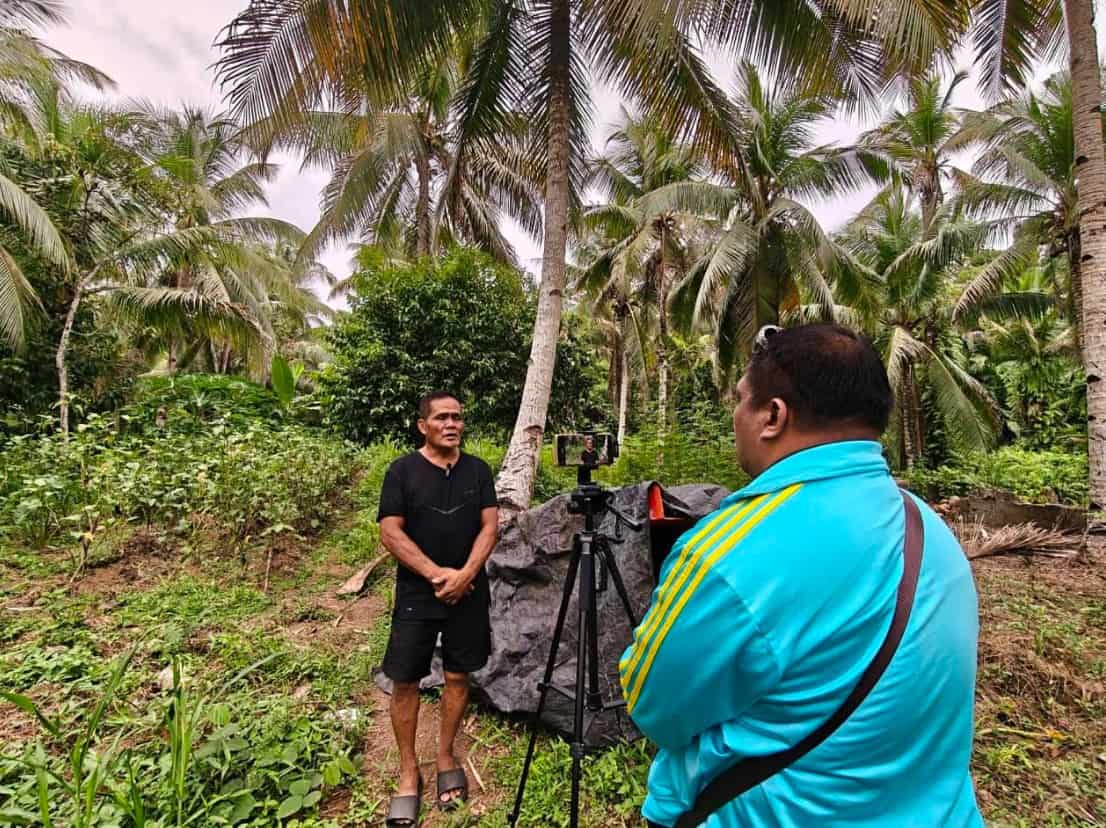
Garilao, a farmer in Barangay Labnig in Talacogon, Agusan del Sur, told Jun Sahay, reporter of the provincial government-run DXGP 89.7 FM, that he could not plant his one-hectare rain-fed rice field because of the lack of water.
But his farm continued to produce.
Vegetables, fruits, coconut and other crops provided his family with food and alternative sources of income while his rice field remained unplanted.
Garilao’s experience illustrates how crop diversification can help farmers cope when extreme weather disrupts agricultural production.
For farmers who depend mainly on rain-fed rice, prolonged dry conditions can mean losing an entire cropping season. Without sufficient rainfall or irrigation water, planting becomes risky, especially after farmers have spent money on land preparation, seeds, fertilizer and fuel.
Garilao’s farm offers another option.
While his rice field waits for sufficient water, the other crops growing around his property continue to provide something to harvest.
Diversification does not eliminate the effects of drought, but it can give farmers alternative sources of food and income when one crop is affected.
A farm that depends on a single crop can be vulnerable when drought or other problems disrupt production. By growing different crops, farmers have more than one source of food and livelihood to fall back on.
In Garilao’s case, El Niño prevented him from planting rice, but it did not stop his farm from producing.
His experience in Labnig offers a practical lesson for farming communities facing difficult and unpredictable weather conditions: when one crop fails, other crops can help keep a family’s livelihood going.
A resilient farm, therefore, is not necessarily one that escapes climate-related damage. It is one that can continue producing despite it.
###