
By CHRIS V. PANGANIBAN
SAN FRANCISCO, Agusan del Sur — The family of Jessie James Manatad, the runner who died during the Mt. Magdiwata Ultra Trail Run (MMUT) 2025 on October 5–6, is holding event organizers accountable, saying lapses in medical preparedness on the 50-kilometer course cost their brother’s life.
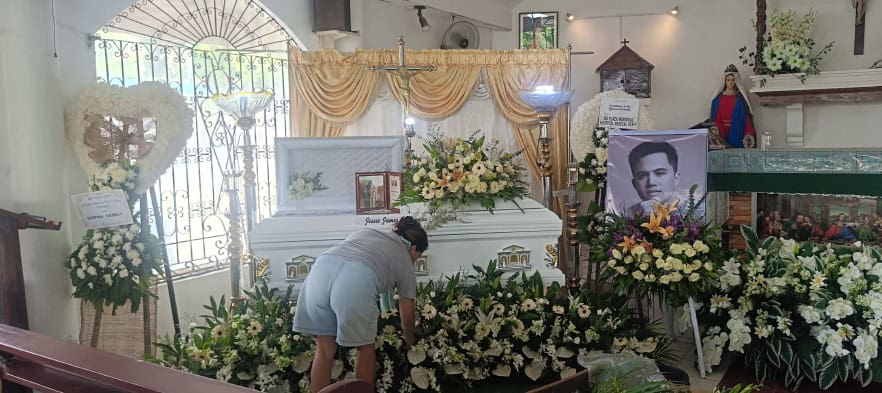
Speaking at Jessie’s wake, his sisters—Sylver Joy Manatad Dinaya and Raquel Irish Manatad Ramientos, both health care workers at D.O. Plaza Memorial Hospital—said a medical team with a doctor or nurse stationed along the route could have saved the 34-year-old. “This would not have happened if a doctor or even a nurse were readily available to attend to runners needing emergency medical attention,” Dinaya said. Their brother worked at the same hospital as a computer maintenance technologist.
The siblings criticized lead organizer San Francisco Water District (SFWD) for what they called critical shortcomings, including the lack of basic supplies like a portable oxygen tank, ice packs, a spinal board, and a cradle for aiding runners in distress. Such equipment is essential, Ramientos said, especially for participants showing signs of heat stroke or dehydration.
Photos and videos sent by friends during the wake showed Jessie receiving only an oxygen mask while already unconscious—prompting the sisters to question why he went more than an hour without intubation as rescuers navigated rough terrain on a motorcycle to reach the nearest ambulance. “It took them more than an hour to reach the ambulance, and he was already unconscious without being intubated,” she said, noting that her brother succumbed to heat stroke and dehydration.
The sisters also flagged the emergency response team’s training, pointing out that the San Francisco Emergency Response (SAFER) team was only equipped for Basic Life Support, unlike certified medical professionals trained specifically for advanced emergencies.
Cousin Maria Glaiza Comendador emphasized the family’s aim wasn’t to assign blame, but to ensure both organizers and runners are prepared in order to prevent similar tragedies. “We only want to remind organizers and runners alike to be fully prepared for these kinds of events that could have been preventable,” Comendador said.
In a statement, SFWD said the event was “carefully planned and coordinated with concerned local authorities, medical teams, and support personnel to ensure the safety and well-being of all participants.” The organizers maintained that “unforeseen circumstances occurred that were beyond anyone’s control.”
SFWD General Manager Elmer Luzon said the incident was managed urgently and in line with safety protocols, involving rapid coordination between organizers, medical teams, the SAFER unit, and the Red Cross. Luzon denied claims that Manatad was forced to walk seven kilometers after collapsing, clarifying instead that he was collected by a habal-habal motorcycle and transported as quickly as possible to a waiting ambulance.
Luzon also refuted reports that there was no oxygen support, stating a Red Cross responder provided an oxygen mask within two minutes of Manatad collapsing. He confirmed, however, that the runner died in hospital the next day.
Luzon added that six other runners who failed to meet the cut-off between kilometers 38 and 40 were safely evacuated by vehicle, in accordance with race guidelines for participant welfare and course management.
#