RECENT energy shocks and catastrophic natural disasters in early 2026 have intensified the urgency of climate action. For the Philippines, one of Southeast Asia’s most climate-exposed economies, the priority is to turn low-carbon ambition into faster, measurable, and collective action.
For Unilever, climate action is embedded in how the business operates – from managing risk, increasing operational efficiencies and building a more resilient supply chain.
Scaling Decarbonization: From Operations to the Supply Chain
At the operational level, Unilever has set a science-based target to reduce absolute Scope 1 and 2 greenhouse gas (GHG) emissions by 100% by 2030 from a 2015 baseline. By the end of 2025, Unilever Philippines had reduced its Scope 1 and 2 emissions by 77% against that baseline.
This progress has been supported by the company’s early investments in renewable energy, which has produced cost efficiencies and helped protect against energy market volatility. In 2019, Unilever Philippines transitioned to 100% renewable grid electricity using geothermal energy and has since expanded to installing solar rooftop panels across its facilities. Through this, it has electrified some of its thermal processes using technologies such as heat pumps and boilers in its factories. The company has also committed to transitioning its owned fleet to 100% hybrid electric vehicles by 2030.
Recognizing that the bulk of its climate footprint lies across the value chain, Unilever Philippines is also working with suppliers to accelerate Scope 3 emissions reduction. Through the global Supplier Climate Programme, the company engages priority suppliers by providing tools and resources to help them measure, report and eventually reduce their GHG emissions.
Reinforcing this in September 2025, Unilever Philippines renewed and expanded its partnership with First Gen to bring renewable energy supply to its priority sites and suppliers across Metro Manila, Cavite, Laguna, and Batangas, extending the benefit of cost efficiencies while starting its supply chain decarbonization journey.
A Shared Principle on Collective Action
These initiatives reflect a broader principle: a low-carbon transition and net-zero future require partnerships that enable action across diverse sectors.
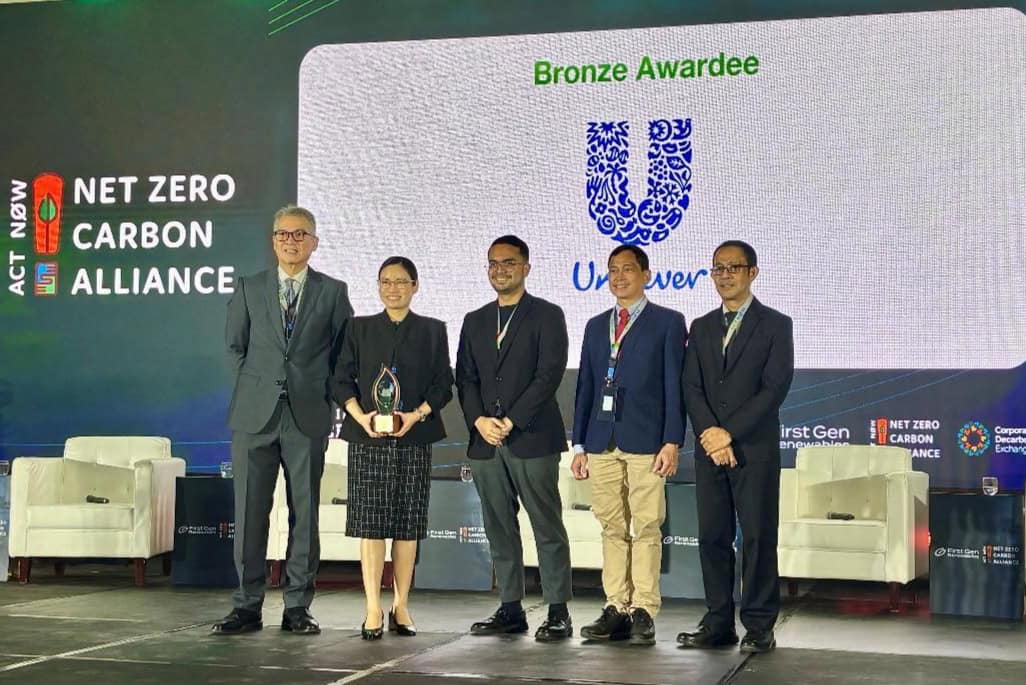
This is why Unilever Philippines is among the inaugural members of the Net Zero Carbon Alliance (NZCA), which brings together cross-sector organizations to advance decarbonization in the Philippines.
At the recent NZCA Philippine Net Zero Conference 2026, business leaders, policymakers, financiers, and sustainability practitioners convened to map out the country’s low-carbon economic transformation. Discussions focused on strengthening corporate leadership and governance, financing the transition, building capabilities, advancing policy, and translating net-zero commitments into measurable outcomes.
Unilever Philippines Sustainability Manager Regina Unson-Silerio emphasized that sustainability must be embedded across the entire business rather than treating it as an organizational silo.
Continuing the Journey Toward Net Zero
For Unilever Philippines, the path to net zero is both an operational imperative and a collective endeavor. Alongside its 2039 targets and value-chain initiatives, the company collaborates with peers, government bodies, and trade associations to build an enabling environment for corporate climate action.
In 2027, Unilever Philippines will celebrate 100 years of creating a positive impact in communities across the country, made possible through well-loved household brands such as Dove, Knorr, Surf, Rexona, and many more that help make everyday life better. As it marks this milestone, the company remains committed to influencing positive change for society and the environment through innovation, sustainability, and purpose-led growth.