

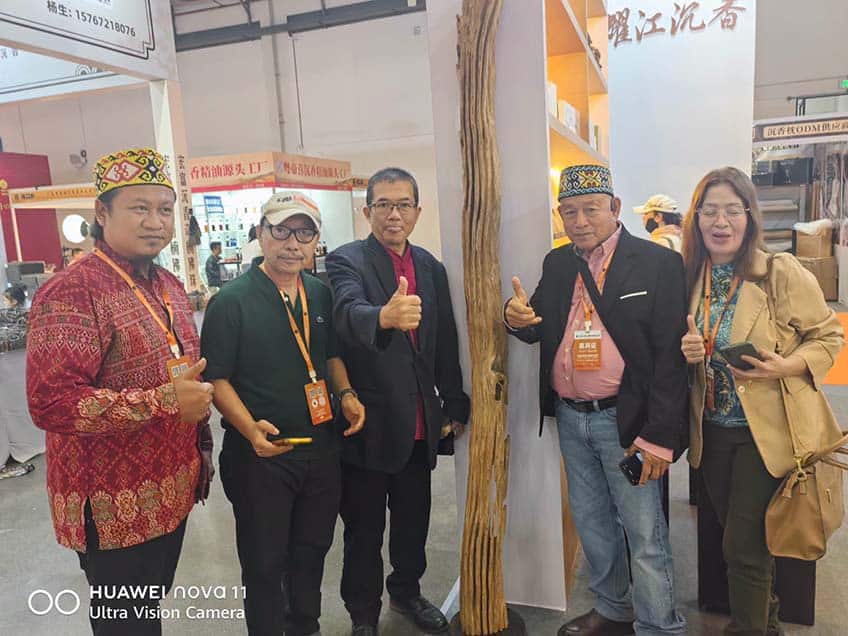
HAIKOU, HAINAN, CHINA – For Philippine agarwood stakeholders, the 2026 3RD HAINAN AGARWOOD AND ROSEWOOD INTERNATIONAL TRADE FAIR was not only an exhibition, it was a lesson in what it takes to enter one of the largest agarwood markets in the world.
HIGHLIGHTED EVENT:
2026 3RD HAINAN AGARWOOD AND ROSEWOOD INTERNATIONAL TRADE FAIR
The fair runs from November 21 to 24, 2026 at the Hainan International Convention and Exhibition Center in Haikou. It is organized by the Hainan Daily Newspaper Group, Hainan Provincial General Chamber of Commerce, and China Collectors Association, with co-organizers Hainan Daily Co., Ltd. and Hainan Hailv Convention and Exhibition Service Co., Ltd.
A New View Of The Chinese Market
Philippine Agarwood consultant Mr. Danilo Vertudazo from Palawan and Misamis Oriental said the expo broadened his understanding of the Chinese agarwood market.
Vertudazo, who reports 18 years of experience as an agro-farmer, said China offers strong market opportunities because agarwood has multiple applications, including medicine, food, and various other products.
He said the medicinal segment in particular has global potential, because Chinese traders can distribute products to markets such as Alaska and the Middle East.
Quality Is The Entry Ticket
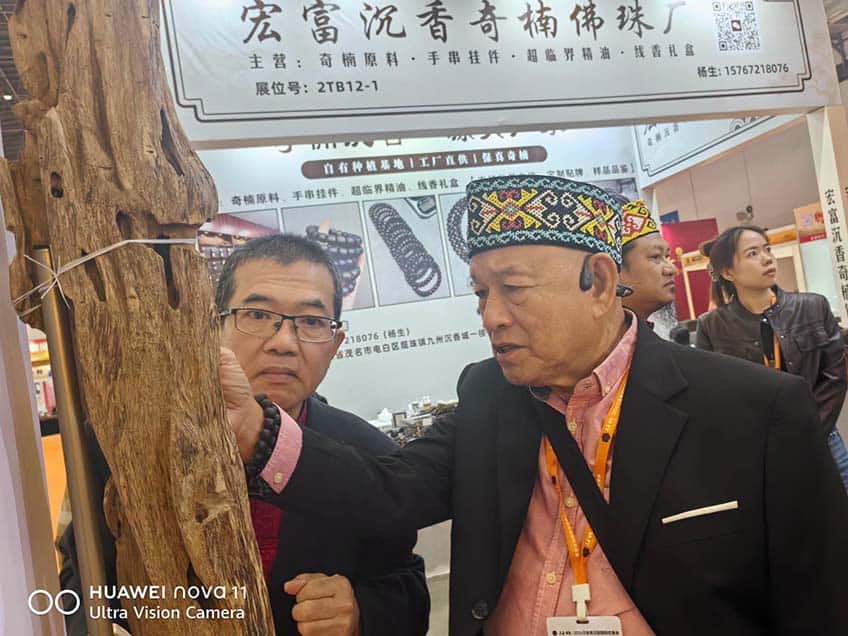
Vertudazo stressed that China has its own standards and guidelines for the agarwood market, and products intended for medicine and food must meet strict requirements.
He emphasized that products must be natural, without adulteration or other additions.
That message echoed the guidance shared at the association meeting in Hainan by Dr. Tan Kim Ting, who is associated with Malaysia’s agarwood (gaharu) sector. Dr. Tan Kim Ting has previously shared that MTIB’s Agarwood Management division highlighted his company’s contributions to the agarwood industry.
Evidence, Not Claims
According to Dr. Tan Kim Ting, the meeting in Hainan focused on examining China-made agarwood products at the exhibition to verify product quality, classification, usage, and market demand. The goal was to collect clear evidence and comparisons rather than rely on vague product claims.
Leaders stressed that product information should be understandable from beginning to end and supported by evidence, not only verbal explanations. Exhibition counters were treated as a key source for identifying and comparing suitable products.
Participants were told to visit each counter, gather information from exhibition explanations, and document findings with photographs.
The Right Category Matters
Dr. Tan Kim Ting said the discussion distinguished between two informal categories, described as chicken and duck.
The group focused on the female Aquilaria category, described as the chicken category, and excluded Kainan, which was described as male and not yet confirmed as part of Aquilaria.
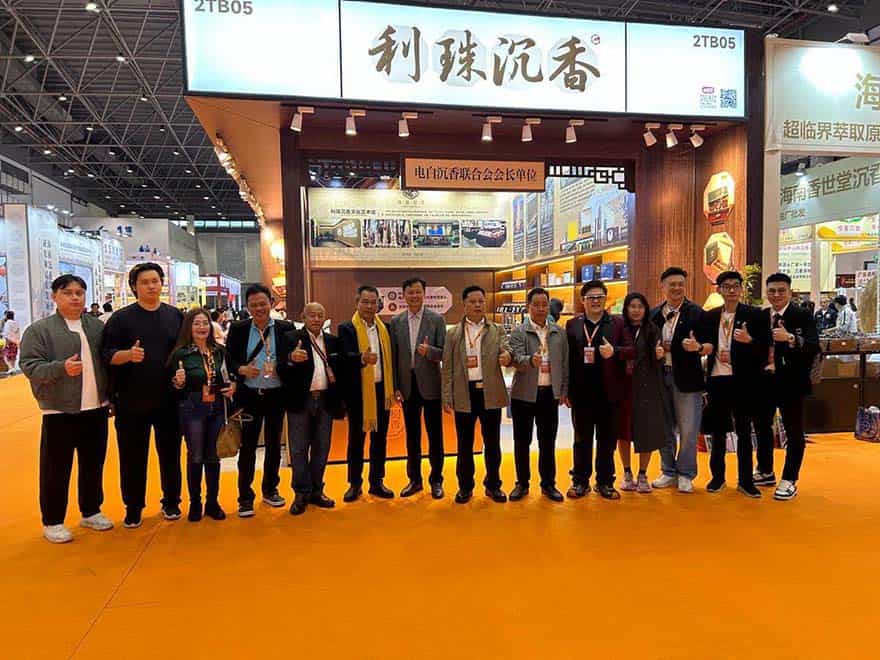
Participants were instructed to identify products in the chicken category rather than the duck category, and to compare materials, intended uses, and real products already being made.
Manufacturers Follow Demand
Dr. Tan Kim Ting noted that the speaker explained manufacturers generally produce goods because they already understand market demand.
For Philippine growers and consultants, that point was central. The products on display at the Haikou fair reflected what Chinese buyers already want, and what Chinese standards already require.
The findings are expected to be discussed at the next meeting and incorporated into an article before the association closes for the day.
What It Means For The Philippines
For Vertudazo, the takeaway was clear. Opportunity in China is large, but access depends on natural, compliant, and well-documented products that can meet medicine and food standards and compete in a market shaped by real demand.
Source: Dr. Tan Kim Ting, with interview from Mr. Danilo Vertudazo