
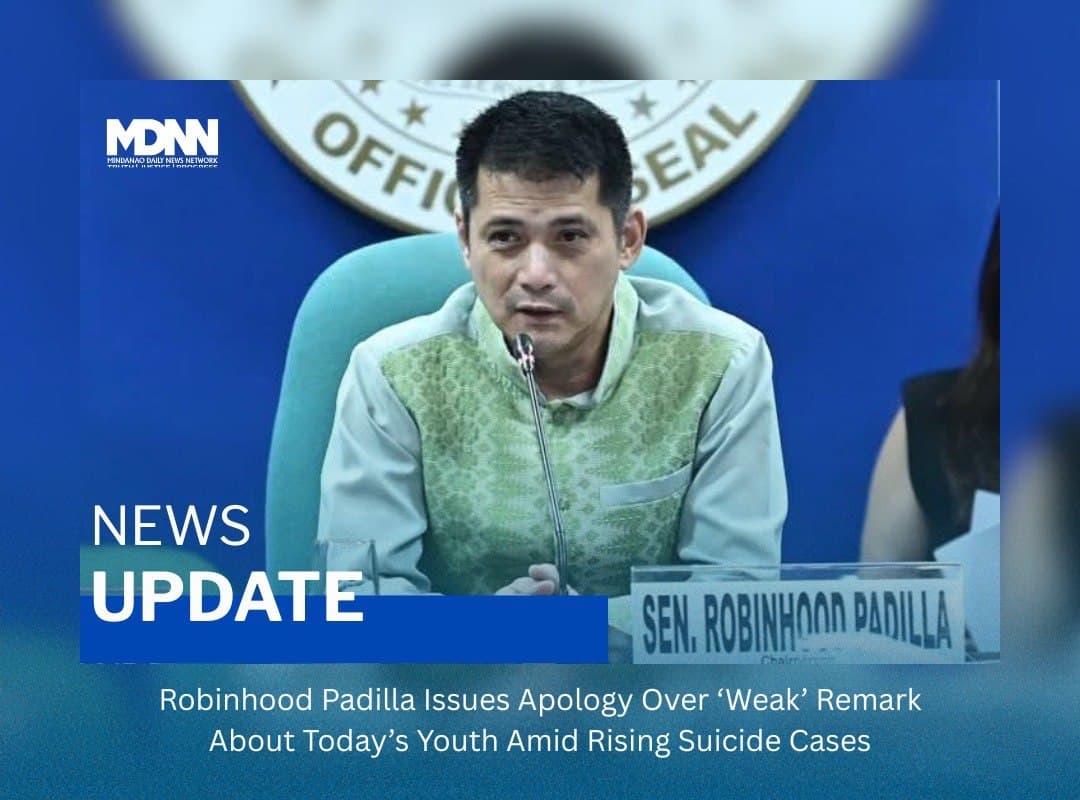
Senator Robinhood Padilla recently issued a public apology after his remarks describing today’s youth as “weak” sparked strong reactions across social media and from mental health advocates. The statement came at a time when conversations around rising suicide cases and the mental well-being of young people are becoming more urgent and sensitive. While the senator acknowledged that his words may have hurt some people, he maintained that his intention was to draw attention to what he believes is a serious issue affecting the younger generation.
Padilla also reiterated his stance that stricter measures, including a proposed total ban on social media for children aged 16 and below, could be one way to help address the growing mental health crisis. According to him, the digital environment plays a significant role in shaping how young people think, interact, and cope with pressure. He believes that setting limits could protect children during their most vulnerable and formative years.
Padilla Apologizes After Controversial Remarks on Youth Mental Health Spark Debate
However, his remarks were met with strong criticism online, with many people pointing out that mental health struggles cannot be reduced to generational differences. Mental health advocates emphasized that depression is complex and requires understanding, support, and professional care. Television host Kim Atienza was among those who spoke up, reminding the public that depression is not a simple matter that can be explained by comparing generations.
In response to the backlash, Padilla offered a brief but sincere apology, saying “Paumanhin po,” and expressed that the controversy may have served a larger purpose. He explained that if the discussion pushed more people to talk openly about mental health, parenting in the digital age, and the impact of social media on children, then it was a conversation worth having.
The situation has sparked a broader national dialogue about the responsibility of families, communities, and leaders in protecting the mental well-being of young people. Whether people agree with the senator’s views or not, one thing is clear: the topic of youth mental health deserves attention, compassion, and meaningful action.