
From the Sidelines
By: Ray G. Talimio Jr.
Why Region X’s 6.0% growth and trillion-peso economy status revive calls for autonomy and a federal future
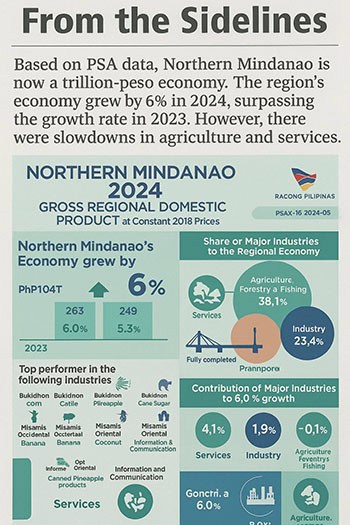
Northern Mindanao has officially entered the ranks of trillion-peso economies in 2024. According to the Philippine Statistics Authority (PSA), Region X posted a Gross Regional Domestic Product (GRDP) of ₱1.04 trillion at constant 2018 prices, growing by 6.0 percent from its 2023 level of ₱984.8 billion. This solidifies its place as one of the fastest-growing and most industrialized regions in the country.
The PSA data confirm that Region X maintained its growth momentum, accelerating slightly from 5.3 percent in 2023. Services contributed 4.1 percentage points to overall growth, followed by industry at 1.9 percentage points. Agriculture, forestry, and fishing contributed negatively by 0.1 percentage point.
Among all 17 regions, Northern Mindanao ranked
• 7th in GRDP size, behind Davao Region (₱1.08 trillion), Central Visayas (₱2.07 trillion), Western Visayas (₱1.21 trillion), and the top three: NCR (₱6.68 trillion), Calabarzon (₱5.95 trillion), and Central Luzon (₱3.03 trillion)
• 2nd highest contributor to Philippine agriculture, next to Western Visayas
• 3rd highest per capita GRDP at ₱200,236, following NCR and Calabarzon
• 2nd highest GRDP among Mindanao regions, next to Davao Region
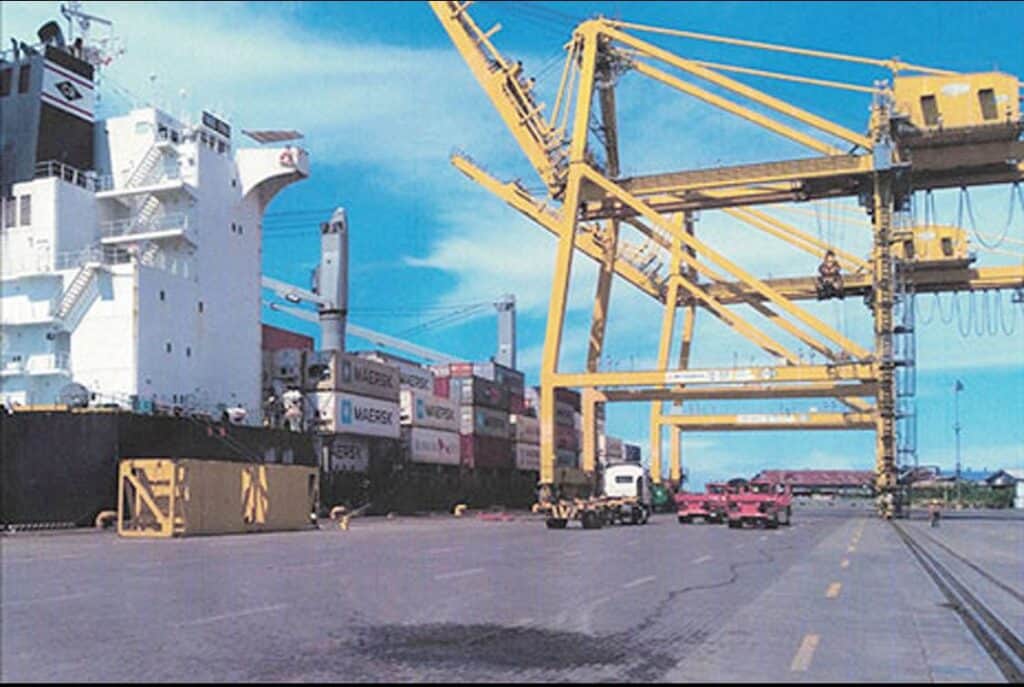
These are not just numbers. These rankings reflect years of strategic investments in infrastructure, logistics, and public-private sector coordination. The completion and inauguration of the Panguil Bay Bridge in 2024, connecting Lanao del Norte to Misamis Occidental, is a game-changing development in regional connectivity.
Northern Mindanao’s success revives the conversation on autonomy and federalism. Existing models such as the Bangsamoro Autonomous Region in Muslim Mindanao (BARMM) and the Cordillera Administrative Region (CAR) offer precedents. Meanwhile, CARAGA remains an administrative region under full national government control, lacking special fiscal or legislative powers.
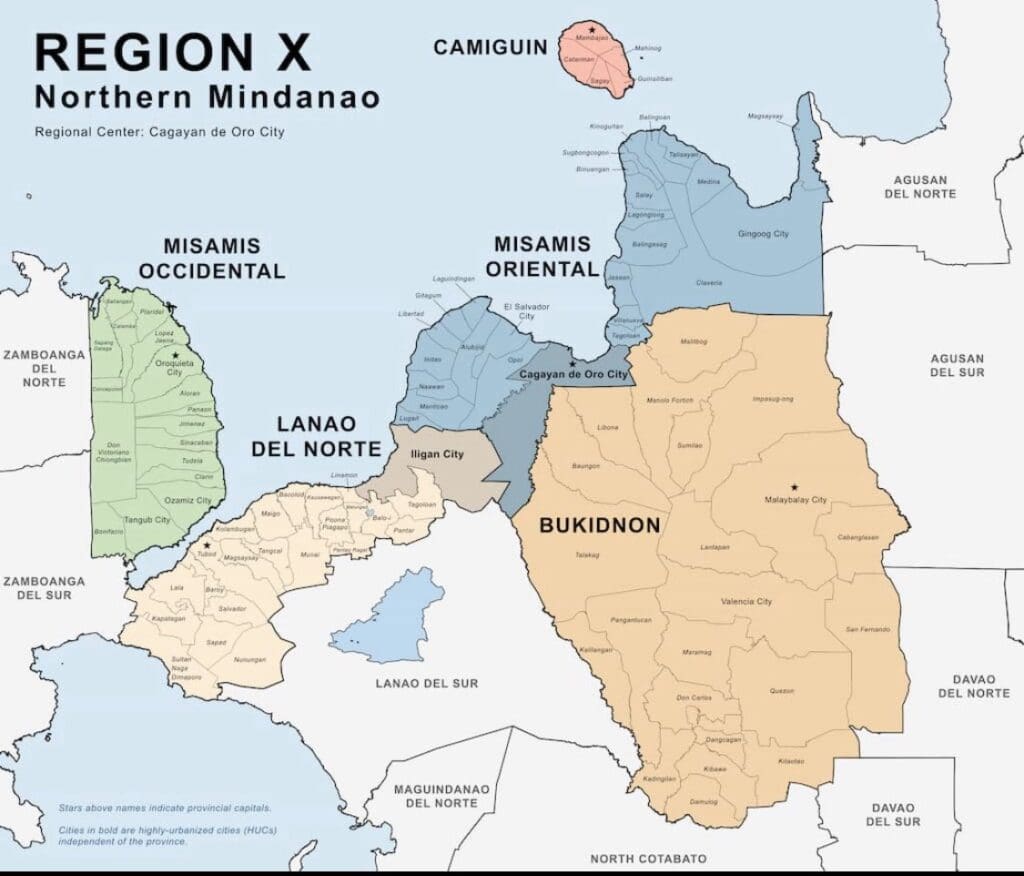
Autonomy and federalism are often used interchangeably but differ structurally. Autonomy refers to delegated governance powers under a unitary setup, often through Organic Acts. Federalism, on the other hand, constitutionally guarantees self-rule over certain areas of lawmaking, taxation, and development.
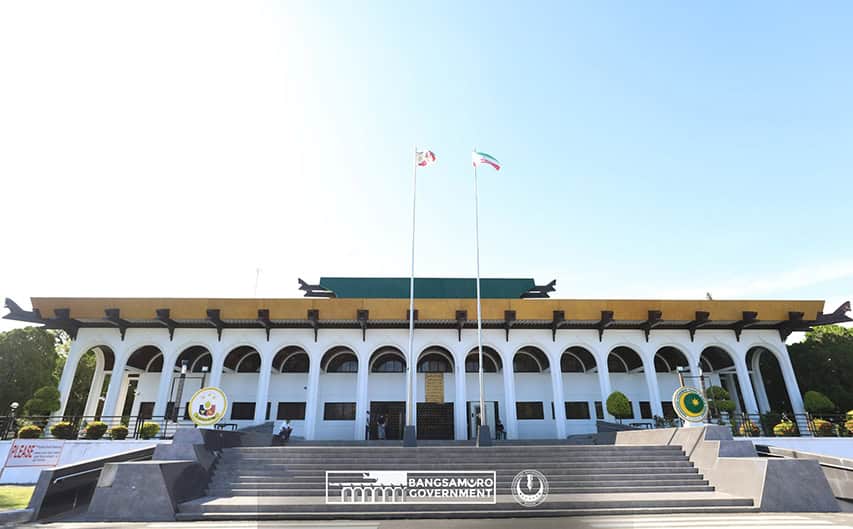
BARMM is a case in point. Despite its history of conflict, the region posted 4.3 percent growth in 2023, down from 6.6 percent in 2022. In 2024, its GRDP stood at ₱189.6 billion, with growth slowing further to 2.7 percent. The region’s economy was weighed down by contractions in agriculture and mining but was supported by strong performance in construction, health, and professional services. The region operates with its own Parliament and receives fiscal transfers via block grants.
CAR continues to advocate for autonomy despite lacking a formal Organic Law. Its governance approach is praised for its respect of indigenous institutions, high literacy rates, and effective social programs.

Cagayan de Oro City holds symbolic significance in this discourse. It is the hometown of two of the Philippines’ foremost advocates of federalism, Reuben Canoy and Aquilino Nene Pimentel Jr. Canoy, a former mayor, published “Real Autonomy” in 1979, calling for a decentralized Mindanao. Pimentel, also a former mayor and later Senate President, pushed for a federal setup and led the Consultative Committee under President Duterte. He worked with former Chief Justice Reynato Puno in drafting the federal charter. Despite its legal soundness, the effort fizzled due to lack of urgency in Congress, fears of expanding political dynasties, and low public awareness.
Northern Mindanao is uniquely positioned to test the viability of a federal transition. Its economic profile, political cohesion, and role in interregional trade make it a logical pilot area.
The benefits of becoming an autonomous region are substantial
• Greater control over public investment and taxation policy
• Tailored legislation for sectors like agribusiness, manufacturing, and tourism
• Stronger collaboration across LGUs through regionally driven planning bodies
Challenges must also be addressed
• Persistent rural underdevelopment in agriculture
• Security concerns in certain areas of Lanao and Misamis Occidental
• The capacity of local governments to manage devolved responsibilities
A phased approach may be considered, such as upgrading the powers of RDC-X or creating a Northern Mindanao Autonomous Region transitional authority. It would serve as a pilot model for constitutional transition without destabilizing national cohesion.
The road to autonomy or federalism is not an exit. It is an entry toward greater inclusion, development, and innovation. With economic credibility and historical relevance on its side, Northern Mindanao deserves to lead the way.
If the economy is the fuel, governance is the steering wheel. Northern Mindanao now has the fuel. The next question is whether it is ready to take the wheel.
Photo credits
• PSA Region X GRDP infographic and report: https://rsso10.psa.gov.ph
• BARMM PSA GRDP report and graphs: https://rssobarmm.psa.gov.ph
• Panguil Bay Bridge aerial progress photos and inauguration materials: https://www.dpwh.gov.ph
• Bagong Pilipinas official branding elements and template: https://www.bagongpilipinas.ph
• Consultative Committee on Federalism (photos of Nene Pimentel and CJ Puno):
https://newsinfo.inquirer.net, https://www.philstar.com, https://www.manilatimes.net
• Portraits of Reuben Canoy and Nene Pimentel: https://en.wikipedia.org/wiki/Reuben_Canoy, https://en.wikipedia.org/wiki/Aquilino_Pimentel
Sources
• PSA Region X. “Northern Mindanao posts 6.0 percent growth, enters trillion-peso economy.” May 2025
• PSA BARMM. “BARMM’s economy expands by 2.7 percent in 2024.” May 2025
• DPWH Flagship Projects Progress Report 2024
• Senate of the Philippines archives on federalism and charter change
• Mindanao Times and Mindanao Gold Star Daily economic briefings
Disclaimer
This article is written for public information and policy discourse. The views expressed are those of the author alone and do not necessarily reflect those of any agency or institution mentioned herein.
About the Author
Ray G. Talimio Jr. is the Chairman of BIMP-EAGA Northern Mindanao and Co-Chair of the Regional Development Council-X (RDC-X) Economic Development Committee. He is also the Chairman of the MSME Development Council for Misamis Oriental and Cagayan de Oro. He is a Past President and Past Chairman of the Board of the Cagayan de Oro Chamber of Commerce and Industry Foundation, Inc. (Oro Chamber), and a national officer, Past Senior Regional Director, and Past Chapter President of the Philippine Institute of Certified Public Accountants (PICPA). He is a columnist, a professional advocate of inclusive growth and economic federalism, and a recognized voice in public-private policy collaboration across Mindanao and the ASEAN region.