

From the Sidelines
By: Ray G. Talimio Jr.
“Inflation may be easing, but when rice prices are rising nearly 20%, millions of Filipino families will hardly feel the improvement.”
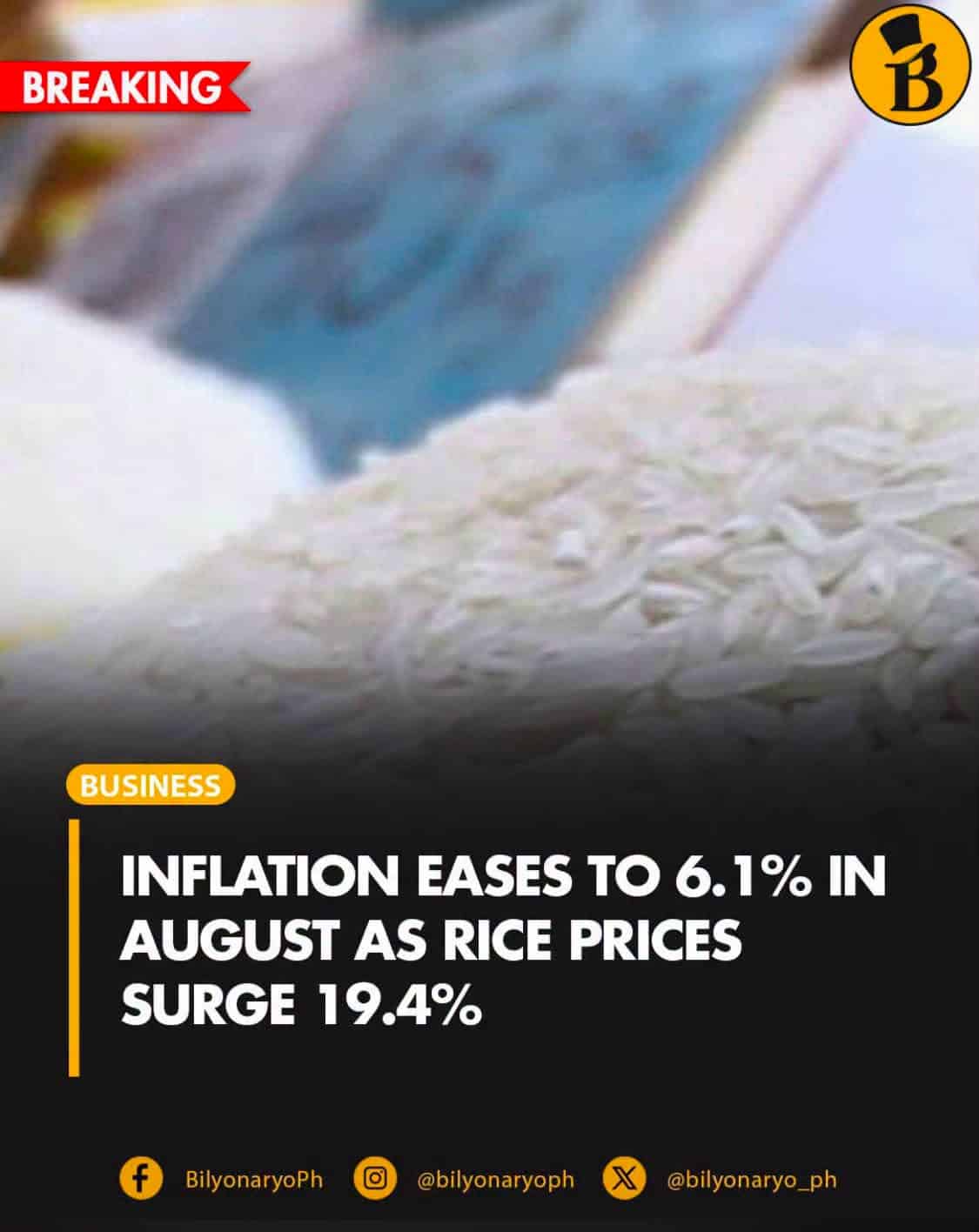
Philippine inflation eased to 6.1% in August 2026, its second consecutive monthly decline from 6.2% in July and 6.4% in June. The direction is encouraging, but 6.1% remains painfully high and still well above the government’s 2% to 4% target range.
More alarming is what is happening to food, particularly rice.
Rice inflation surged to 19.4% in August from 17.1% in July. Cereals and cereal products, which include rice, corn, flour and bread, accounted for most of the pressure on food prices.
For Filipino households, rice is not an optional expense. It is consumed daily and takes a significant share of the food budget, particularly among lower-income families. A nearly 20% increase in rice prices therefore hits household purchasing power much harder than increases in many other consumer items.
Overall food inflation may have slowed as prices of some vegetables and other food products moderated, but that provides little comfort when the country’s principal staple continues to become more expensive.
The situation in Northern Mindanao provides an important local perspective. Regional inflation eased to 6.4% in July from 7.0% in June. Cagayan de Oro City performed considerably better, with inflation declining to 4.8% in July from 5.6% in June. CdeO’s July rate was below both Northern Mindanao’s 6.4% and the national rate of 6.2%.
But the burden was heavier among poorer households. Inflation for Cagayan de Oro’s bottom 30% income households was 5.2% in July, although this also improved from 5.7% in June. This illustrates an important reality: families that spend a larger portion of their incomes on food feel price increases more severely.
As of this writing, the Philippine Statistics Authority Region X has yet to release the August inflation figures for Northern Mindanao and Cagayan de Oro.
Government should therefore not celebrate merely because national inflation declined by 0.1 percentage point.
Monetary policy can help moderate demand, but expensive rice is fundamentally a supply-side problem. Higher interest rates cannot increase palay production, repair irrigation systems, reduce post-harvest losses or improve farm-to-market logistics.
Government must intensify domestic rice production, irrigation, storage and post-harvest facilities, reduce transportation and distribution costs, and closely monitor profiteering and market manipulation.
Importation may sometimes be necessary to address shortages, but it should not become a permanent substitute for strengthening Philippine agriculture.
Inflation easing for two consecutive months is good news. But 6.1% inflation remains high, while 19.4% rice inflation is a serious warning sign.
For ordinary Filipinos, inflation is ultimately measured by how much rice and other necessities their wages can still buy.
Sources:
Philippine Statistics Authority (PSA), August 2026 Consumer Price Index and Inflation Report; PSA Region X, Northern Mindanao and Cagayan de Oro City July 2026 inflation reports; PSA Region X, Consumer Price Index for Bottom 30% Income Households, Cagayan de Oro City, July 2026; Bilyonaryo Business, “Inflation eases to 6.1% in August as rice prices surge 19.4%,” September 4, 2026.
Photo Credits: Bilyonaryo Business.
Disclaimer: The views expressed in this column are those of the author and are based on publicly available government statistics and published reports. They are intended for public discussion and economic analysis.
About the Author: Ray G. Talimio Jr. is a Certified Public Accountant (CPA), economist, tax advisor, columnist and business consultant. He is a Past President and Past Chairman of the Oro Chamber, former Co-Chairman of the RDC-X Economic Development Committee, former Chairman of the Micro, Small and Medium Enterprise (MSMED) Council of Misamis Oriental and Cagayan de Oro, former Chairman of BIMP-EAGA Northern Mindanao, a National Officer of the Philippine Institute of Certified Public Accountants (PICPA) and a member of the Association of Certified Public Accountants in Public Practice (ACPAPP).