
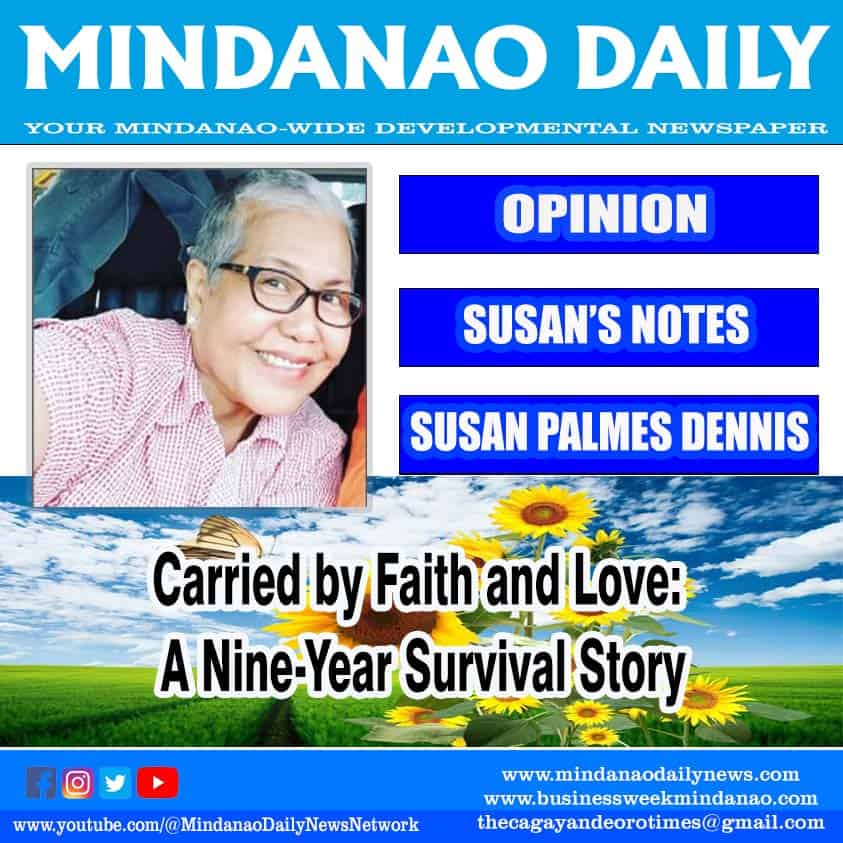
By Susan Palmes Dennis
Nine years ago on October 18, I sat in a clinic chair and underwent my very first chemotherapy session for breast cancer. It was the beginning of an intense treatment plan that included chemo, surgery, and radiation. Not a single day has passed that I have forgotten it; that journey permanently altered my thinking and shifted how I view life. It is only through continuous prayers to our Lord and the powerful intercession of my favorite saints—St. Padre Pio, St. Peregrine, St. Agatha, and St. Jude—that I find the strength to transcend that painful ordeal.
Through every single step of this daunting road, my husband was right by my side, acting as my constant pillar of strength and giving me the unwavering support I needed to keep going.
Before chemo could even begin, I had surgery to implant a port in the upper right side of my chest. Then came the chemotherapy itself, spanning from October to February 14 of the following year. Because my old journals are gone, I can no longer recall if my sessions were weekly or biweekly, but the memory of how it felt remains vivid. Except for the very first session, the infusions themselves felt almost routine—like receiving a standard IV for an hour.
But it was the aftermath that truly tested me. That first night was terrible; I was incredibly nauseous and spent the entire night throwing up. I was terrified by the bright red color of my urine, and even though my care team had forewarned me, being human, the fear gripped me anyway.
Ultimately, my oncologist ended my chemotherapy a week earlier than planned. During an appointment, the doctor watched me struggle to pick up a penny from the floor. That simple, failed action was the onset of severe peripheral neuropathy. Even today, nine years later, I still struggle every time I try to pick something up, button a shirt, or open a jar. I continue to take gabapentin daily to manage this lasting souvenir of my treatment.
Between my therapies, I also underwent a lumpectomy. At the time, well-meaning friends asked me, “Why a lumpectomy? Why not a full mastectomy like Angelina Jolie?” While the exact medical explanation my surgeon gave has faded from my memory, I trusted him completely—he was truly the best surgeon, and I knew there was a sound biological reason for the choice. Following surgery came 33 sessions of radiation therapy, scheduled five times a week. The radiation itself wasn’t painful; it was just the discomfort of holding perfectly still and enduring the precise chest markings. Thankfully, the technicians were incredibly tender and did everything they could to keep me comfortable.
Even after completing the initial gauntlet, the road didn’t instantly clear. In 2017 and 2018, my medical team detected suspicious “activity” in the same breast area, requiring additional surgical interventions. My follow-up schedule slowly stretched from weekly visits, to twice a month, to six months, and finally to yearly checkups. Yet, over these past nine years, the physical reminders have persisted. I still experience bouts of intense itching, redness, heat so severe it feels like my breast might burst, and scaling skin. During the months when these symptoms flare up, or when a sudden ache appears in my back, the old fear creeps back in: Is the cancer returning? Anyone who has walked this path knows that fear. It is completely normal.
Yet, as we observe Breast Cancer Awareness Month this October, I look at the medical landscape today and see so much room for optimism. For current patients, the advancements are astounding compared to what was available during my diagnosis. There is a massive global shift toward daily oral prevention therapies, shorter treatment courses, and fewer grueling side effects.
Most incredible of all is the rise of AI-driven risk assessment tools. Today, artificial intelligence is used to guide mammograms, acting as a brilliant second pair of eyes to review what human doctors see. This isn’t just happening in the United States; major global publications like the Times of India have highlighted how AI is revolutionizing breast imaging and early detection on a massive public health scale.
To all the patients currently fighting and to my fellow survivors: try not to let the fear of recurrence steal your peace. Science is moving rapidly, and the tools are sharper than ever. Lean into your faith, hold onto hope, and remember the golden rule that keeps us here: early detection saves lives.
###