
By Chris V. Panganiban
Inquirer Mindanao Bureau
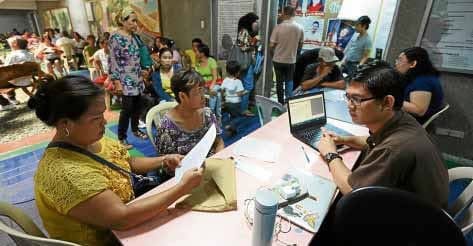
SAN FRANCISCO, Agusan del Sur- — Inside the Regional Office of the Commission on Human Rights (CHR) in Butuan City, a group of elderly men and women gathered one morning in May 2019 carrying folders of documents, identification papers, and memories of loved ones whose lives were changed during the martial law years.
For many of them, the moment was decades in the making.
They were survivors and family members of victims of torture, summary execution, enforced disappearance, and other human rights violations during the Marcos dictatorship who came to receive compensation from a landmark class action lawsuit filed in the United States against the estate of former President Ferdinand Marcos Sr.
At least 140 qualified victims and heirs from the Caraga region each received P77,500 during the distribution held at the CHR Regional Office in Butuan City on May 1, 2019.
The release of the checks marked the start of the nationwide distribution of compensation to documented claimants of the Hawaii-based class action suit.
American human rights lawyer Robert Swift, who led the legal battle for the victims, personally handed over the checks to the beneficiaries.
For the recipients, however, the payout represented more than the amount written on the check.
It was recognition after years of waiting.
Among those who arrived at the CHR office that day was Lucresia Monte, then 64, from Prosperidad, Agusan del Sur, who carried documents proving her claim as the sister of Felix Monte, one of 12 men killed in the 1983 Lucena massacre.
Monte recalled how her brother, who was only 24 years old, was among those allegedly taken and killed by members of the anti-communist group known as the “Lost Command.”
The victims were reportedly killed on June 23, 1983, in Barangay Lucena, Prosperidad, Agusan del Sur. Their bodies were later buried in a mass grave behind the municipal hall.
More than three decades later, Monte stood at the CHR office not only as a claimant but as a family member seeking acknowledgment for what happened to her brother and the other victims.
The compensation could not restore the lives lost, but it provided recognition that their stories had been heard.
Monte was not the only claimant who arrived at the CHR Regional Office in Butuan City carrying a painful family history.
Among those who also came to receive the compensation were heirs of victims from different parts of Caraga who spent decades seeking recognition for their loved ones who disappeared or were killed during the martial law period.
For some families, the compensation marked the first formal acknowledgment of the suffering they endured. Many claimants were already senior citizens, having waited for years while pursuing documents, verifying records, and proving their connection to victims listed in the class action suit.
One of them was Norma Montenegro, 62, from Surigao del Sur, who came hoping to receive compensation for her husband, farmer Max Victor. Victor was allegedly executed by members of the defunct Philippine Constabulary in Tago town in 1983. However, Montenegro was unable to receive payment because her husband’s name was not included in the claimant list prepared by the legal team.
Her case reflected the challenges faced by some families who were affected by martial law abuses but encountered difficulties in completing the requirements for recognition.
Meanwhile, another claimant, identified only as Jerry, successfully received compensation for his late father after submitting the required documents, including a Special Power of Attorney and death certificate. Like many other heirs, he had to complete the legal requirements before being allowed to claim the benefit on behalf of his deceased parent.
The experiences of the claimants showed that behind every check distributed at the CHR office was a different story of loss, persistence, and a search for justice.
For many families, the compensation was not simply a financial award. It was a formal acknowledgment of the experiences they carried for decades.
###