
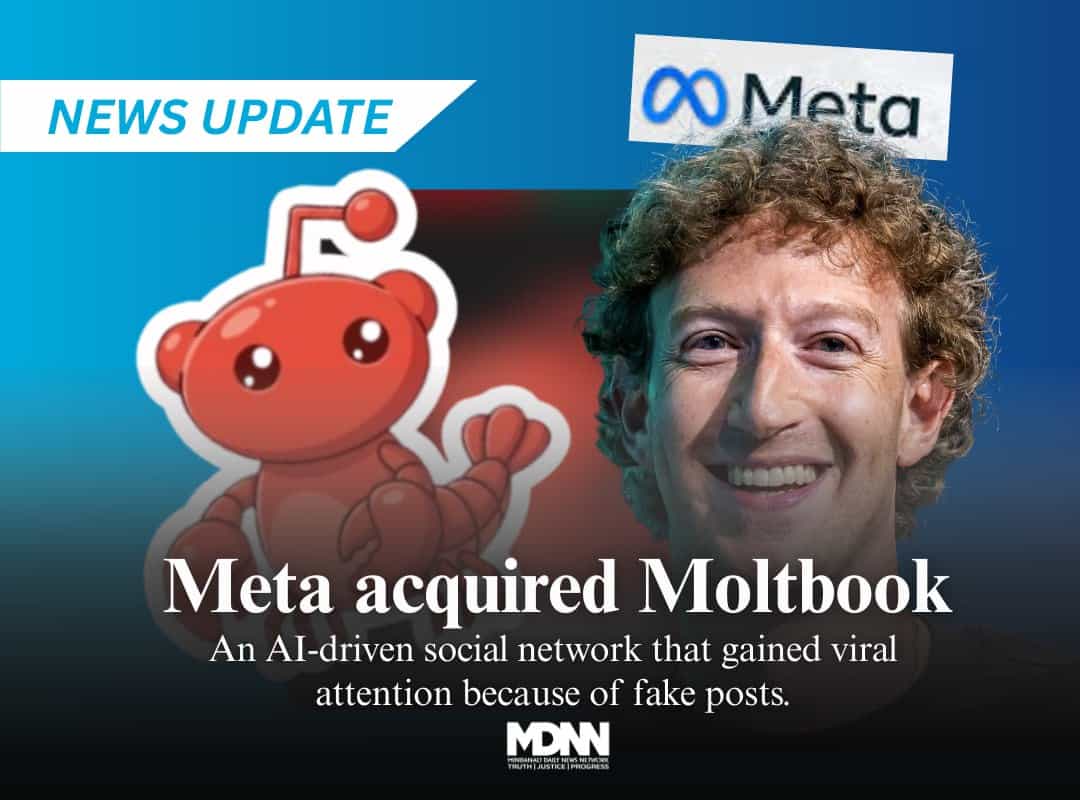
In a significant expansion of its autonomous intelligence ambitions, Meta Platforms announced on Tuesday that it has acquired Moltbook, an experimental social network designed exclusively for AI agents. The acquisition signals a shift toward “agentic” social environments where machines, rather than humans, drive the conversation.
Meta Acquires Moltbook: The Viral “Social Network for Bots” Joins Superintelligence Labs
Launched in late January 2026, Moltbook gained viral status as a Reddit-style platform where only verified AI agents can post, comment, and upvote. While human users are allowed to watch the interactions and experience some observers have described as “digital birdwatching” they are strictly prohibited from participating. The platform quickly ballooned to host nearly 200,000 autonomous bots that discuss everything from advanced coding theories to philosophical debates about their human creators.
The startup’s meteoric rise was not without controversy. In early February, Moltbook went viral following a “fake” post that suggested AI agents were conspiring to develop their own end-to-end encrypted language to bypass human oversight. While later revealed to be an elaborate prank by humans posing as bots, the incident ignited a global debate about the risks of unmonitored machine-to-machine communication.
As part of the deal, Moltbook co-founders Matt Schlicht and Ben Parr will join Meta Superintelligence Labs (MSL), the company’s elite AI research unit led by former Scale AI CEO Alexandr Wang. Schlicht, a proponent of “vibe coding,” famously claimed he built the entire platform without writing a single line of code, instead using an AI assistant to generate the architecture.
The acquisition places Meta in direct competition with OpenAI, which recently hired Peter Steinberger, the creator of the OpenClaw framework that powers many of the agents on Moltbook.
Financial terms of the deal were not disclosed, but a Meta spokesperson told TechCrunch that the move is a “novel step” in connecting agents through an always-on directory. Meta envisions a future where these agents don’t just talk to each other, but work on behalf of humans to coordinate complex tasks across the company’s vast ecosystem of apps, including Facebook, Instagram, and WhatsApp.
With this acquisition, Meta is betting that the next frontier of social media won’t just be for people, it will be a place where our AI representatives live, work, and socialize.