
From the Sidelines
By: Ray G. Talimio Jr.
“A Non-Lawyer’s Legacy in a Traditionally Legal Committee”
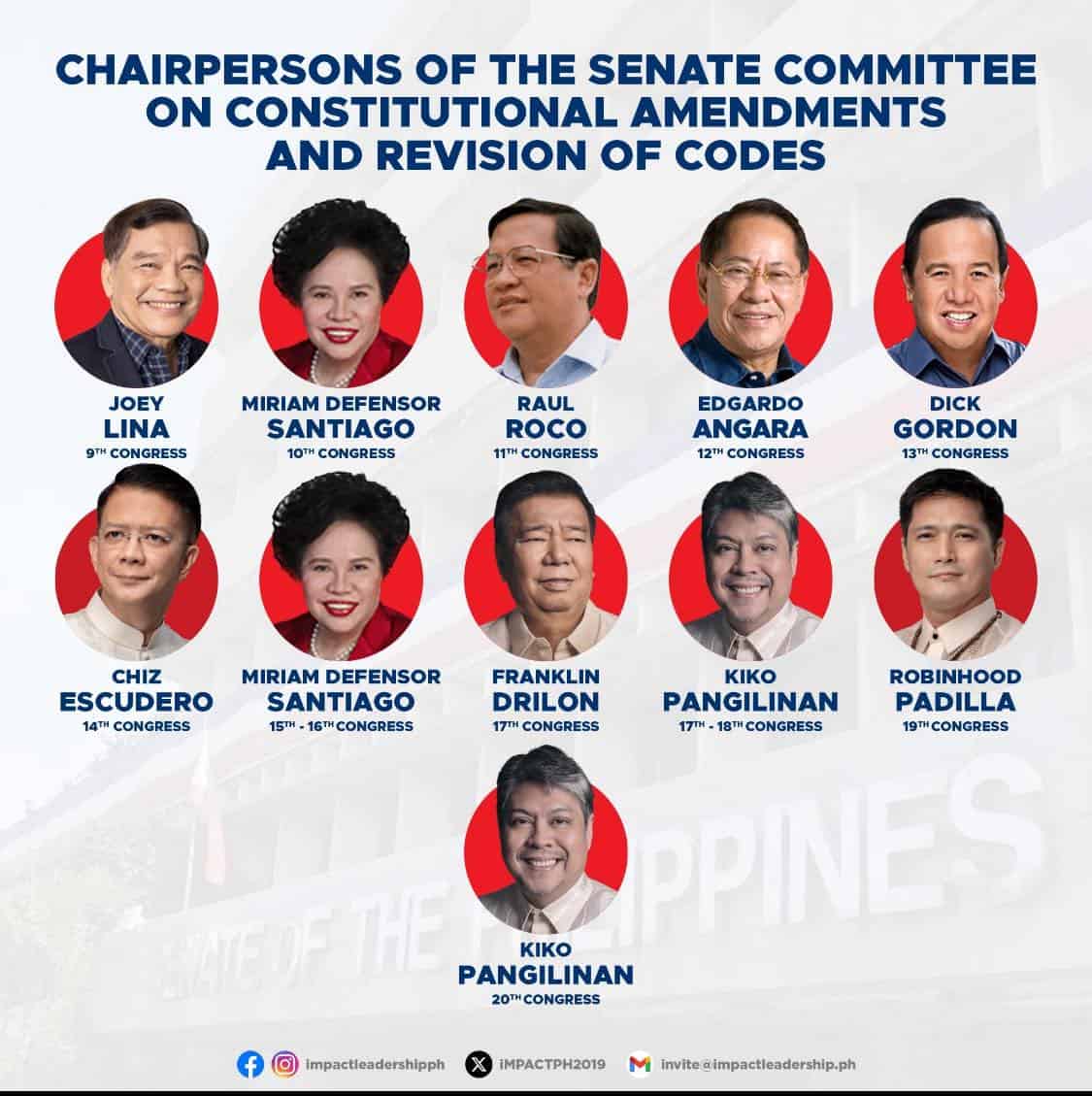
The Senate Committee on Constitutional Amendments and Revision of Codes has traditionally been led by seasoned lawyers whose expertise in constitutional law shaped the committee’s agenda. This tradition shifted in the 19th Congress when Senator Robinhood “Robin” Padilla, a non-lawyer, assumed the chairmanship.
Padilla brought a distinct approach, prioritizing direct constitutional reform rather than limiting the committee’s work to ordinary legislation. He held province-wide consultations to bring charter change discussions to the grassroots, filed Resolution of Both Houses No. 3 to amend economic provisions of the 1987 Constitution through a constituent assembly, and introduced Resolution No. 11 to make the Commission on Human Rights an independent constitutional office. These efforts were aimed at altering the charter itself rather than simply revising statutes.
By contrast, earlier chairs like Miriam Defensor Santiago, Franklin Drilon, and Kiko Pangilinan focused largely on statutory reforms and code revisions, with constitutional amendments often stalling before plebiscite stage. Santiago was known for her formidable advocacy of parliamentary government and anti-dynasty provisions, but her legislative legacy lay mostly in landmark laws like the Reproductive Health Act, Sin Tax Law, Climate Change Act, and Magna Carta of Women. Drilon oversaw the passage of the Revised Corporation Code, Philippine Identification System Act, and amendments to the Revised Penal Code, ensuring legal robustness and constitutional compliance. Pangilinan has been consistent in pushing anti-dynasty legislation, though it remains unpassed.
In the 20th Congress, Padilla was initially re-elected as committee chair. However, less than a month later, he was replaced by Senator Francis “Kiko” Pangilinan, returning the leadership to a lawyer-chair. This transition restored the long-standing preference for legal expertise in the post, particularly for work involving potential amendments to the nation’s fundamental law.
Padilla’s completed chairmanship stands out in Senate history. While lawyer-chairs built deep legislative records grounded in legal precision, Padilla distinguished himself by making charter change a public conversation beyond the halls of the Senate. His tenure, though concluded, remains a notable departure from tradition, bringing constitutional reform closer to the people and challenging the assumption that only lawyers should lead the nation’s most legally demanding committee.
Sources: Senate journals and committee records of the 9th to 20th Congresses, official press releases, and public statements of former and current committee chairs.
Photo Credits: Impact Leadership PH.
Disclaimer: The views expressed in this article are those of the author and do not necessarily reflect the official policy or position of any organization or institution.
About the Author:
Ray G. Talimio Jr. is a Certified Public Accountant and a veteran columnist on governance, economic policy, and public accountability. He is Past President and Past Chairman of the Board of the Cagayan de Oro Chamber of Commerce and Industry Foundation Inc. (Oro Chamber), Past Co-Chairman of the Economic Development Committee of the Regional Development Council Region X, and Past Chairman of the MSME Development Council of Misamis Oriental and Cagayan de Oro from 2022 to 2025. He currently serves as a National Officer of the Philippine Institute of Certified Public Accountants (PICPA), after having served as its Past Senior Regional Director and Past Chapter President. He is a staunch advocate for MSME development, regional economic integration, and good governance, and served as BIMP-EAGA Chairperson from 2023 to 2025. He is also a strong proponent of BIMP-EAGA cooperation and public private partnerships.
#