
From the Sidelines
By: Ray G. Talimio Jr.
“For decades, we have paid to collect garbage, haul garbage and bury garbage. Perhaps it is time to ask a different question: Why keep treating waste purely as a liability when technology can turn part of it into energy, fuel, fertilizer and other useful products?”
Cagayan de Oro has a problem common to every growing city: the more populous and economically active it becomes, the more garbage it produces.
But what if part of the solution to our garbage problem could become an economic resource?
That possibility deserves serious consideration following the renewed push of the Department of Energy (DOE) for waste-to-energy (WTE) projects in the Philippines.
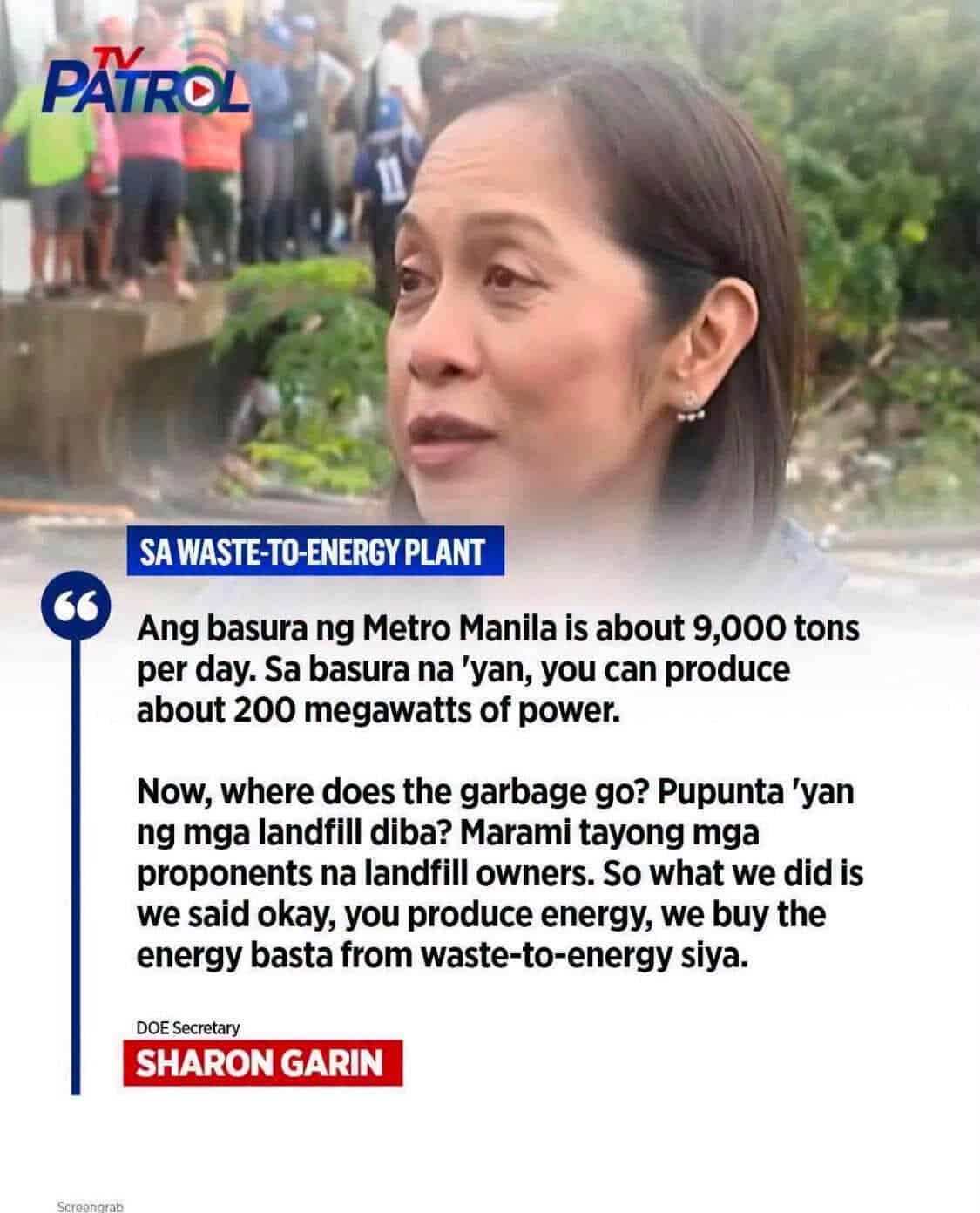
Energy Secretary Sharon Garin recently cited Metro Manila, which generates around 9,000 metric tons of municipal solid waste daily. According to the DOE, that volume could potentially produce around 200 megawatts (MW) of power.
The same principle deserves examination closer to home.
Cagayan de Oro reportedly generates around 600 tons of garbage daily. The city’s own Solid Waste Management Plan earlier projected approximately 661 tons per day by 2026.
And CdeO should not necessarily be viewed in isolation.
Misamis Oriental surrounds the city and forms part of an increasingly urbanized and industrialized economic corridor. At the regional level, the Environmental Management Bureau in Region 10 reported in 2025 that Northern Mindanao was collecting approximately 1,800 tons of garbage every day.
Instead of asking only, “Where will we dump it?” perhaps we should ask, “What value can we recover from it?”
WTE does not necessarily mean simply burning garbage to generate electricity. Several technologies are available.
Controlled combustion or incineration can produce heat and electricity, although any system must comply strictly with the Clean Air Act and emission standards. Gasification converts suitable carbon-based waste into synthetic gas or syngas. Pyrolysis uses thermal decomposition with little or no oxygen and can produce gas, oil and carbon-rich materials. Anaerobic digestion converts biodegradable waste into biogas. Refuse-derived fuel (RDF) processes suitable combustible residual waste into fuel for qualified industrial users or energy facilities.
The choice should depend on the actual composition of our waste.
A properly designed system could therefore combine several technologies rather than rely on a single process. Recyclables can be recovered, biodegradable materials can produce compost, organic fertilizer or biogas, and suitable residual materials can become RDF or undergo other compliant conversion processes.
This changes the economics considerably because the business model need not depend solely on selling electricity.
A properly structured project can potentially have multiple revenue streams.
First is energy or fuel sales, whether electricity, biogas, RDF or other usable energy products.
Second is the tipping fee, the amount paid for accepting and processing waste. Local governments already incur substantial expenses collecting, hauling and disposing of garbage. A properly negotiated tipping arrangement could redirect part of that expenditure toward processing waste while reducing dependence on increasingly scarce landfill capacity.
Third is the production and sale of organic fertilizer from suitable biodegradable materials. This creates an interesting circular economy opportunity for Misamis Oriental, where agriculture remains economically important.
Additional revenues may come from recovered recyclables and other usable by-products.
The concept, therefore, should be broader than waste-to-electricity.
It should be waste-to-value.
There is also a compelling argument for Cagayan de Oro and Misamis Oriental to think together rather than separately. Waste does not recognize political boundaries. A metropolitan or inter-LGU system could create sufficient scale for better technology, stronger environmental safeguards and greater commercial viability.
But government should not simply accept the first impressive WTE presentation placed on the table.
Before choosing technology or capacity, there must be a credible Waste Analysis and Characterization Study. The project must also comply with Republic Act No. 9003, or the Ecological Solid Waste Management Act of 2000, and Republic Act No. 8749, or the Philippine Clean Air Act of 1999.
Segregation, recycling and materials recovery must continue. WTE should address appropriate residual waste, not become an excuse to burn everything.
The financial structure deserves equal scrutiny. Government must determine what taxpayers will pay, what tipping fees will apply, what guarantees are being requested and who carries construction, operating, technological and market risks.
Transparency, however, does not mean prematurely disclosing proprietary technology, detailed engineering designs or commercially sensitive financial assumptions that could effectively hand competing proponents a ready-made feasibility study.
Public obligations must be transparent. Legitimate proprietary information must also be protected.
Cagayan de Oro and Misamis Oriental already spend money collecting, transporting and disposing of hundreds of tons of garbage every day.
Perhaps we have been looking at garbage from the wrong end of the truck.
Instead of merely paying to bury it, why not recover its recyclable materials, convert its organics into fertilizer or biogas, transform suitable residuals into fuel or electricity, and reduce what ultimately reaches the landfill?
The better question is no longer where we will put tomorrow’s garbage.
How much of tomorrow’s garbage should still be garbage at all?
Sources:Department of Energy, materials and issuances on biomass and waste-to-energy technologies.
Cagayan de Oro City Government, Ecological Profile and Solid Waste Management Plan.
Environmental Management Bureau Region 10 and Philippine Information Agency reports on Northern Mindanao solid waste generation.
Republic Act No. 9003, Ecological Solid Waste Management Act of 2000.
Republic Act No. 8749, Philippine Clean Air Act of 1999.
Republic Act No. 11898, Extended Producer Responsibility Act of 2022.
Disclaimer: The views expressed in this column are those of the author and are intended to encourage informed public discussion. References to a possible WTE project for Cagayan de Oro and Misamis Oriental should not be construed as an endorsement of any particular technology, supplier, investor or project proponent. Any project should remain subject to applicable environmental, regulatory, technical, procurement and financial requirements.
About the Author: Ray G. Talimio Jr. is a Certified Public Accountant (CPA), economist, tax advisor, columnist and business consultant. He is a Past President and Past Chairman of the Cagayan de Oro Chamber of Commerce and Industry, former Co-Chairman of the Regional Development Council-X Economic Development Committee, former Chairman of the MSMED Council of Misamis Oriental and Cagayan de Oro, former Chairman of BIMP-EAGA Northern Mindanao, a National Officer of the Philippine Institute of Certified Public Accountants (PICPA), and a member of the Association of Certified Public Accountants in Public Practice (ACPAPP). He writes on economics, taxation, governance, public accountability and national development.#WasteToEnergy#WTE