
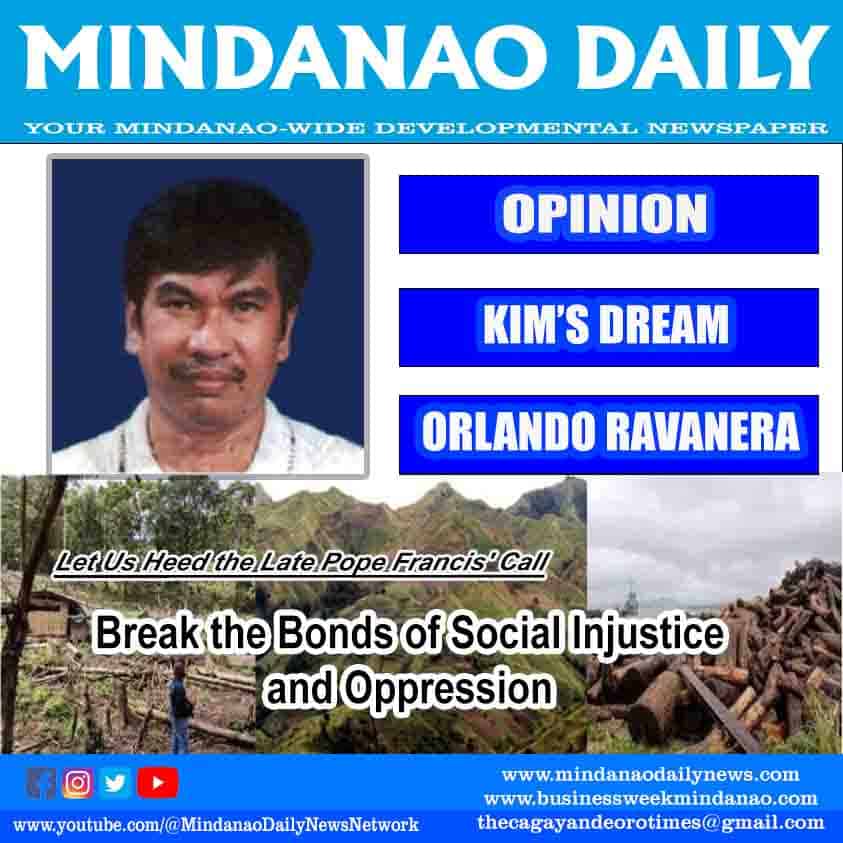
Let Us Heed the Late Pope Francis’ Call
Kim’s Dream Orlan Ravanera
“It bids us all to break the bonds of social injustice and oppression that give rise to glaring and scandalous social inequities.”
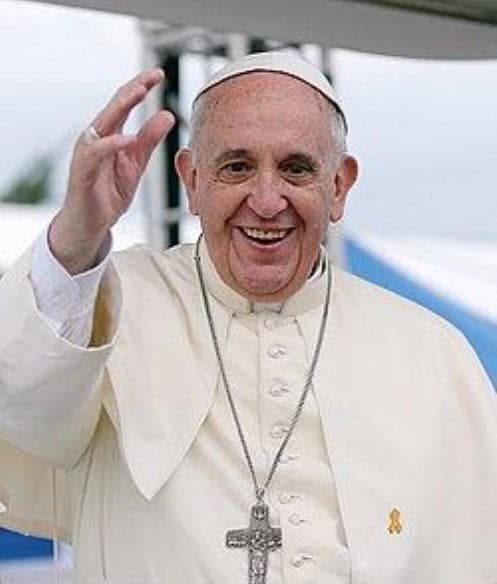
These profound words were spoken by the late Pope Francis during his historic address at Malacañang Palace in January 2015. More than a decade has passed, yet his appeal remains as urgent and relevant today as it was then. Pope Francis did not merely speak about charity. He challenged governments, institutions, churches, and every citizen to confront the structures that perpetuate injustice. His message went beyond offering temporary relief to the poor. He called for the transformation of systems that deprive people of their dignity, their rights, and their future.
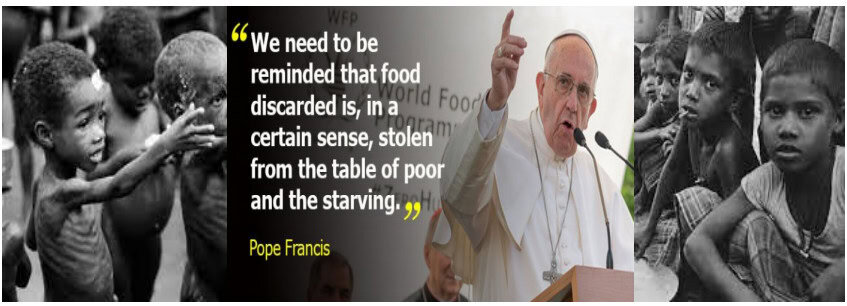
Nowhere does this challenge seem more compelling than in Mindanao, a land blessed with extraordinary natural wealth yet burdened by persistent poverty, conflict, environmental degradation, and unresolved struggles over land and ancestral domains. This paradox should disturb every Filipino. How can a region known as the nation’s food basket continue to experience widespread hunger and malnutrition? Why do communities living amid fertile mountains and rich forests remain among the poorest in the country? These questions demand honest reflection.
For many Indigenous Peoples, land is not simply a commodity to be bought and sold. It is their identity, history, spirituality, and source of life. Their ancestral domains represent centuries of stewardship, cultural traditions, and sustainable coexistence with nature. To lose these lands is not merely to lose property; it is to lose a way of life that has been carefully preserved across generations.
Many Indigenous communities and advocacy groups have long alleged that they have experienced displacement, land conflicts, violence, and exclusion resulting from competing claims involving private corporations, government projects, and commercial development. Some of these disputes have become the subject of court proceedings, congressional inquiries, and investigations by human rights organizations. While individual cases involve differing legal positions and should ultimately be resolved through due process, the recurring pattern of conflict raises profound questions about justice, governance, and the protection of Indigenous rights.
Pope Francis consistently reminded the world that economic progress loses its moral foundation when it comes at the expense of the vulnerable. Genuine development cannot be measured solely by investments, exports, or corporate profits. It must also be measured by whether the poor become less poor, whether Indigenous communities can live with dignity on their ancestral lands, whether forests and watersheds are protected, and whether future generations inherit a healthier environment rather than one scarred by exploitation. These concerns became even more explicit in his landmark encyclical “Laudato Si’”. There, Pope Francis emphasized that “the cry of the earth and the cry of the poor” are inseparable. Environmental destruction and human suffering are deeply connected. When forests disappear, rivers are polluted, and fertile lands are converted without meaningful consultation or adequate safeguards, it is often the poorest communities who bear the greatest burden.
The Philippines continues to wrestle with these difficult issues. Across various regions, conflicts over land tenure, ancestral domains, mining, plantations, infrastructure, and environmental protection remain sources of social tension. Indigenous communities frequently seek recognition of their legal rights under the Indigenous Peoples’ Rights Act (IPRA), while government agencies, private landowners, and corporations may present competing legal claims. These disputes deserve careful, transparent, and impartial resolution under the rule of law, with full respect for human rights.
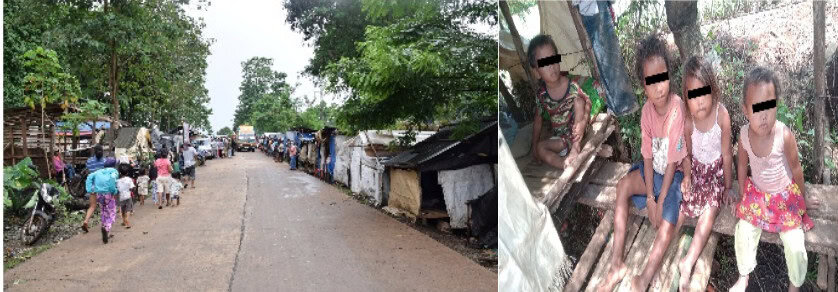
Unfortunately, legal recognition alone is not always enough. A title or court decision has little practical value if families continue to live in displacement, insecurity, or poverty. Justice must be more than a document. It must be experienced in the daily lives of those it is intended to protect. This is precisely why Pope Francis’ message continues to challenge us today. Social injustice is not only about economic inequality. It is about systems that leave some communities unheard, unseen, and unable to enjoy the rights already guaranteed to them by law.
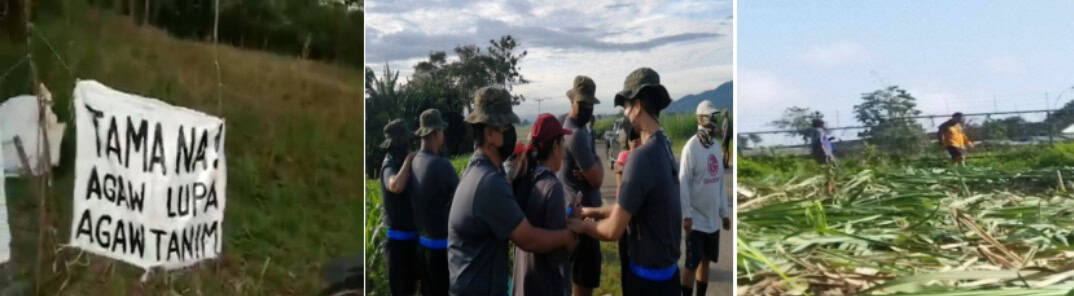
As Filipinos, we must ask ourselves difficult but necessary questions. Are our laws being implemented fairly? Are the voices of Indigenous Peoples genuinely heard during decisions affecting their ancestral lands? Does economic development always benefit local communities, or do some bear disproportionate costs while others enjoy most of the gains? These questions are not expressions of hostility toward development. Rather, they are invitations to pursue development that is just, inclusive, environmentally responsible, and respectful of human dignity.
The late Pope Francis reminded us that authentic peace cannot exist where injustice prevails. Peace is not merely the absence of armed conflict. It is the presence of justice, compassion, accountability, and solidarity. Lasting peace begins when every Filipino, especially those who have long been marginalized, can live with dignity, security, and hope.
The challenge before us is therefore not simply political or economic. It is profoundly moral. It calls upon government leaders, business institutions, churches, civil society, Indigenous communities, and ordinary citizens to work together in building a nation where development serves humanity rather than the other way around. Breaking the bonds of social injustice and oppression is not a slogan. It is a responsibility that belongs to all of us. All for God’s greater glory!
###