By CHRIS V. PANGANIBAN
SAN FRANCISCO, Agusan del Sur — Bracing for what they fear could be another takeover by Aboitiz-owned Davao Light and Power Company (DLPC), officials of the Northern Davao Electric Cooperative (NORDECO) said police were reportedly being mobilized to enforce a court-issued writ of possession at the cooperative’s main office here.
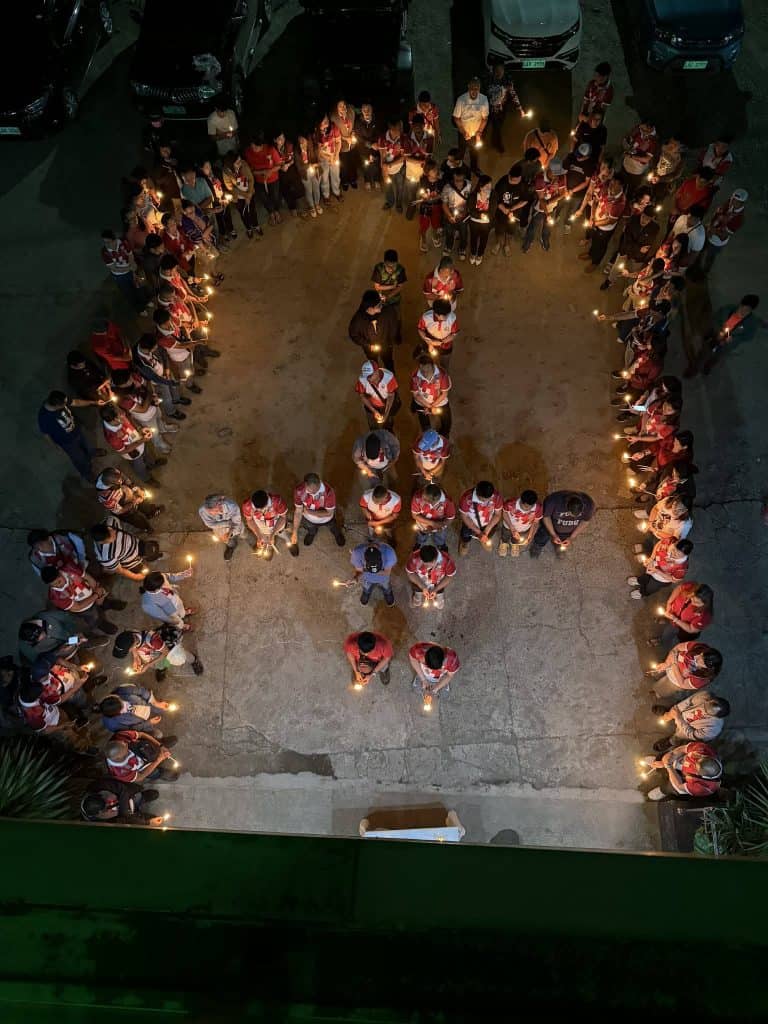
Outside the Tipaz, Magugpo East compound IN Tagum City, tension has turned prayerful. Since last week, NORDECO workers have been holding nightly candlelight vigils in front of the office. Employees lit candles, some forming a crucifix, as they knelt and asked for divine intervention for justice amid the escalating legal battle over the cooperative’s assets.
In a statement, NORDECO said it received “reliable information” that policemen were on their way to Tagum City to assist in implementing a Feb. 27, 2026 order of the Regional Trial Court (RTC), Branch 2, Tagum City, granting DLPC a writ of possession over its “vital assets,” including the Tagum headquarters.
The cooperative, however, insisted enforcement would be premature. It said it electronically filed an omnibus motion for reconsideration of the order at 6:53 p.m. on March 1, with a prayer to stay and lift the writ pending resolution.
“Any and all actions leading towards the implementation of the Feb. 27, 2026 writ of possession into the assets of NORDECO is premature, illegal and violative of the constitutional guarantee to due process of law,” it said.
The latest tension comes days after a separate writ of possession was enforced in the Island Garden City of Samal, allowing DLPC to assume operational control there. NORDECO described that move as “totally illegal,” claiming a motion for reconsideration was still pending when it was carried out.
The dispute stems from a recent decision of the Supreme Court of the Philippines denying NORDECO’s petition challenging the validity of Republic Act No. 12144, which expanded DLPC’s franchise into areas previously served by the cooperative.
The standoff follows a separate writ enforcement in the Island Garden City of Samal that allowed DLPC to assume operational control there — a move NORDECO described as “totally illegal,” claiming a motion for reconsideration was still pending at the time.
The dispute stems from a recent decision of the Supreme Court of the Philippines denying NORDECO’s petition challenging the validity of Republic Act No. 12144, which expanded DLPC’s franchise into areas previously served by the cooperative.
NORDECO and its allies argue that while the ruling upheld the law, it did not order the cooperative’s dissolution and effectively allowed co-existence under regulatory supervision consistent with the Electric Power Industry Reform Act of 2001.
DLPC, however, has framed the high court ruling as a clear validation of its expanded franchise and its immediate enforceability. Engr. Enriczar Tia, DLPC President and Chief Operating Officer told Davao City reporters in a press conference that the Supreme Court’s dismissal of NORDECO’s petition and application for a temporary restraining order means Republic Act No. 12144 stands as constitutional and effective.
The utility also pushed back against claims that the ruling mandates parallel operations in the same area, saying there is nothing in the decision requiring simultaneous service by both entities. DLPC has maintained it is acting pursuant to court orders and remains committed to ensuring stability and continuity of power service in the affected areas.
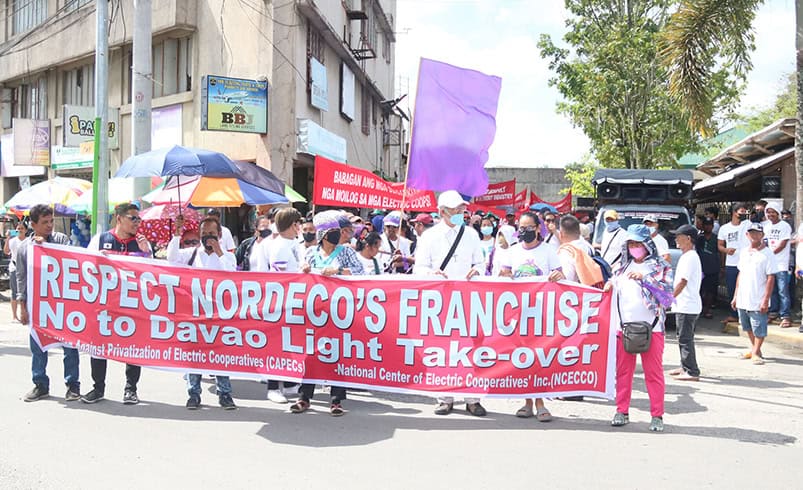
In a Feb. 24 statement, NORDECO for Peoples OWnership of Electricity Rights (NPOWER) said the high court ruling, while upholding DLPC’s franchise expansion, also effectively affirmed the co-existence of both utilities in affected areas. It noted that under the Electric Power Industry Reform Act of 2001 (EPIRA), distribution utilities operate through legislative franchises but remain subject to state regulation to protect public interest and consumer welfare.
NPower cited the situation in Iloilo City, where MORE Electric and Power Corporation assumed operations while Iloilo Electric Cooperative I (ILECO I) continued to exist and operate in areas outside the city, as proof that legal and operational co-existence is not unprecedented.
“The Court did not mandate the extinction of NORDECO,” the group said, adding that the challenge now is to ensure any transition genuinely results in better service, fair rates and stronger consumer protection.
The Alliance for the People’s Protection of Electricity Consumers (APPEC), in a Feb. 21 statement, also congratulated NORDECO, calling the ruling a “significant legal triumph” affirming the principle of co-existence of franchises.
For APPEC, co-existence “is not a conflict, but a structured and legitimate framework” that upholds the rule of law and protects member-consumer-owners. The group urged all parties to respect the decision and work toward reliable, affordable and people-centered electricity service.
As legal maneuvers intensify and court orders loom, the atmosphere at the Tipaz compound remains charged but solemn — candles flickering in the dark, workers standing vigil, and a power struggle that has moved from the courtroom to the cooperative’s doorstep.
###